




William IV Rosewood Sewing Box
A William IV rosewood sewing box brings 19th-century elegance to a room, combining fine timber with clever internal fittings for needlework and small treasures.
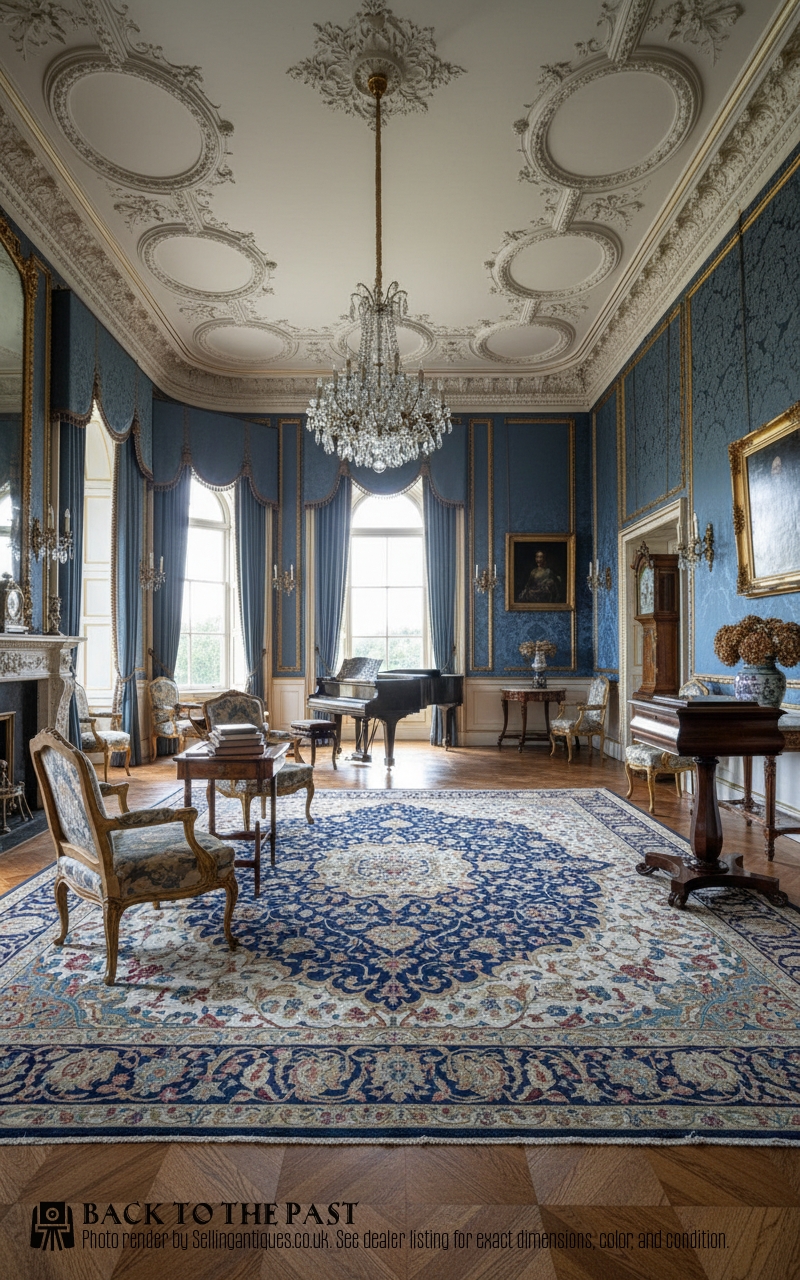
William IV Rosewood Sewing Box
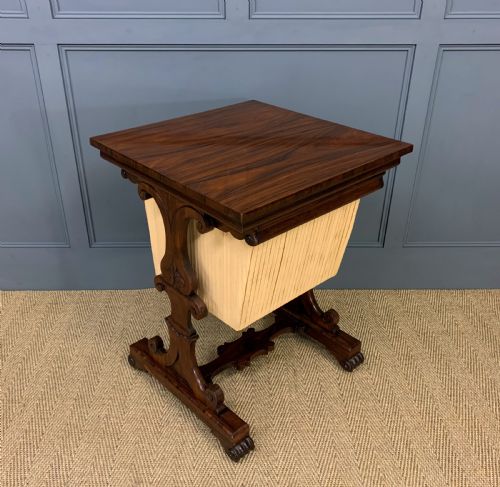
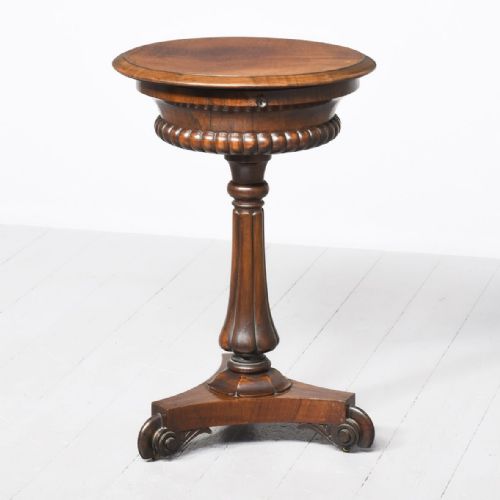
When you search for a william iv rosewood sewing box, you encounter refined 19th-century pieces designed for parlour and boudoir use. These objects range from compact tabletop work boxes to substantial freestanding sewing tables and teapoys.
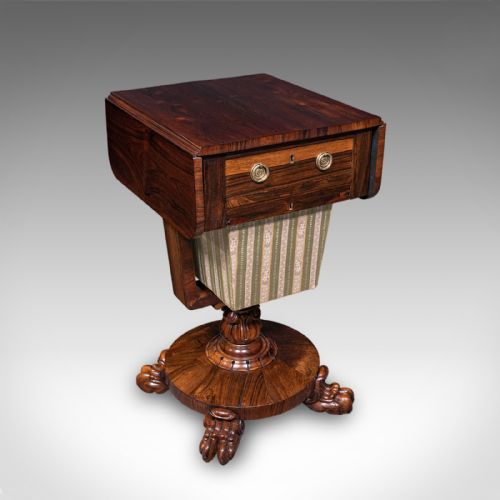
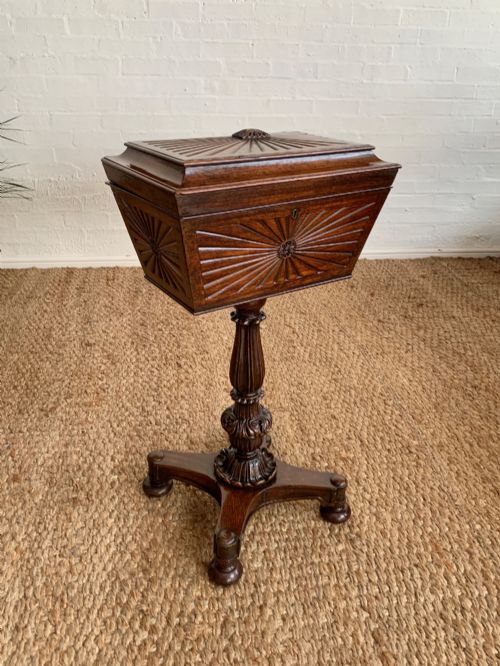
The pieces on this page span the 19th century, with Regency and Victorian influences appearing across the selection. Forms include drop-leaf work tables, caddy top designs, and sarcophagus shapes.
Occasional tables and work tables dominate the offerings, often combining storage for needlework with writing or games surfaces. The timber is predominantly dark rosewood, sometimes accented with mother of pearl inlay.
Materials and Construction
Cabinetmakers utilised rich rosewood veneers over solid secondary timbers, applying French polish to highlight the distinctive grain patterns. Brass hardware, from escutcheons to hinges, provides structural contrast and secure closures.
Interiors frequently feature fitted compartments lined with silk or fabric, alongside leather inserts for writing surfaces. Carved details such as sunburst motifs and pedestal bases showcase the craftsmanship of the period.
Listings feature rosewood, mahogany, brass, leather, and silk across 19th-century occasional tables and work boxes.
Judgements of Quality
The standard of a piece rests upon the crispness of its carving and the preservation of its rosewood surfaces. Crisp sunburst carving and intact brass fittings elevate a piece above plainer examples.
Internal arrangement determines utility and desirability. Retaining original silk linings, fitted compartments, and working locks distinguishes superior examples from those that have lost their internal fittings.
The William IV Rosewood Sewing Box Glossary
- Rosewood
- A dense, dark timber prized for its dramatic grain and deep colour. It served as the primary exterior material for high-status 19th-century cabinet work.
- Teapoy
- A small stand or box originally designed to store loose tea leaves, often adapted to serve multiple functions including sewing and writing.
- Caddy Top
- A hinged lid design with a domed or stepped profile, commonly found on boxes and tables from the period.
- Escutcheon
- A small protective plate surrounding a keyhole, usually cast in brass to complement the dark wood.
William IV Rosewood Sewing Box: Frequently Asked Questions
What is a teapoy?
A teapoy is a lidded box on a pedestal base, originally used for storing tea when tea was an expensive commodity. Many examples from this era double as work boxes or sewing tables.
Over time, these versatile pieces moved from the dining room to the parlour, where they accommodated sewing equipment and writing materials.
How do I care for rosewood?
Rosewood benefits from stable indoor humidity and protection from direct sunlight to prevent the timber from fading or drying out. Regular dusting with a soft, dry cloth preserves the French polish.
Avoid using silicone-based polishes or harsh chemical cleaners, as these can permanently damage the historic finish.
Where were these pieces used?
These boxes and tables belonged in the private sitting rooms, parlours, and boudoirs of 19th-century homes. Ladies utilised them for keeping needlework, threads, and personal letters close at hand.
Today, their compact proportions make them suitable as bedside stands, hallway pieces, or side tables in modern living spaces.
How do I identify a William IV piece?
William IV pieces date from the 1830s and sit stylistically between Regency elegance and early Victorian mass production. Look for robust classical proportions, bold rosewood grain, and carved details like acanthus leaves or sunbursts.
Construction methods such as hand-cut dovetails and traditional joinery help confirm the period of manufacture.