


Dark Rosewood Work Box
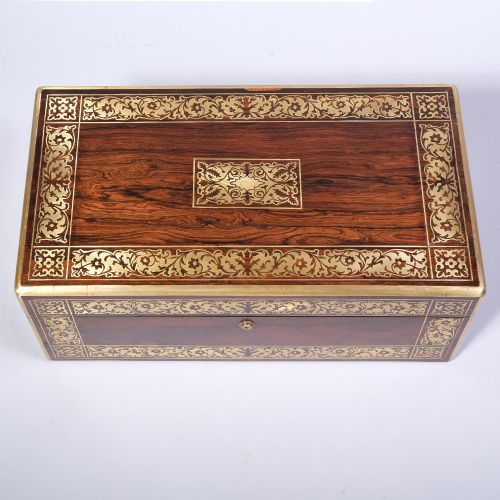
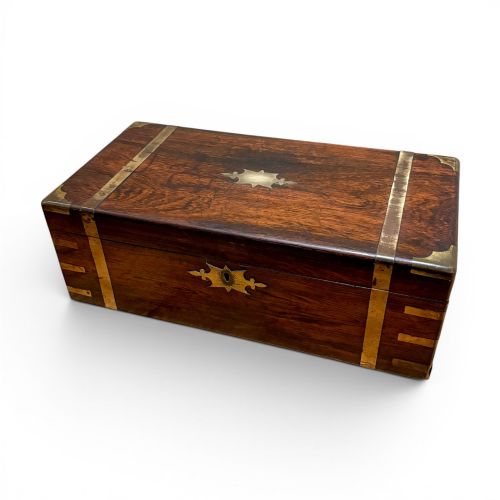
A dark rosewood work box brings together dense tropical timber and fitted internal compartments designed for nineteenth-century needlework or correspondence.
Dark Rosewood Work Box
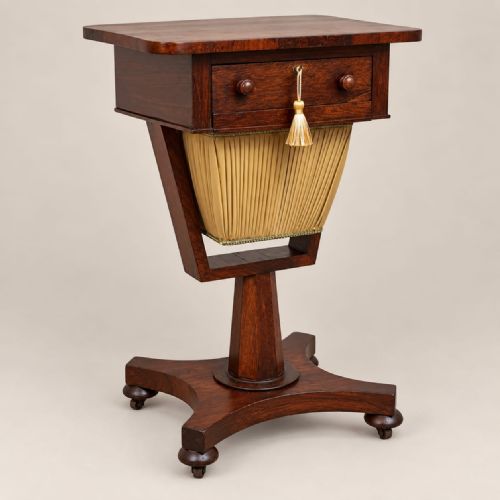
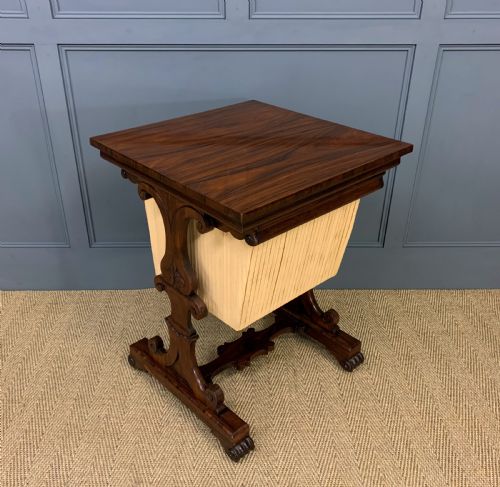
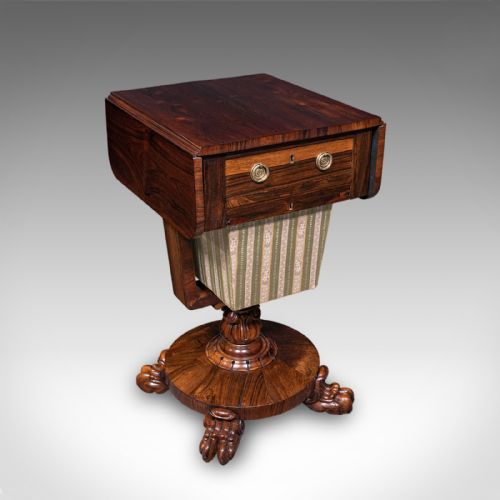
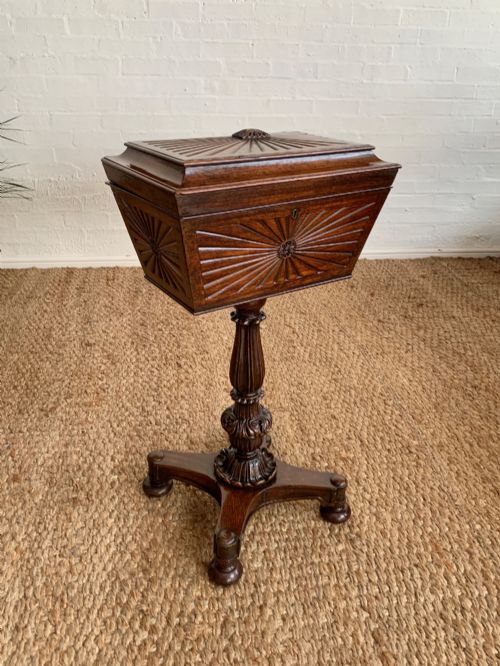
Buyers will encounter items designated as work tables, sewing tables, writing boxes, and sarcophagus-shaped jewellery boxes. The heavier tables often feature pedestal bases or turned legs, while the smaller boxes display fitted trays and internal compartments for threads and writing tools.
Materials and construction methods
The primary carcase construction relies upon solid rosewood or rosewood veneers applied to secondary timbers, providing the characteristic deep grain and dark hue. Many pieces incorporate decorative brass binding, brass inlay, or boxwood stringing to accent the exterior surfaces.
Interiors frequently utilise contrasting light woods, silk linings, and mirror glass fitted into the lids of writing slopes and sewing cases. Inlaid work boxes often display mother of pearl or precise wood marquetry depicting floral or geometric motifs.
Listings span the Regency, William IV, and Victorian periods, with materials ranging from solid rosewood and brass to mother of pearl and tortoiseshell.
Distinctions in craftsmanship and design
Quality separates pieces through the precision of the joinery and the complexity of the internal fittings rather than mere surface decoration. Superior items show crisp carving on pedestals, such as sunburst motifs, alongside well-fitted locking mechanisms with working keys.
The refinement of the inlay work, the integrity of the rosewood grain matching, and the original condition of internal silk pockets and velvet writing surfaces distinguish standard production items from workshop pieces associated with makers like Gillows.
Gillows
The Dark Rosewood Work Box Glossary
- Rosewood
- A dense, dark timber prized for its rich grain patterns and durability in nineteenth-century cabinet making. It forms the primary exterior material for the boxes and tables on this page.
- Sarcophagus
- A box shape featuring a stepped, domed lid resembling an ancient stone coffin. This style appears frequently in Victorian and William IV jewellery and work boxes.
- Writing Slope
- A portable desk fitted with a hinged writing surface that angles downward towards the user. These boxes open to reveal inkwell recesses, pen trays, and hidden storage compartments.
- Marquetry
- Decorative patterns formed by fitting small pieces of veneer into a prepared wood ground. Examples on this page employ contrasting timbers to create floral or geometric table tops.
- Teapoy
- A small stand or box originally designed to hold containers of loose tea leaves. Many nineteenth-century examples share similar proportions and internal compartments with sewing work boxes.
Dark Rosewood Work Box: Frequently Asked Questions
What is a work box?
A work box is a portable container designed to hold sewing gear, threads, and small needles. Nineteenth-century versions often include removable trays with partitioned compartments.
Larger variants double as writing slopes or small dressing cases, lined with fabric and fitted with mirrors or inkwells.
How do I date a rosewood box?
Dating relies upon stylistic markers such as Regency curves, William IV carved pedestals, or Victorian brass stringing. The construction of internal trays and lock types also provides chronological clues.
Woods used for secondary framing inside the box help narrow down the period of manufacture.
Were these used for sewing?
Most of these pieces served domestic needlework purposes, holding lace, pins, and yarn. The drop-leaf tables often included suspended fabric bags underneath to catch scraps.
Over time, many adapted to serve as general occasional tables or decorative storage units in parlours.
How do I care for rosewood?
Rosewood benefits from stable indoor humidity and protection from direct sunlight to prevent timber fading. Occasional application of appropriate furniture wax maintains the finish.
Avoid placing damp items directly onto the polished wooden surfaces or interior silk linings.