

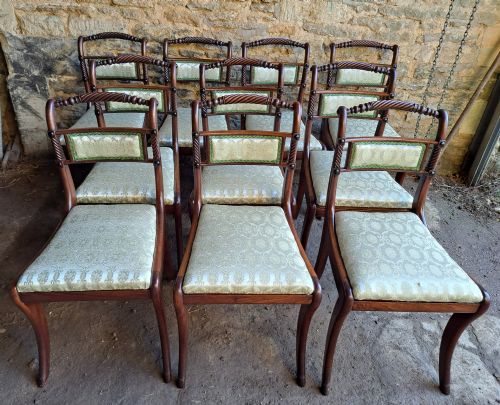


William IV Rosewood Seating
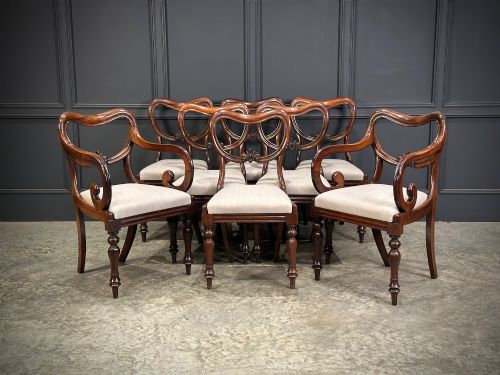
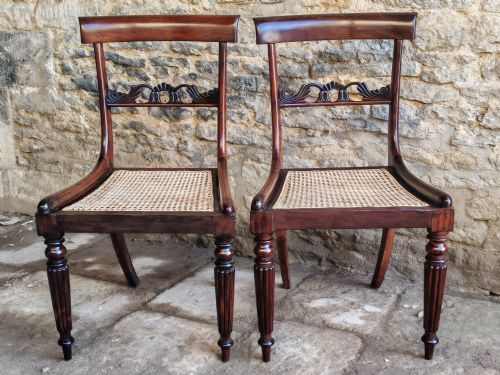
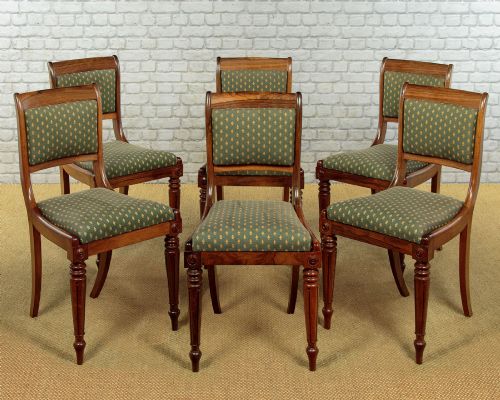
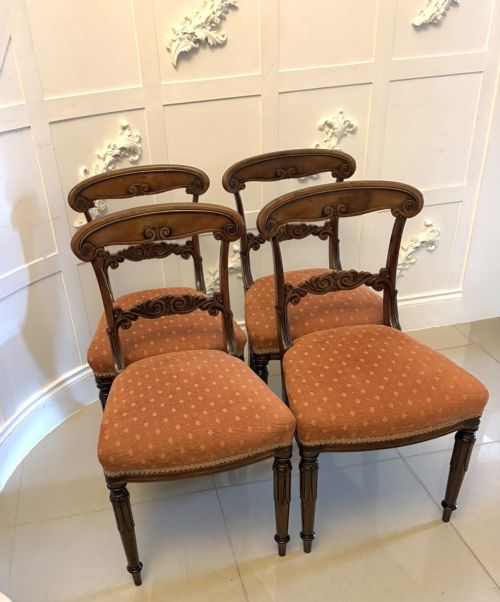
William iv rosewood seating brings substantial timber and deep grain into a room, offering functional chairs and stools built in the nineteenth century.
William IV Rosewood Seating
William iv rosewood seating encompasses dining chairs, armchairs, library chairs, piano stools, and desk chairs originating primarily from the nineteenth century. Buyers seeking this phrase encounter sturdy timber frames shaped by Regency, late Regency, and William IV styles.
Sets of dining chairs appear frequently alongside single armchairs and music stools. The pieces span the 1800s, reflecting the cabinet-making practices of the period through robust forms and dark woods.
How they were made
Makers utilised dense rosewood for frames, often enriched with carved details and brass mounts. Seats incorporated cane, leather, velvet, silk, and upholstery fabric to provide comfort.
Construction methods included adjustable mechanisms on piano stools and X-framed supports on stools. Simulated rosewood surfaces also appear alongside solid timber work.
William IV Rosewood Seating Retail Price Guide 2026
Typical asking prices for william iv rosewood seating among the pieces listed under this phrase on Sellingantiques today, from the lower quarter to the upper quarter. They describe what is for sale here now, not the wider market.
Listings feature 19th-century dining chairs, armchairs, and piano stools utilising rosewood, brass, cane, leather, and velvet.
What varies in quality
The degree of carved detail and the selection of timber grain define the upper tier of these pieces. Sets of chairs matched in timber and form command greater attention than assembled groups.
Mechanical elements on adjustable stools and the preservation of original cane or upholstery influence the standing of individual examples.
Gillows
The William IV Rosewood Seating Glossary
- Rosewood
- A dense, dark timber featuring pronounced grain patterns, utilised extensively for nineteenth-century furniture. It provides a heavy and durable foundation for seating.
- Bergère
- An enclosed upholstered armchair with a wooden frame, often featuring cane panels to the back and sides. This form offers a lighter aesthetic within heavy timber frameworks.
- Piano stool
- An adjustable seat designed for keyboard players, frequently featuring a rising mechanism. Nineteenth-century versions often include swivel seats supported on pillar bases.
- Simulated rosewood
- Painted or stained timber treated to imitate the grain and colour of genuine rosewood. It allowed makers to achieve an expensive look using alternative woods.
- X-framed
- A furniture base constructed from intersecting members forming an X shape. This structural arrangement supports stools and chairs with architectural stability.
William IV Rosewood Seating: Frequently Asked Questions
What periods do these pieces date from?
The listings span the nineteenth century, with specific examples originating from the Regency period, the William IV era, and Victorian times.
Most items cluster around the 1825 to 1835 window, reflecting the prevailing styles of those decades.
How were piano stools used?
Piano stools provided an adjustable seat for musicians practising or performing at keyboard instruments in nineteenth-century drawing rooms.
Many incorporated rising mechanisms to allow players to alter their height easily while seated.
How do I live with rosewood seating?
Rosewood seating requires placement away from direct heat sources and strong sunlight to protect the deep timber grain and prevent finish degradation.
Regular gentle dusting maintains the polished surface, while sturdy frame construction suits everyday use in reception rooms.
What is the difference between dining chairs and library chairs?
Dining chairs are proportioned for upright seating around a table, featuring straight legs and supportive backs designed for meals.
Library chairs offer wider, more relaxed proportions with armrests, built for reading and prolonged comfort in studies.