

William IV Mahogany Seating
William iv mahogany seating brings solid timber and confident turnings into the dining room or hall.
William IV Mahogany Seating
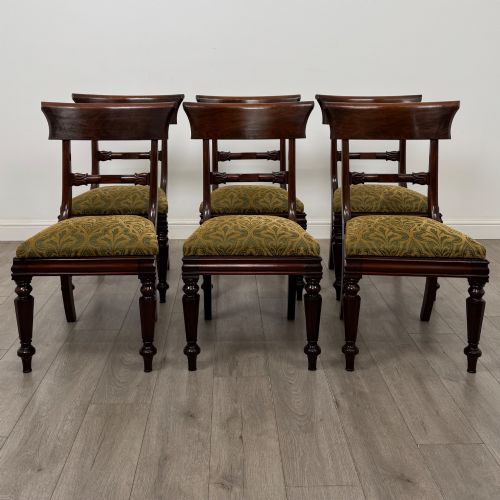
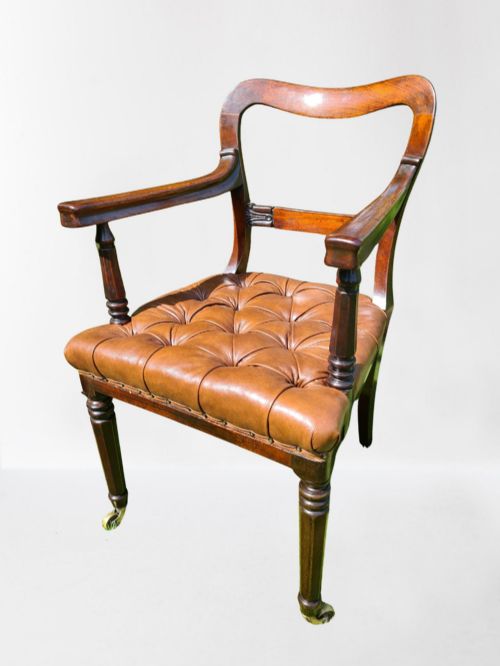
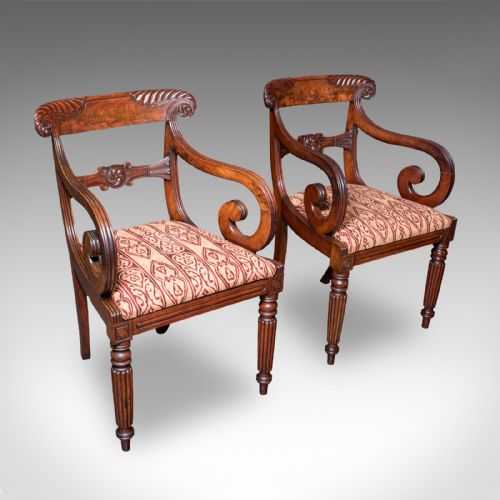
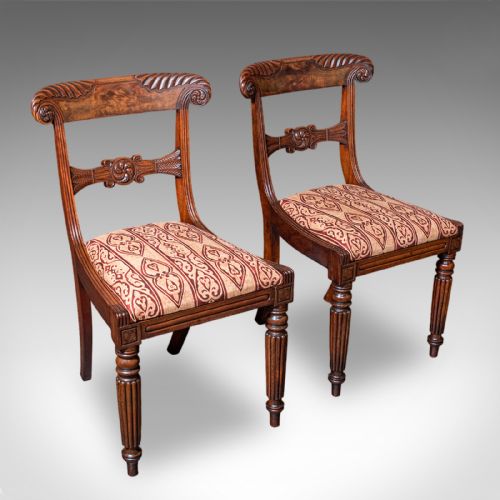
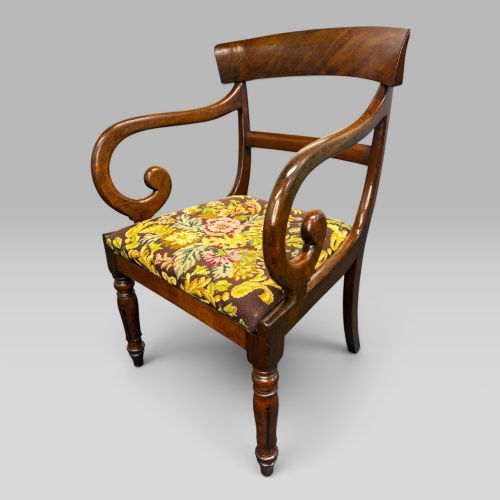
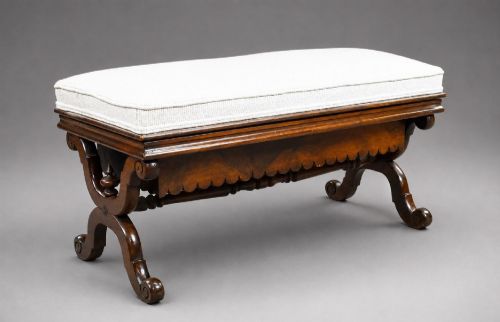
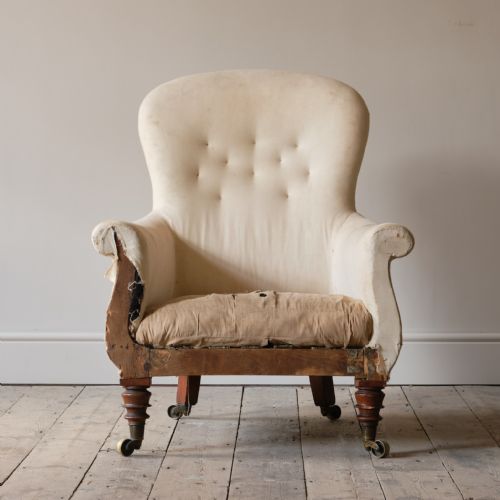
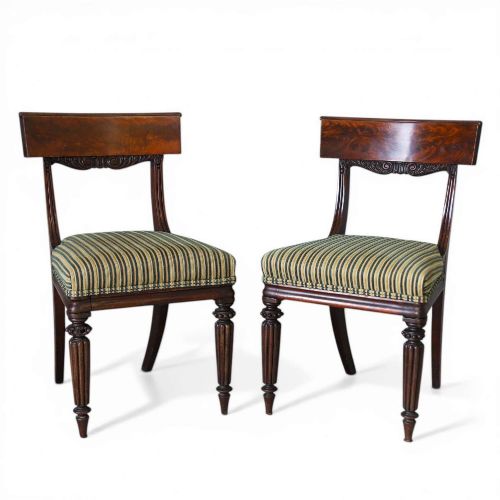
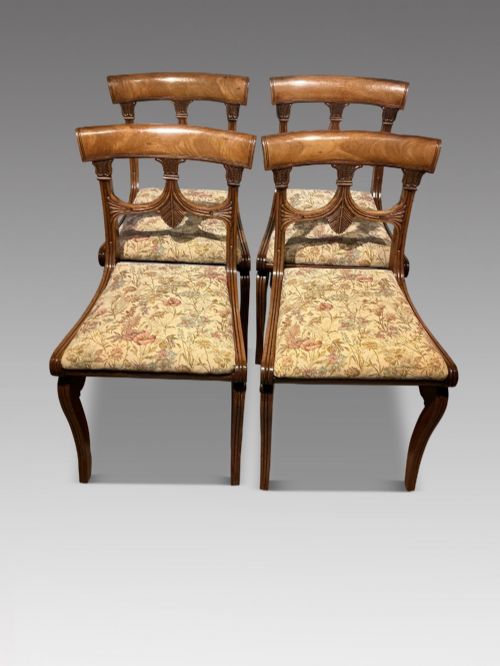
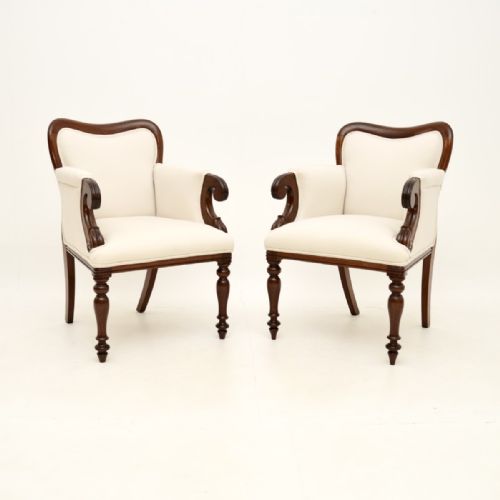
William iv mahogany seating covers dining chairs, armchairs, hall chairs, and stools produced primarily during the nineteenth century. These pieces bridge the transition between late regency restraint and early victorian elaboration, reflecting the robust proportions typical of the period.
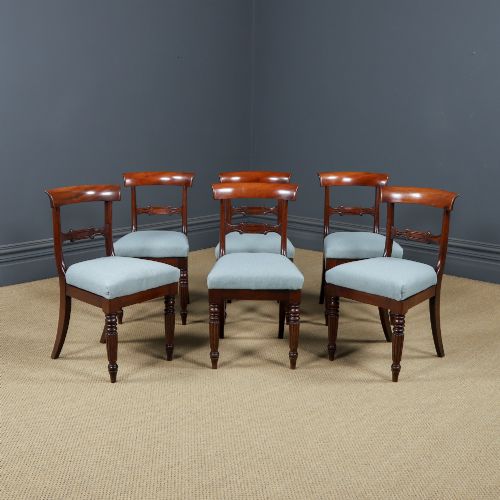
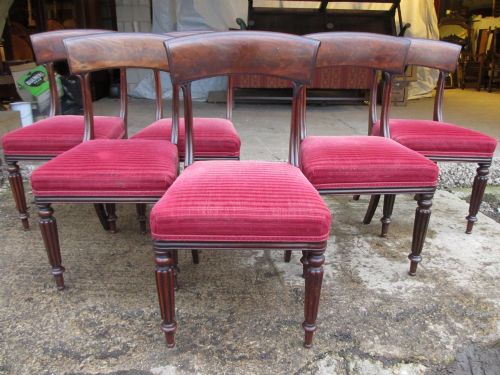
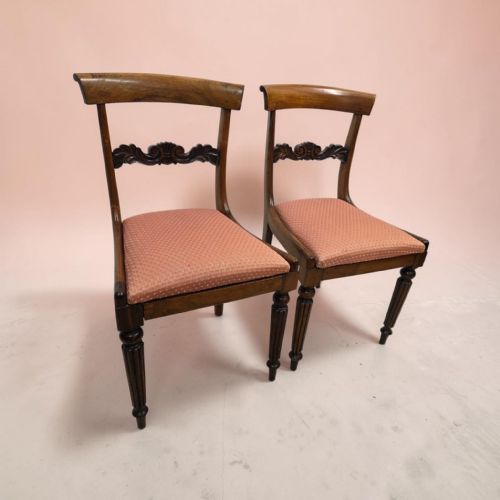
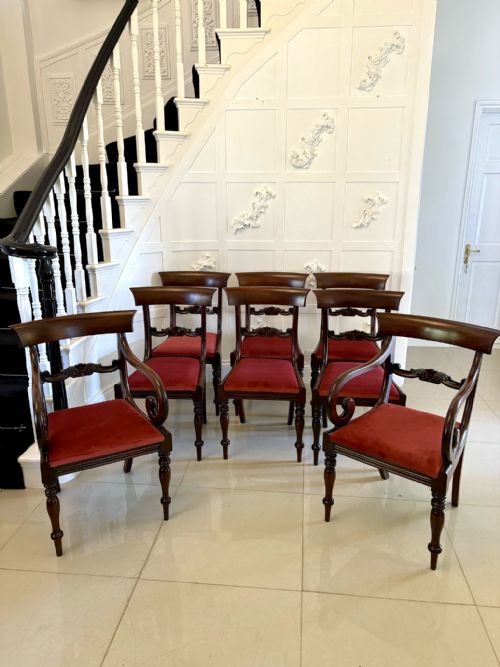
Sets of dining chairs form the largest share of available seating, often featuring bar backs or curved crest rails. Single pieces like hall chairs, desk chairs, and footstools also appear frequently alongside larger sets.
Origins span English workshops, with occasional Scottish examples noted among larger dining sets. The recurring presence of mahogany defines the visual consistency across these diverse seating forms.
Materials and construction
Solid mahogany provides the structural framework for these chairs and stools, selected for its dense grain and deep colour. Joinery relies on traditional mortise and tenon construction to sustain daily use.
Upholstered elements utilise materials such as leather, velvet, fabric, and kilim coverings secured over padded seats. Brass accents appear on specific items like revolving piano stools and castors.
Listings feature nineteen-century mahogany seating alongside nineteenth-century variants, incorporating brass, leather, and fabric upholstery.
Distinctions in construction and finish
Subtlety in carved detail and timber selection separates standard seating from finer examples. Grain alignment across prominent crest rails and the crispness of turned legs indicate superior craftsmanship.
Originality of components and the integrity of the frame dictate overall standing. Re-glued joints or replaced structural members alter the baseline quality of an individual chair.
Gillows·Minter
The William IV Mahogany Seating Glossary
- Bar back
- A horizontal top rail shaped like a bar, often seen on dining chairs from this era. This design provides robust lumbar support.
- Carver chair
- An armchair designed for the head of a dining table. These pieces feature supportive arms matching the dining chairs.
- Hall chair
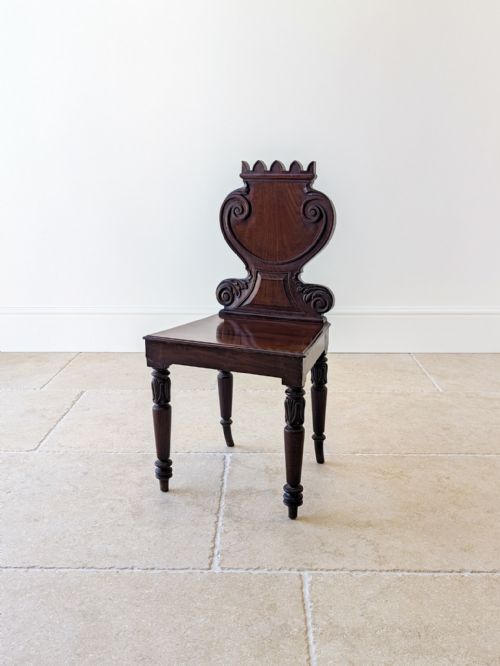
- A rigid wooden seat intended for an entrance hall rather than long dining sessions. They usually lack upholstery and display carved crests.
- Metamorphic
- Describing furniture that transforms for different functions, such as a child's high chair converting into a low seat. Ingenious mechanisms permit this dual purpose.
- Kilim
- A flat-woven textile utilised for upholstery on footstools and low seats. These geometric fabrics introduce pattern to traditional wooden frames.
William IV Mahogany Seating: Frequently Asked Questions
How do I identify william iv chairs?
Look for heavy mahogany frames, turned or reeded legs, and carved scroll details on the crest rails. These design cues separate the period from lighter eighteenth-century forms.
Proportions tend to be heavier and more grounded, reflecting the transition towards mid-nineteenth-century tastes.
Are dining sets sturdy enough for daily use?
Solid mahogany frames built with traditional joinery remain remarkably robust. Most sets tolerate regular family dining provided joints stay secure.
Periodic checks by a professional keep the internal framework stable over decades of service.
What is a hall chair used for?
Hall chairs served as functional seating in grand entrances where guests waited briefly. Their solid wooden construction discouraged lingering.
Today they function effectively as sculptural accent pieces in narrow corridors or bedrooms.
Can I mix different chair styles around a table?
Pairing carvers at the table ends with simpler side chairs along the sides reflects historical dining arrangements. Matching wood tones helps unify mixed groupings.
Consistency in timber colour matters more than exact uniformity in minor carved details.