



William IV Elbow Chairs
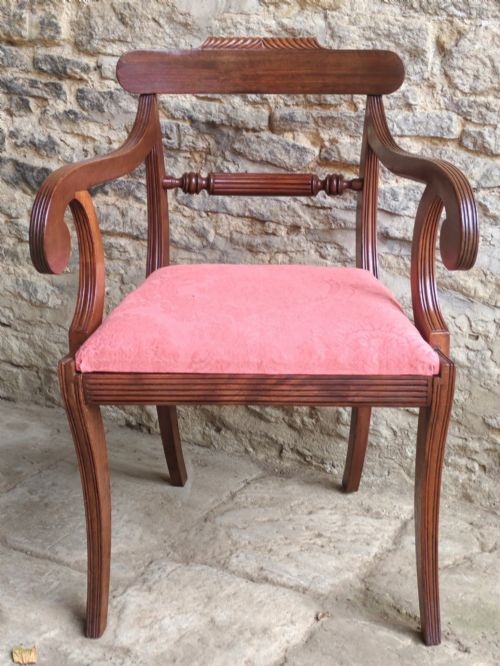
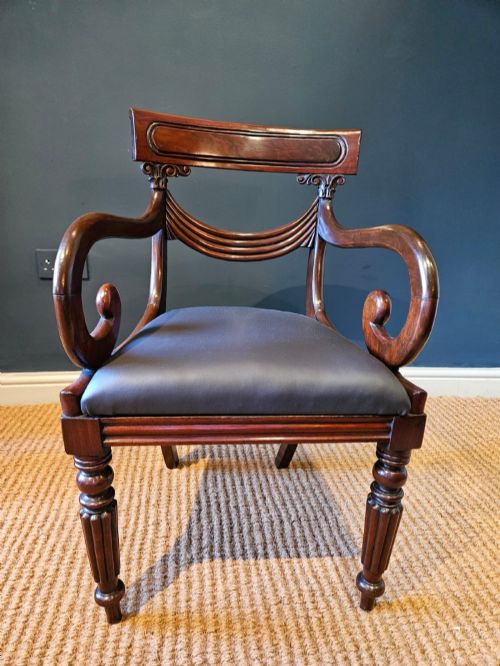
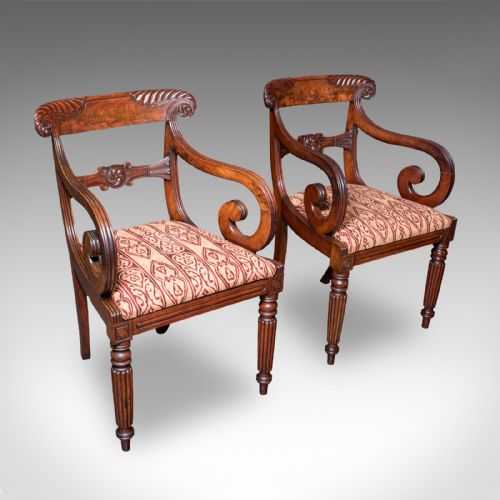
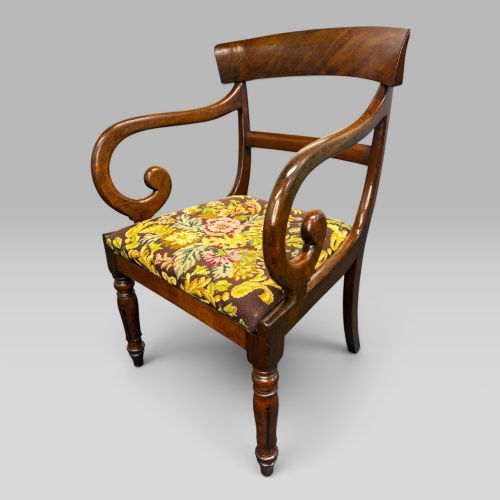
William IV elbow chairs bring substantial timber and confident scroll arms to a room, offering sturdy comfort and classic seating.
William IV Elbow Chairs
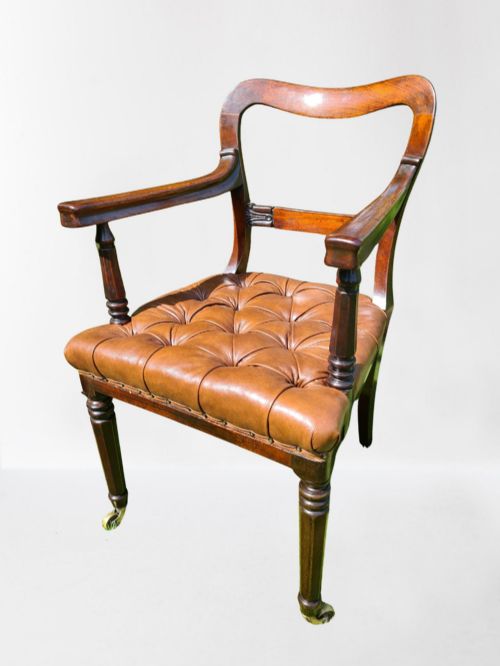
William IV elbow chairs form a distinctive group of seating designed primarily during the nineteenth century, bridging Regency elegance and early Victorian solidity. Buyers searching for william iv elbow chairs generally encounter robust carvers, armchairs, and desk chairs intended for dining rooms, libraries, and morning rooms.
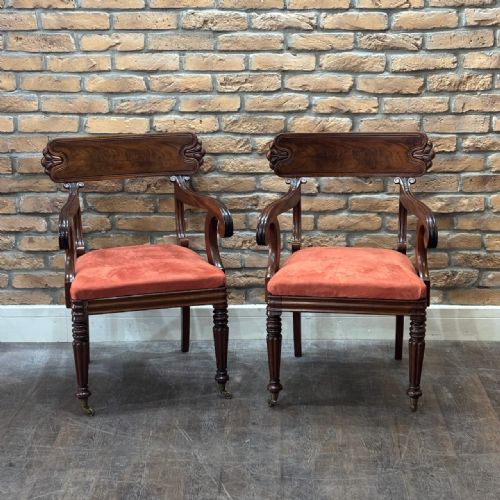
The pieces appearing in these collections predominantly showcase mahogany and rosewood construction, frequently paired with upholstered seats in fabric, leather, velvet, or tapestry. Many examples survive in pairs, functioning well as carvers at the ends of a dining table or as standalone library armchairs.
How they were made
Cabinetmakers constructed william iv elbow chairs using dense timbers such as mahogany and rosewood, often turning and carving the wood to form scroll arms and robust frames. Simulated rosewood surfaces also appear, offering a grained appearance through painted or treated finishes.
Seating support relied on traditional upholstery methods using fabric, leather, velvet, or tapestry. Metal components like brass sometimes appeared in castors or structural fittings to complete the design.
William IV Elbow Chairs Retail Price Guide 2026
Typical asking prices for william iv elbow chairs among the pieces listed under this phrase on Sellingantiques today, from the lower quarter to the upper quarter. They describe what is for sale here now, not the wider market.
These sturdy elbow chairs provide reliable arm support for anyone wishing to ponder nineteenth-century upholstery trends in comfort.
What varies in quality
The standard of carving and timber selection dictates the distinction between standard room seating and finer examples. Crisp execution of scroll arms and well-figured mahogany grain elevate the visual weight of the chair.
The integrity of the frame construction and the quality of the chosen upholstery materials, whether leather, velvet, or tapestry, determine how well the chair retains its original character through regular use.
The William IV Elbow Chairs Glossary
- Elbow chair
- An armchair featuring supports for the arms, often used alongside matching dining chairs as a carver. These pieces provide broader seating than standard side chairs.
- Carver chair
- An alternative term for an elbow chair, historically placed at the head of a dining table for the host. They share matching design traits with the surrounding dining chairs.
- Scroll arm
- An armrest shaped into a tight, inward-curling scroll, characteristic of nineteenth-century seating design. This feature adds weight and visual interest to the frame.
- Simulated rosewood
- A painted or stained finish applied to a secondary timber to imitate the rich grain of genuine rosewood. This technique provided an alternative look during the period.
William IV Elbow Chairs: Frequently Asked Questions
What is a william iv elbow chair?
A william iv elbow chair is a nineteenth-century timber seat featuring supportive armrests, designed for dining rooms, studies, and reception spaces. These pieces typically exhibit solid mahogany or rosewood frames with prominent scroll details.
They serve practical roles as carvers at dining tables or as standalone armchairs in libraries and morning rooms. Their sturdy proportions distinguish them from lighter Regency seating.
How do I use them at home?
These chairs find natural placement as host seating at either end of a dining table, pairing with simpler side chairs. They also function well as desk chairs or accent seating in hallways and bedrooms.
Their robust timber frames and upholstered seats in leather, velvet, or fabric provide reliable daily support while adding traditional character to a room.
How do I tell periods apart?
Distinguishing periods involves examining the heaviness of the timber and the style of the carving. Pieces from this era often display bolder scroll arms and heavier pedestals than lighter Georgian or Regency designs.
Looking at the wood selection, such as solid mahogany or rosewood, helps align the piece with nineteenth-century cabinetmaking standards.
What materials were used?
Makers relied heavily on dense hardwoods like mahogany and rosewood to construct the frames of these chairs. Brass fittings and simulated rosewood finishes also appear on selected examples.
Seats were finished with various textiles including leather, velvet, tapestry, and patterned fabric to ensure comfort alongside the structural timber.