

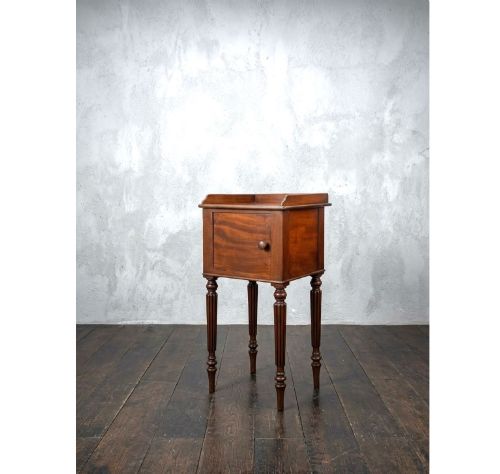
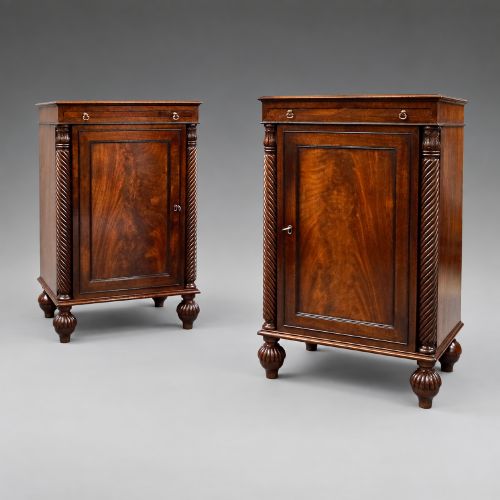
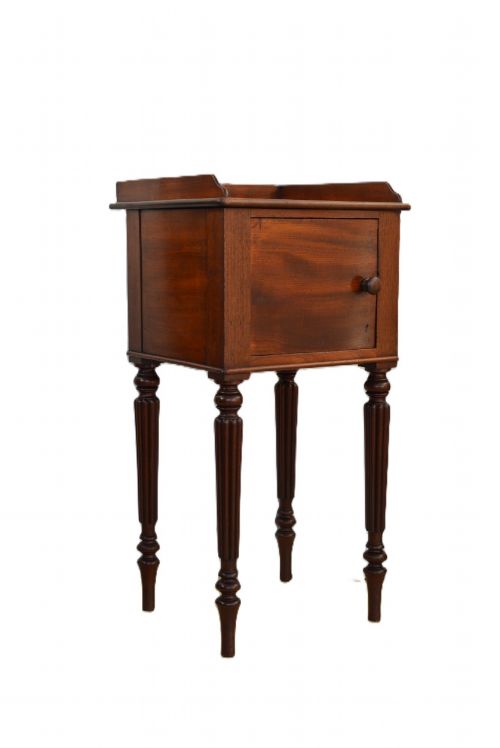


William IV Bedside Cupboard
A william iv bedside cupboard brings robust timber and quiet utility to a room, offering a sturdy surface for a lamp and a discreet interior for nighttime essentials.
William IV Bedside Cupboard
When searching for a william iv bedside cupboard, collectors look at sturdy small-scale furniture designed to stand beside a bed or in a corner. These pieces span the nineteenth century, with specific examples appearing from around eighteen hundred and the grand regency period.
Makers and workshops of the period produced these cabinets with single doors or cylindrical bodies, sometimes incorporating faux marble or fabric details. Their compact proportions make them adaptable additions to modern interiors as well as traditional rooms.
How they were made
Cabinet makers relied heavily on dense hardwoods such as mahogany and flame mahogany veneer, often building secondary carcases in pine. Rosewood and figured elm also appear, showing the variety of timber accessible to nineteenth-century workshops.
Construction techniques combined solid framing with finely matched veneers to create striking figure patterns on doors and panels. Brass hardware, including handles and fittings, provided functional accents and structural support.
William IV Bedside Cupboard Retail Price Guide 2026
Typical asking prices for william iv bedside cupboard among the pieces listed under this phrase on Sellingantiques today, from the lower quarter to the upper quarter. They describe what is for sale here now, not the wider market.
Listings feature woods including mahogany, flame mahogany veneer, rosewood, elm, and pine, alongside brass and fabric elements.
What varies in quality
Quality rests in the selection of the timber and the precision of the veneer work across the door panels and top surface. Flame mahogany with deep natural figuring elevates a simple bedside cabinet into a more ambitious piece of furniture.
The architectural detailing, such as reeded legs or turned pillars, separates standard utility items from finer cabinetwork produced in the manner of established workshops like Gillows.
Gillows
The William IV Bedside Cupboard Glossary
- Pot cupboard
- A small enclosed cabinet originally designed to house a chamber pot. These practical items form a large portion of the bedside cabinets available today.
- Pedestal cabinet
- A tall, single-pedestal freestanding cupboard with a door opening to reveal internal shelving. They offer a compact footprint combined with useful storage capacity.
- Flame mahogany
- A timber cut from the branching fork of a mahogany tree to produce a dramatic, flickering grain pattern. Cabinet makers reserved this veneer for prominent exterior surfaces.
- Reeded legs
- Cylindrical supports carved with parallel convex mouldings running vertically. This decorative feature reflects classical architectural influences popular during the regency and william iv periods.
- Figured wood
- Timber possessing an irregular growth pattern that creates natural decorative designs on the surface. Grain variations add distinct character to individual cabinets.
William IV Bedside Cupboard: Frequently Asked Questions
What is a pot cupboard?
A pot cupboard is a small nineteenth-century cabinet designed specifically to conceal a chamber pot behind a single door. Over time, their practical proportions have made them ideal for modern bedside use.
These pieces typically feature an enclosed lower section and a flat top surface. Collectors prize them for their combination of compact size and discreet storage.
How do I spot flame mahogany?
Flame mahogany displays a distinctive, fiery grain pattern that resembles flickering flames or feathers. Cabinet makers achieved this effect by slicing veneer from the point where a branch joins the main tree trunk.
This decorative veneer appears on the primary exterior surfaces of finer nineteenth-century cabinets. It creates a rich visual depth that distinguishes high-quality pieces from plain timber equivalents.
Can I use these cabinets today?
These cabinets serve admirably as contemporary bedside tables or small storage units in a living space. Their enclosed interiors easily accommodate modern items while concealing clutter.
The sturdy construction of nineteenth-century mahogany and rosewood ensures they withstand daily use. Placing a lamp or a book on the top surface integrates them naturally into daily routines.
How do I tell styles apart?
William iv pieces generally feature heavier, bolder proportions with robust architectural details like reeded legs or turned pillars. Regency and grand regency items lean towards classical restraint and refined, leaner lines.
Victorian examples often introduce darker finishes or alternative veneering techniques. Comparing the weight of the timber and the style of the base helps determine the likely period of manufacture.