






Whytock and Reid Table
These whytock and reid table examples are Edinburgh-made pieces of Scottish cabinet-making tradition that bring exceptional joinery and historical revival styling into a home.
Whytock and Reid Table
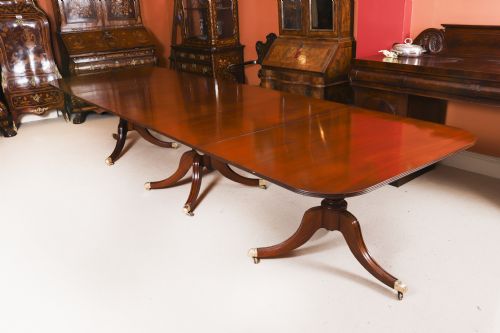
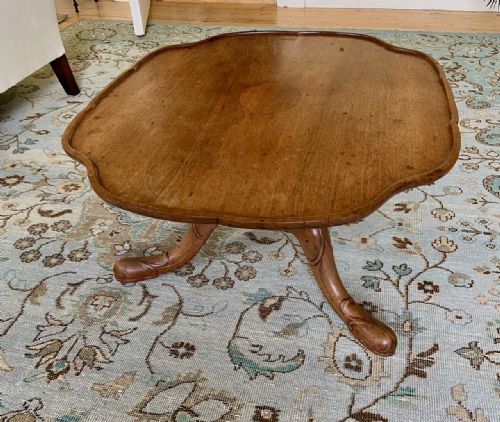
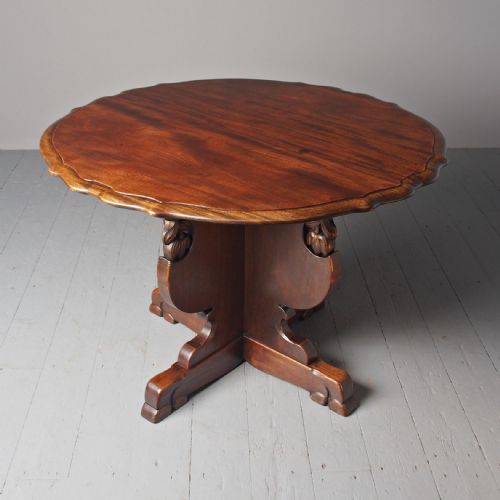
A whytock and reid table represents the output of the Edinburgh firm through various revival styles and traditional Scottish cabinet-making. Buyers encounter forms ranging from large triple pillar dining tables and partners desks to compact coffee tables and side tables.
The selection spans periods from 1900 to 1930, capturing Edwardian pieces alongside later manifestations of Georgian, Regency, and Queen Anne revivals. Side tables and serving tables appear frequently in the record, alongside dining furniture and library desks.
Originating predominantly from Edinburgh workshops, these tables often incorporate specific design influences such as the Lorimer design or Spanish and Chinoiserie aesthetics. They suit domestic and formal interiors that require robust construction paired with refined historicism.
Materials and construction
Mahogany and walnut form the primary structural timbers, frequently enhanced by burr walnut veneers and crossbanding to create decorative surface patterns. Padouk and oak also appear in specific regional commissions and utility pieces.
Brass hardware, leather inserts, and gold leaf provide traditional detailing on desks and writing tables, while glass and polished wood surfaces finish the tops. Joinery relies on traditional framing and pillar construction to support extended dining tables and heavy serving furniture.
Whytock and Reid Table Retail Price Guide 2026
Typical asking prices for whytock and reid table among the pieces listed under this phrase on Sellingantiques today, from the lower quarter to the upper quarter. They describe what is for sale here now, not the wider market.
Even a humble stool manages to get dressed up in full Chinoiserie regalia.
Assessing quality
Quality in these pieces rests upon the selection of timber veneers, such as figured mahogany or burr walnut, and the precision of crossbanding. Superior examples display balanced grain patterns and meticulous hand-finishing across every visible surface.
Whytock and Reid
The Whytock and Reid Table Glossary
- Crossbanding
- A decorative border applied to table tops where the grain runs perpendicular to the main surface. This technique frames the primary timber and demonstrates advanced cabinet-making skill.
- Partners desk
- A large double-sided writing table designed for two people to work opposite each other. These incorporate drawers and cupboards accessible from both sides.
- Silver table
- A small display or serving table historically used for holding silver tea services. They often feature raised edges or galleries to secure items.
- Refectory table
- A long dining table traditionally associated with communal halls. Whytock and Reid interpretations adapt this medieval form with refined domestic proportions.
- Triple pillar dining table
- An extending dining table supported by three separate pedestals with branching legs. This construction allows the table to accommodate significant length while maintaining stability.
Whytock and Reid Table: Frequently Asked Questions
What periods do these tables represent?
The pieces span the early decades of the twentieth century, specifically clustering around 1900, 1920, and 1930. This era encompasses late Edwardian production through the interwar period.
Cabinet-makers of this time drew heavily upon earlier historic vocabularies, producing revivals of Queen Anne, Regency, and Georgian styles alongside contemporary Arts and Crafts and Art Deco touches.
How do I identify a Whytock and Reid piece?
Identification relies on the distinctive combination of Edinburgh provenance, high-grade timber selection like walnut and mahogany, and adherence to Scottish traditional or revival forms. Many pieces reflect specific architectural collaborations, such as the Lorimer design aesthetic.
Construction methods follow traditional workshop practices rather than mass-produced manufacturing. Examining the secondary woods and interior drawer framing often clarifies the origin.
Where were these tables made?
The firm operated primarily from Edinburgh, establishing a reputation for high-end interior furnishings and bespoke cabinet-making. Their workshop output supplied large Scottish houses and institutional clients alike.
Pieces designed in this Scottish capital context frequently absorbed local architectural traditions while maintaining a dialogue with London and continental design movements.
How should I care for a walnut surface?
Walnut and mahogany surfaces require consistent indoor humidity levels to prevent timber movement and veneer lifting. Regular dusting with a soft, dry cloth preserves the polished finish without building up greasy residues.
Direct sunlight can fade rich timber tones over time, so positioning tables away from unshaded windows helps maintain the colour. Occasional waxing maintains the moisture content of the antique wood.