





White Wall Mirror
A white wall mirror brings scale and reflected light into a room, spanning grand nineteenth century overmantles and smaller painted frames.
White Wall Mirror
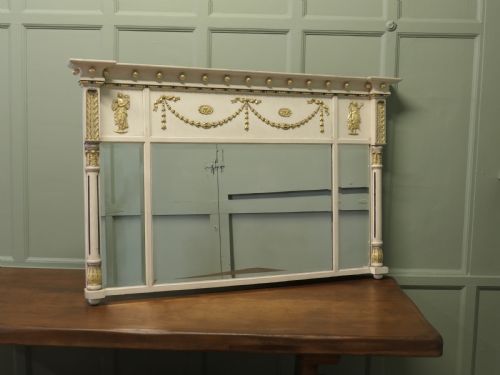
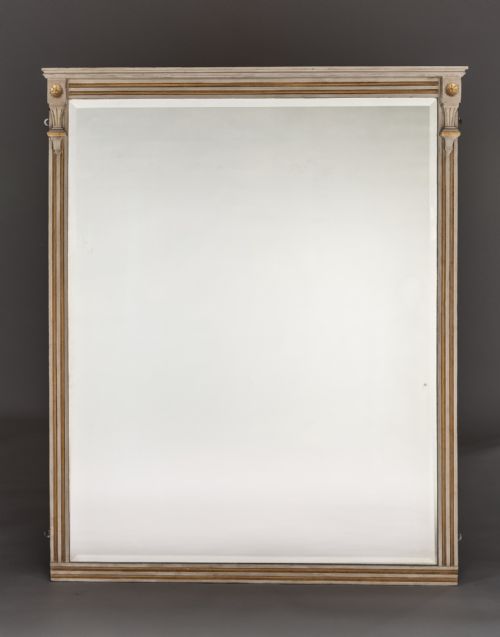
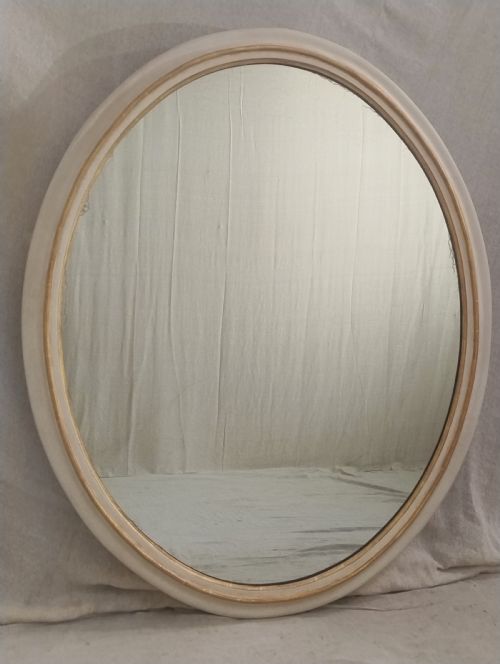
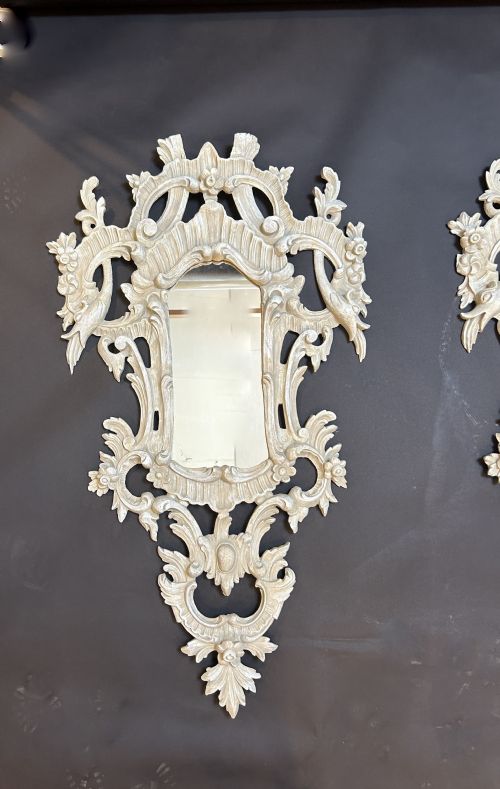
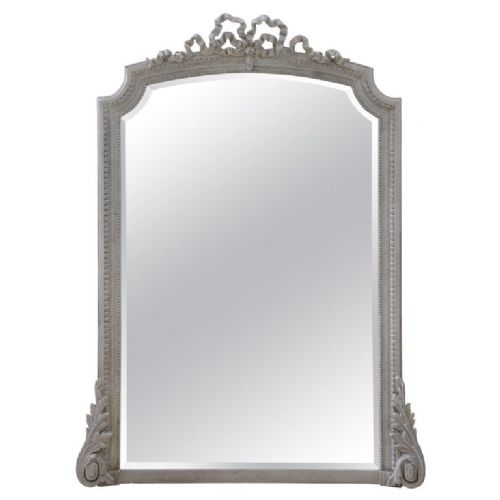
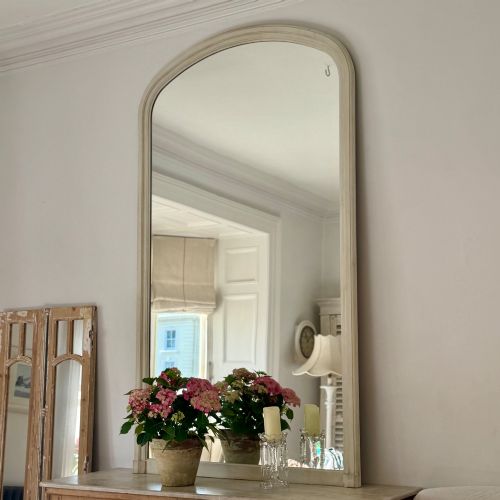
When you search for a white wall mirror, you encounter everything from substantial nineteenth century overmantles designed to sit above a fireplace to smaller oval and round forms intended for halls and reception rooms. These pieces often combine white painted surfaces with parcel gilt details, showing the influence of Regency, Victorian, and French rococo design.
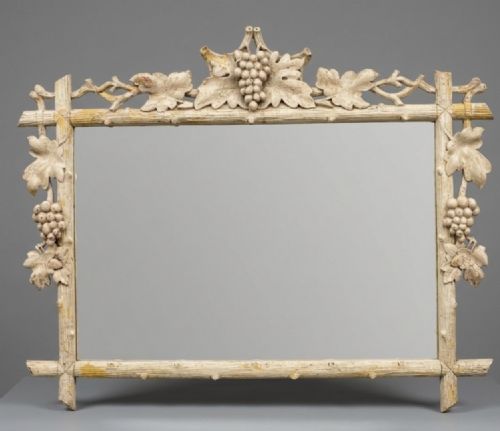
The selection ranges from architectural arched frames and multi-plate marginal mirrors to rustic carved wood creations and classical trumeau panels. Many items date from the nineteenth century, though eighteenth century Italian examples and early twentieth century pieces also appear regularly.
How they were made
Frames are constructed from carved wood or built up using gesso over a wooden base, providing the smooth or textured ground necessary for paint and gilding. Artisans applied layers of white paint, often distressed by time, alongside gold leaf or parcel gilt highlights to accentuate carved mouldings, columns, and floral motifs.
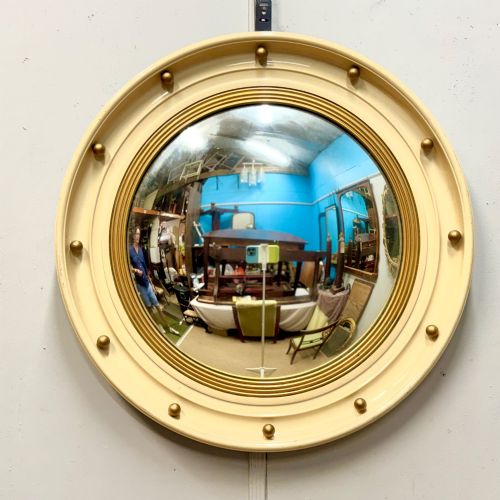
Mirrors utilise glass plates appropriate to their period, including convex circular glasses for butlers mirrors and triptych or triple plates for wide overmantles. Original mirror plates frequently display natural foxing and age spots that evidence their long history.
Convex butlers mirrors let servants monitor entire dining rooms with a single glance while polishing silver out of sight.
What varies in quality
The depth and crispness of the wood carving separate standard items from superior works, particularly on grand overmantles where acanthus leaves, columns, and shaped tops demand skilled hand manipulation. Inferior mouldings often rely on heavy, uniform composition ornament rather than detailed individual carving.
The integrity of the original surface finish matters significantly, distinguishing pieces retaining their authentic layered paint and gold leaf from those subject to unsympathetic modern re-painting. Original mirror glass plates with genuine bevels and soft oxidation add substantially to the character of the piece.
The White Wall Mirror Glossary
- Overmantle mirror
- A large mirror specifically designed to hang on the wall directly above a fireplace mantelpiece. These pieces often feature wide horizontal formats to match the width of the hearth below.
- Parcel gilt
- A decorative technique where specific raised portions of a frame are gilded with gold leaf while the remaining surface is painted white. This creates a contrasting two-tone effect.
- Gesso
- A plaster-like mixture applied to a wooden frame base to create a smooth surface for painting or gilding. Artisans model and carve intricate details directly into this layer.
- Trumeau mirror
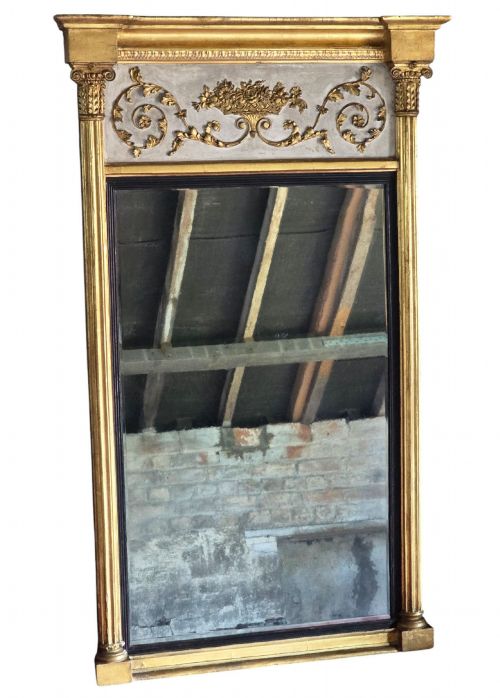
- A decorative wall mirror combined with a painted panel or piece of artwork above the glass. Originating in French interior design, these tall vertical pieces fit between windows or doors.
- Convex glass
- A curved, outwardly projecting mirror glass used in round butlers mirrors to widen the field of vision in a room. This optical form distorts reflections slightly at the edges.
- Marginal mirror
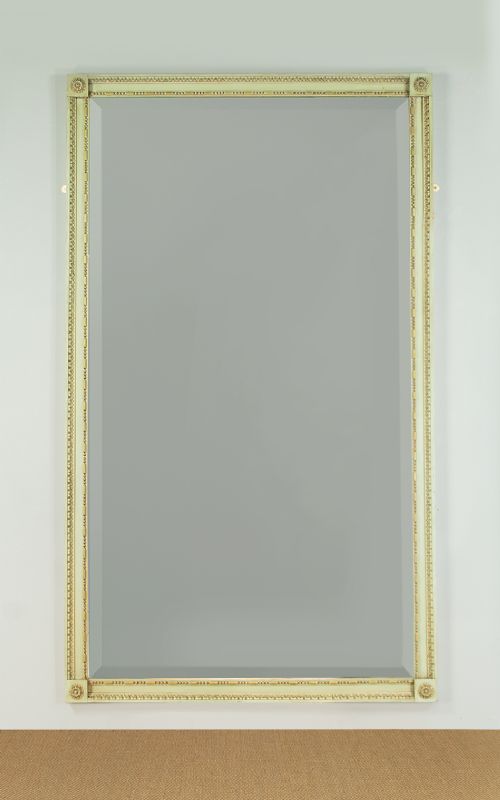
- A mirror featuring a central plate surrounded by smaller separate glass sections fitted at the borders. These narrow outer segments are often bevelled and secured with decorative rosettes.
White Wall Mirror: Frequently Asked Questions
How do I hang a heavy overmantle mirror safely?
Large overmantle mirrors require substantial weight-bearing fixings secured directly into wall studs or masonry rather than relying on standard picture hooks. Professional installers use heavy-duty mirror brackets or a French cleat system to distribute the load evenly across the frame.
Because these pieces were originally designed to rest partly on a mantelpiece while anchored to the wall, checking the stability of the hanging loops on the reverse is essential before mounting.
What periods do these mirrors come from?
The selection spans from the eighteenth century up through the nineteenth century and into the early twentieth century. Victorian and Regency examples appear frequently alongside French chateau styles and Edwardian pieces.
Stylistic markers such as classical columns, rococo scrolls, and neoclassical symmetry help identify the era of manufacture when documentation is absent.
Should I replace an aged mirror plate?
Original mirror plates displaying foxing, light oxidation, and dark spots are generally preserved by collectors because they confirm the age and authenticity of the piece. Replacing the glass removes the historical character that defines antique mirrors.
Clear, modern glass is usually only fitted if the original plate has suffered catastrophic breakage or structural failure that prevents proper reflection.
How do I clean a painted and gilded frame?
Dusting gently with a soft, dry ostrich feather duster or a microfibre cloth prevents dirt buildup without harming delicate nineteenth century paint layers. Moisture and chemical cleaning products should be avoided entirely to protect fragile gesso and gold leaf.
Professional conservators should handle any stubborn grime to ensure the historic painted surface remains intact and undisturbed.