
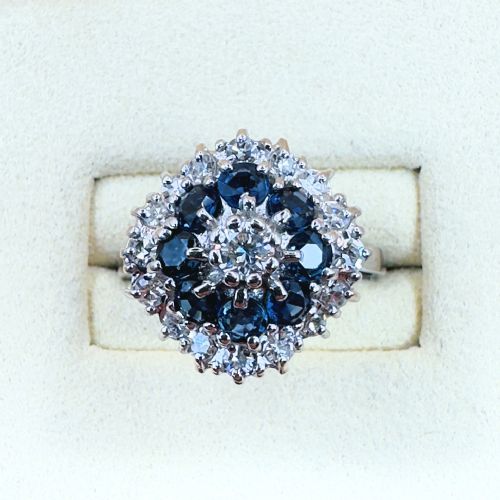


White Sapphire Ring
A white sapphire ring brings bright, durable brilliance and geometric elegance, most commonly found in mid-century or art deco cluster designs from the early twentieth century.

White Sapphire Ring
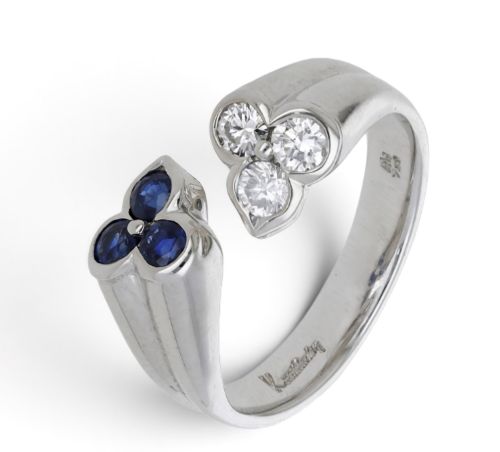
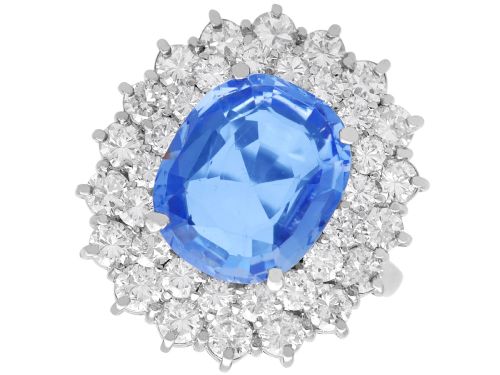
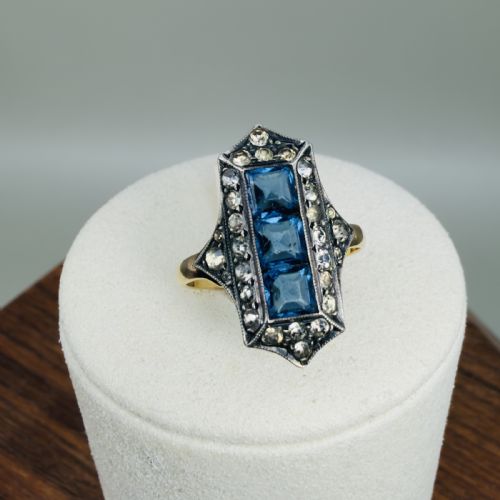
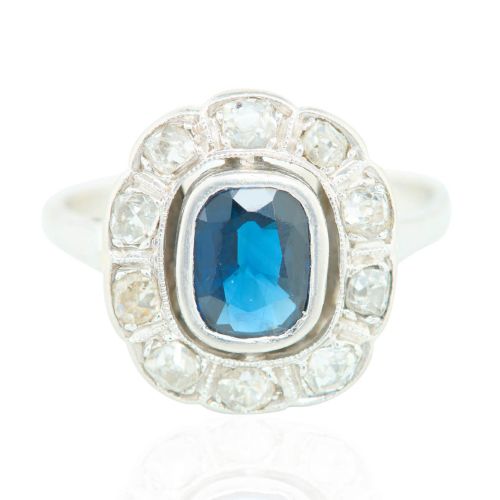
A white sapphire ring offers a colourless, durable alternative to diamond, frequently paired with accent diamonds in clusters, target rings, or solitaire settings. These pieces span from the Edwardian era through the art deco period, the 1950s, and into mid-century designs, showcasing shifts from delicate filigree to bolder cocktail forms.
The dominant examples on this page are clustered rings featuring central sapphires framed by old cut diamonds, alongside clean solitaires and geometric plaque settings. Originating from workshops in Britain, France, and Italy, these rings reflect the changing tastes of the 1920s, 1930s, and 1950s.
How they were made
Goldsmiths utilised 18ct white gold, platinum, and occasionally 9ct gold or silver to construct durable, lightweight settings that would support central corundum stones and surrounding diamonds. Platinum was frequently employed during the art deco period for intricate claw and millegrain settings, securing stones while adding delicate metallic texture.
Gemstones were cut into old cuts, brilliant cuts, calibre cuts, or emerald cuts to maximise light return within tight geometric configurations. Cluster and target settings required precise stone-fitting by hand, arranging concentric circles or floral motifs around the central sapphire.
Listings feature 18ct white gold and platinum predominantly, alongside archival pieces utilising 9ct gold and silver settings across the 19th century and mid-century periods.
What varies in quality
Quality rests upon the stone's optical clarity, natural origin, and the precision of the goldsmith's handwork within the setting. Top-tier examples exhibit well-matched diamond accents, crisp calibre cutting, and minimal inclusions in the central sapphire.
The integrity of the metalwork also distinguishes pieces; hand-formed platinum claws, crisp millegrain edges, and solid gauge shanks that have resisted thinning over decades indicate superior original manufacture.
The White Sapphire Ring Glossary
- Cluster ring
- A ring design featuring a central gemstone surrounded by a border of smaller stones, typically diamonds. This layout maximises visual impact and was exceptionally popular during the art deco period.
- Calibre cut
- Gemstones custom-cut into specific geometric shapes to fit tightly together within a channel or bezel. This technique demands high skill to eliminate gaps in the metalwork.
- Millegrain
- A decorative technique consisting of a raised line of tiny beads along the edges of a setting. It softens the metal profile and adds refined texture.
- Old cut
- A precursor to the modern brilliant cut diamond, characterised by a high crown, small table, and deep pavilion. These cuts catch candlelight and low illumination with a distinct, soft sparkle.
- Target ring
- A specific cluster style featuring concentric rings of contrasting gemstones around a central stone, creating a bullseye visual effect. It is a hallmark of art deco design.
White Sapphire Ring: Frequently Asked Questions
How do I care for a white sapphire ring?
Sapphires rank high on the Mohs hardness scale, making them resilient for daily wear, though the surrounding gold or platinum settings still require gentle handling. Clean the piece using warm water, mild soap, and a soft brush to remove oils from beneath the stones.
Avoid harsh chemical cleaners and ultrasonic baths if the ring contains older repairs or softer accent gems. Periodic inspection by a jeweller ensures the claws remain secure.
Are white sapphires natural or treated?
Many vintage white sapphires occur naturally, while some stones from mid-century periods may feature standard historical treatments to enhance clarity. Certification documents often accompany larger carat stones to verify their origin and untreated status.
Examining the stone under magnification reveals natural inclusions that distinguish earth-mined gems from synthetics. Dealers list certified details when laboratory reports are present.
What is the difference between art deco and mid-century rings?
Art deco rings from the 1920s and 1930s lean towards sharp geometric symmetry, platinum settings, and intricate filigree work. The stones are frequently old cut diamonds paired with calibre-cut borders.
Mid-century pieces from the 1950s often display softer floral cluster arrangements or bolder standalone solitaires in 18ct white gold. The profiles became slightly higher and more rounded as manufacturing techniques evolved.