


White Rococo Candle Holders
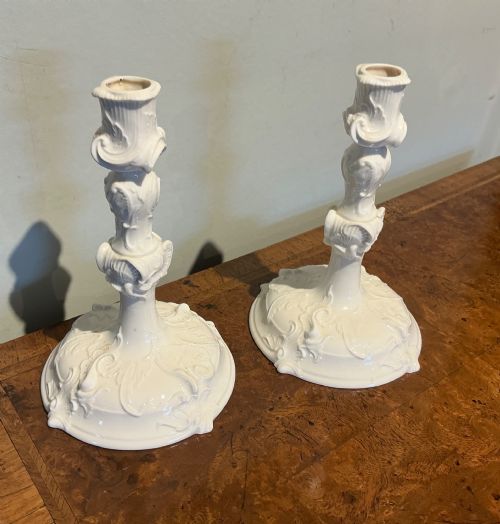
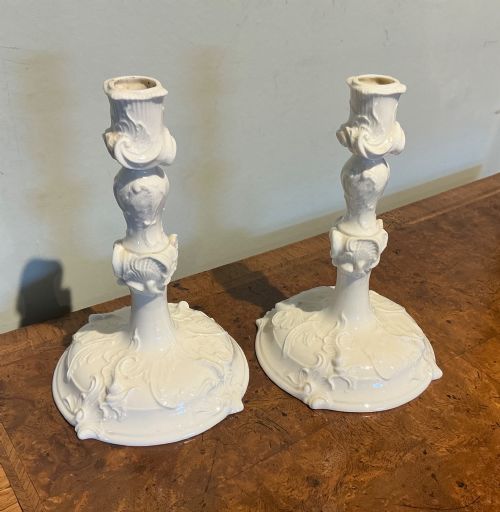
White rococo candle holders bring elaborate flourish and sculptural porcelain or bronze into a room.
White Rococo Candle Holders
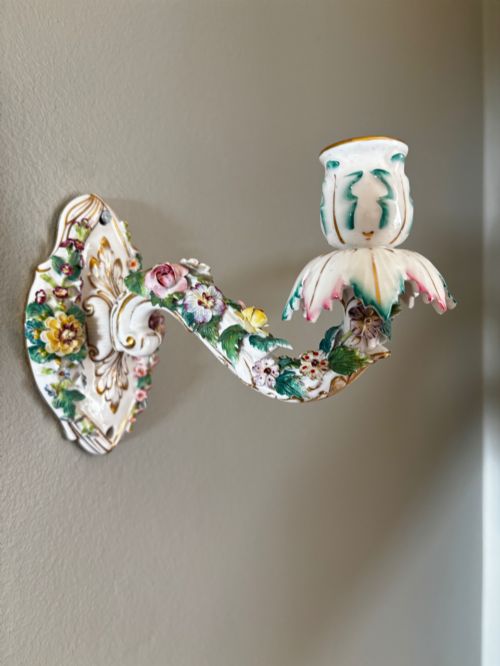
When you search for white rococo candle holders, you are looking at ornate candlesticks, candelabra, wall sconces and chambersticks shaped by asymmetric curves and scrollwork. The examples gathered here span from Georgian porcelain figures to nineteenth-century French bronze and marble designs.
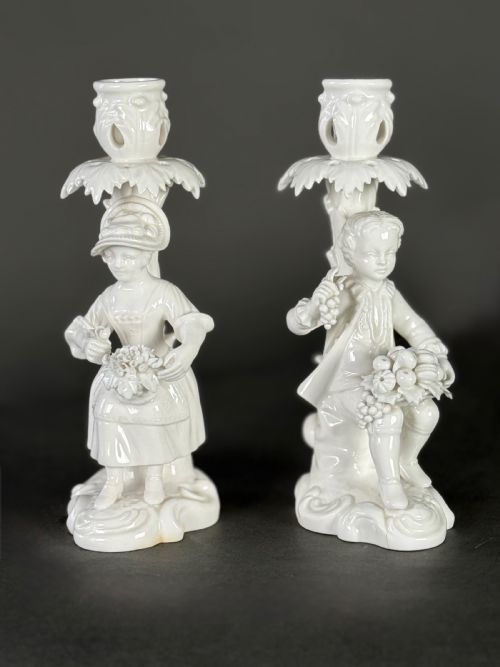
You will frequently meet pairs of porcelain figures, such as shepherdesses, putti and allegorical seasonal figures, modelled alongside candle sockets. These pieces combine functional lighting with the theatrical flair of the rococo revival style.
Origins stretch across English factories like Derby, Chelsea and Minton, alongside continental porcelain houses including Meissen, Nymphenburg, Sitzendorf and Dresden. French gilt bronze and marble sconces and candelabra provide the heavier architectural alternatives.
What varies in quality
The integration of the candle sockets to the main figural body dictates structural integrity, alongside the weight and quality of the underlying marble bases or bronze casting.
Several pieces feature winged putti holding candle sockets aloft as if they carry torches in a miniature procession.
Nymphenburg·Meissen·Derby·Chelsea·Minton·Sitzendorf·Dresden
The White Rococo Candle Holders Glossary
- Blanc de chine
- A French term for white Chinese porcelain, later used to describe unpainted European white glazed figures. It highlights the pure ceramic form without the distraction of polychrome enamels.
- Chamberstick
- A low candlestick fitted with a pan to catch drips and a handle for carrying through a house. They provide portable illumination before the advent of electric lighting.
- Candelabra
- A branched candlestick holding multiple lights from a single base. They offer a grander scale than single sticks.
- Hard-paste porcelain
- A dense, durable ceramic fired at high temperatures using kaolin and petuntse. It resists scratching and takes fine detail well.
- Putto
- A chubby male infant figure, often winged, derived from classical art and frequently appearing in rococo designs. They sit among the scrollwork and candle sockets.
White Rococo Candle Holders: Frequently Asked Questions
How do I date these holders?
Dating relies on factory marks stamped or painted on the base, combined with stylistic cues from the period. Porcelain composition and the style of the bronze casting also indicate the era.
Eighty-year-old or nineteenth-century pieces often display wear patterns on the underside that help confirm their age.
Can I use real candles in them?
Most antique holders accommodate standard taper candles, though sockets can vary slightly in diameter. Drip trays and chambers catch melted wax during use.
Care should be taken to protect fragile porcelain arms and leaf details from heat damage.
How should I clean porcelain holders?
Gentle dusting with a soft brush preserves the delicate modelled leaves and fingers. Water and mild soap should be used sparingly if at all.
Gilt and enamel highlights scratch easily under abrasive cloths.
What is the difference between rococo and rococo revival?
Original rococo pieces date from the eighteenth century, characterised by natural asymmetry and shell motifs. Rococo revival items emerged later in the nineteenth century, reinterpreting those forms with heavier industrial techniques.
Both styles share the characteristic curves and white glazed surfaces found in this selection.