


White Porcelain Tableware
White porcelain tableware brings centuries of refined dining to the table, spanning delicate Georgian sauce boats and expansive Victorian dinner services.
White Porcelain Tableware
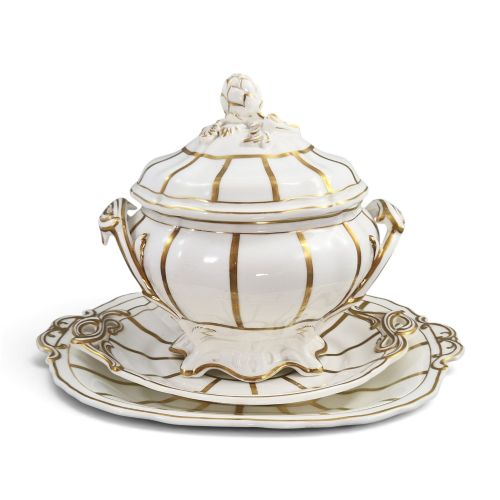
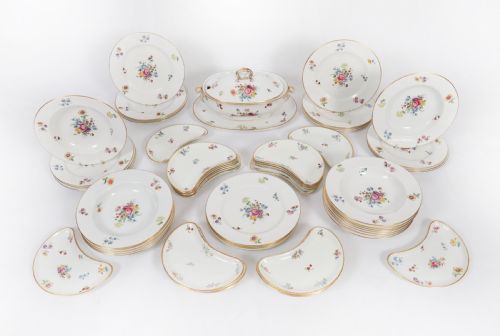
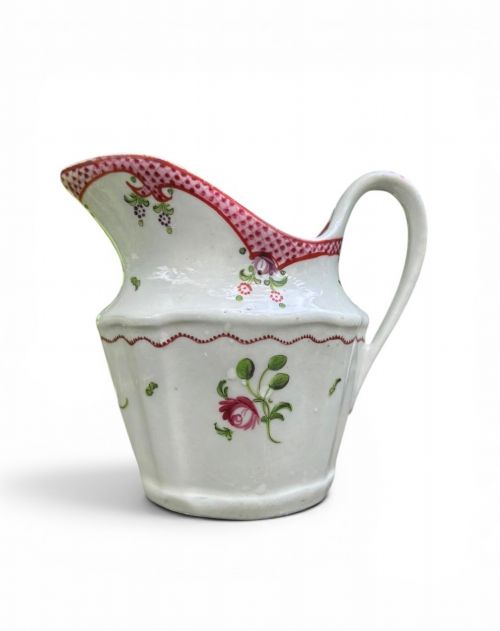
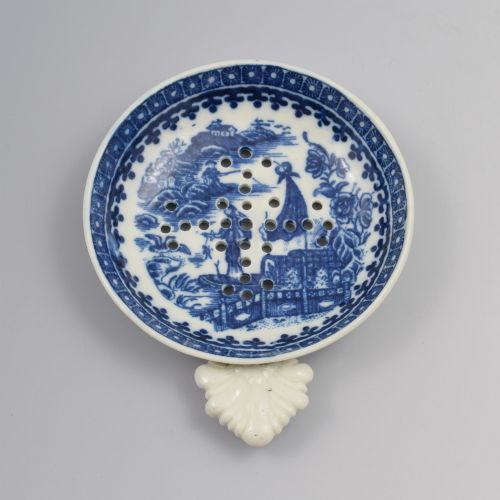
White porcelain tableware covers everything from individual cream jugs and egg drainers to large dinner services and dessert sets designed for formal dining. Buyers encounter forms ranging from simple plates and platters to specialised vessels like sauce tureens, butter dishes, and pickle dishes.
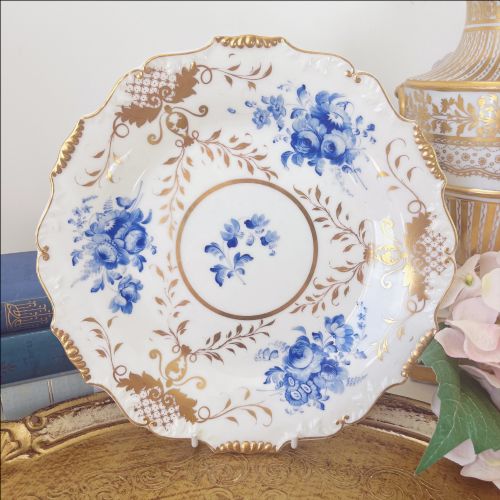
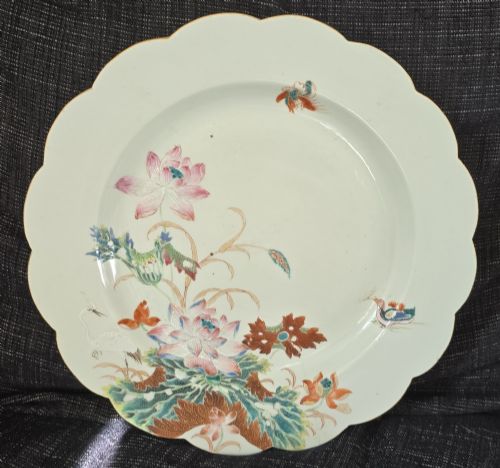
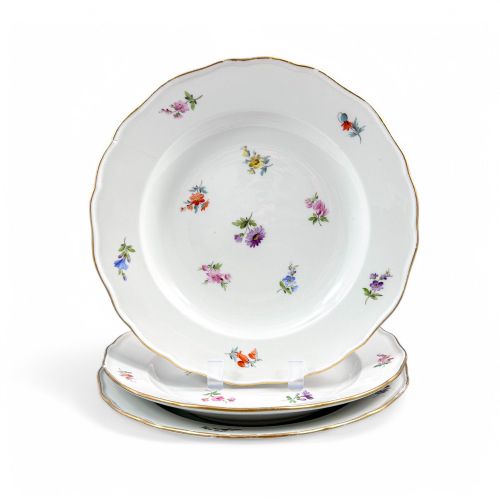
The pieces available originate across English, European, and Japanese traditions, reflecting shifting tastes from the eighteenth century into the twentieth. Eighteenth-century examples often display blue and white transfer printing or hand-painted Chinoiserie motifs, while nineteenth-century pieces lean towards rich gilding, armorial designs, and botanical studies.
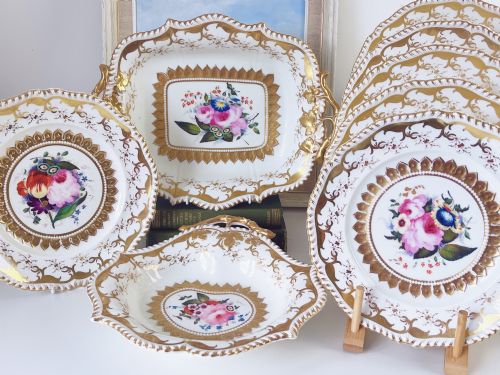
Service components frequently survive in partial sets rather than full complements, offering practical use or cabinet display. Dinner services, dessert sets, and tea wares make up the bulk of the domestic items found within this tradition.
Materials and production techniques
Makers utilised various ceramic bodies including soft-paste porcelain, bone china, felspar porcelain, and ironstone, shaped either by throwing on a wheel or moulding in sections. Glaze was applied to seal the porous or vitreous body before secondary firings fixed underglaze pigments or overglaze enamels.
Decoration often combined hand-painted botanical or figurative scenes with transfer printing techniques to replicate intricate Chinese and European patterns. Artisans frequently added finishing touches using gold leaf and gilt detailing to accentuate handles, rims, and moulded borders.
Several eighteenth-century factories dedicated entire porcelain runs to depicting solitary fishermen casting lines from tiny, improbable islands onto sauce boats.
Quality variations in historical ceramics
Quality depends heavily on the crispness of the moulding and the refinement of the ceramic body, where superior pieces exhibit thinness, translucency, and a smooth, even glaze free from major kiln debris. Early soft-paste bodies react differently to light than later bone china or hard-paste porcelain, influencing both durability and visual depth.
The execution of the painted or printed decoration marks a clear division between standard utility wares and high-end cabinet pieces. Skilled hand-painting, precise gilding work, and well-registered transfer prints elevate the visual success of a service.
Grainger Lee And Co·Wedgwood·Davenport·Spode·New Hall·Meissen·Caughley·Bow·Worcester·Rockingham Pottery·Coalport·Masons·Doulton·Royal Worcester·Kuznetsov·Flight Barr And Barr·Jacob Petit·Veuve Perrin·Barr Flight And Barr·Limoges·Kpm·Sutherland·Gladstone Potteries
The White Porcelain Tableware Glossary
- Bone china
- A type of soft-paste porcelain containing bone ash, developed to increase strength and whiteness while allowing thinner walled vessels. It became a staple of English factories during the nineteenth century.
- Soft-paste porcelain
- An artificial ceramic compound fired at lower temperatures than hard-paste porcelain, producing a warm, creamy body with a distinctive glaze texture. It was widely utilised by eighteenth-century English potteries before bone china took precedence.
- Sauce tureen
- A covered serving dish specifically shaped for gravies and sauces, often accompanied by a fixed or separate matching stand and a ladle. They form a key component of formal nineteenth-century dining services.
- Felspar porcelain
- A dense ceramic body developed in the early nineteenth century utilising felspar as a primary flux, offering increased durability and a bright white ground. Spode notably championed this material for robust tableware.
- Armorial
- Ceramic decoration featuring a family coat of arms, crest, or heraldic motto hand-painted onto the surface. These custom commissions represent high-status tableware ordered by landed families.
White Porcelain Tableware: Frequently Asked Questions
How do I care for antique porcelain tableware?
Wash historical porcelain gently by hand in warm water using a mild detergent, avoiding modern dishwashers entirely. Enamel decorations and gold leaf gilding degrade over time when subjected to harsh machine cycles and abrasive scrubbers.
Store pieces with adequate padding between plates to prevent rim chipping. Stacked items bear weight unevenly, so using felt dividers or vertical plate racks protects fragile nineteenth-century earthenware and bone china.
Can I use these antique plates for daily dining?
Many nineteenth-century and Edwardian pieces remain structurally sound for occasional food service, provided the glaze has no deep crazing or cracks. Older soft-paste bodies and delicate hand-painted surfaces suit light use better than heavy daily wear.
Check pieces for signs of previous restoration or hairline fractures before serving hot food or liquids. Historic glazes on certain eighteenth-century wares contain lead compounds, prompting many collectors to reserve them strictly for display.
How do I identify eighteenth-century porcelain?
Examine the unglazed foot rim of the vessel, known as the biscuit, for signs of kiln grit and characteristic shrinkage marks. Eighteenth-century soft-paste porcelain often displays uneven glaze pooling and subtle surface imperfections caused by primitive firing methods.
Look for underglaze blue painted marks or early factory symbols hidden beneath the glaze. Stylistic clues like Chinoiserie figures and fisherman patterns point directly to early English and continental production periods.
What is the difference between bone china and ironstone?
Bone china incorporates animal bone ash into the paste, creating a translucent, refined material suited to delicate teacups and cabinet plates. It rings slightly when tapped and transmits light readily through the body.
Ironstone is a heavy, opaque earthenware developed to imitate porcelain's durability while remaining cheaper to produce on an industrial scale. It lacks translucency but offers exceptional strength for large dinner services and soup tureens.