

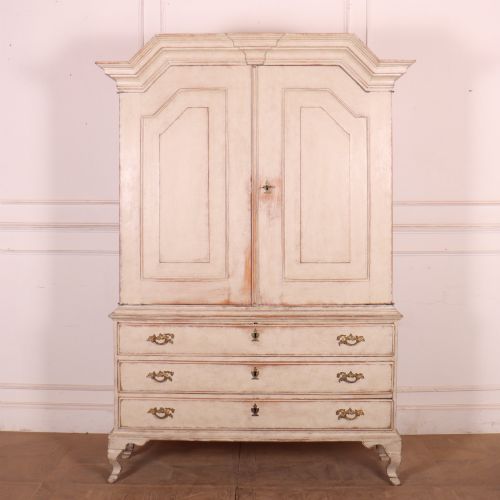


White Pine Wardrobe
A white pine wardrobe offers practical storage with country charm, shaped from soft timber and finished in paint.
White Pine Wardrobe
A white pine wardrobe provides ample room for garments, often taking the form of a linen cupboard, housekeepers cupboard, or traditional armoire. Buyers searching for a white pine wardrobe encounter sturdy pieces designed for utilitarian storage in domestic spaces.
The pieces listed span the eighteenth century, the nineteenth century, and around nineteen hundred, showing English country and Scandinavian country origins. Gustavian and rustic country styles appear alongside simple Georgian forms, demonstrating varied regional interpretations of the utility cupboard.
Many examples arrive with original painted surfaces, often in white or pale tones that brighten interiors. Functional internal layouts typically feature hanging space or shelving tailored for linens and household garments.
How they were made
Cabinetmakers constructed these pieces from native pine timber, selecting softwoods for ease of working and wide board availability. Joinery relied on traditional pegging and panel construction to accommodate seasonal movement in the wood.
Surfaces received layers of lead-based or oil paints, sometimes applied in muted white or cream hues to protect the timber and reflect light in domestic rooms. Iron or brass hardware, including hinges and latches, secured the doors and completed the utilitarian construction.
White Pine Wardrobe Retail Price Guide 2026
Typical asking prices for white pine wardrobe among the pieces listed under this phrase on Sellingantiques today, from the lower quarter to the upper quarter. They describe what is for sale here now, not the wider market.
Listed examples span the eighteenth and nineteenth centuries, featuring English country and Scandinavian painted finishes on pine.
What varies in quality
Proportion and architectural detailing distinguish finer examples, where cornice mouldings and panel placements show considered design rather than purely utilitarian assembly. The integrity of the original timber frame dictates structural longevity.
Surface patination plays a major role in distinction, particularly where layers of early white paint have worn naturally through time. Original hardware and undisturbed interior fittings elevate the standing of a piece compared to later replacements.
The White Pine Wardrobe Glossary
- Linen cupboard
- A tall storage cabinet traditionally used for storing household textiles, blankets, and folded garments. These pieces often feature internal shelving behind full-length doors.
- Housekeepers cupboard
- A large storage unit historically used in country houses for provisions and household goods. They typically combine upper cupboard storage with lower drawers or deeper compartments.
- Gustavian
- The Swedish interpretation of neoclassical style, characterised by restrained carving and pale painted finishes. This aesthetic emerged during the late eighteenth century.
- Armoire
- A large freestanding wardrobe with doors enclosing hanging space or shelves. The form originates from continental Europe and often displays regional vernacular details.
- Patina
- The surface sheen and wear developed on wood and painted finishes over decades of use. This quality reflects the age and history of the object.
White Pine Wardrobe: Frequently Asked Questions
How do I date a white pine wardrobe?
Dating relies on construction methods, hardware types, and nail technology visible inside the cabinet. Hand-cut dovetails and forged iron hinges point to earlier periods, while machine-sawn timber indicates later nineteenth-century work.
Paint analysis also assists with dating, as early lead paints differ significantly from modern synthetic finishes. Examining the backboards and internal panels reveals tool marks left by the original maker.
Are these wardrobes suitable for modern hanging clothes?
Many historic cupboards were built for folded linens or shorter garments rather than modern longer coats. Buyers often check internal depths to ensure standard coat hangers fit comfortably inside.
Some pieces feature removable shelves that allow conversion into hanging space. Others retain fixed peg rails or interior hooks originally used for hanging items.
How should I care for painted pine furniture?
Painted pine benefits from stable room temperatures and protection from direct sunlight to prevent paint flaking and wood splitting. Dusting with a soft, dry cloth preserves the fragile historic surface layers.
Avoid using harsh chemical cleaners or abrasive pads on painted finishes. Natural beeswax can be applied sparingly to unpainted interior pine surfaces to condition the wood.
What is the difference between an armoire and a linen cupboard?
An armoire generally provides deep interior space designed specifically for hanging garments behind large doors. A linen cupboard traditionally focuses on horizontal shelving for stacked textiles and bedding.
Regional terminology often blends these definitions, as makers adapted standard forms to suit domestic needs. Both share robust pine construction and functional door arrangements.