


White Painted French Armchair
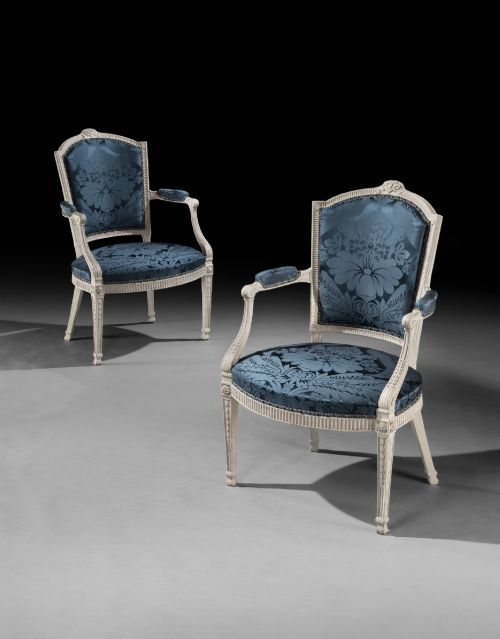
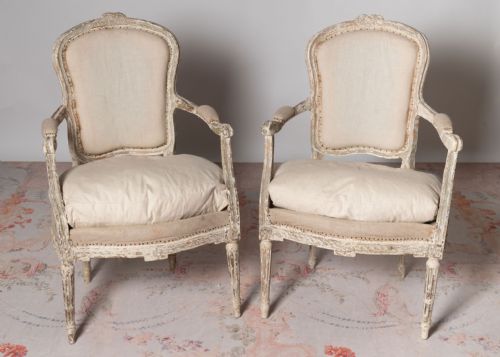
A white painted french armchair brings the lightness of eighteenth-century seating into a room through carved wood and distressed pale surfaces.
White Painted French Armchair
A white painted french armchair represents a search for seating that bridges classical continental elegance and lighter decorative finishes. The pieces found here span from the eighteenth century through to the twentieth century, taking in both formal revival pieces and relaxed country forms.
Buyers most frequently encounter nineteenth-century examples influenced by Louis XV and Louis XVI styles, alongside twentieth-century vintage interpretations. These seats often appear in pairs and frequently feature later painted surfaces over beech or other hardwoods.
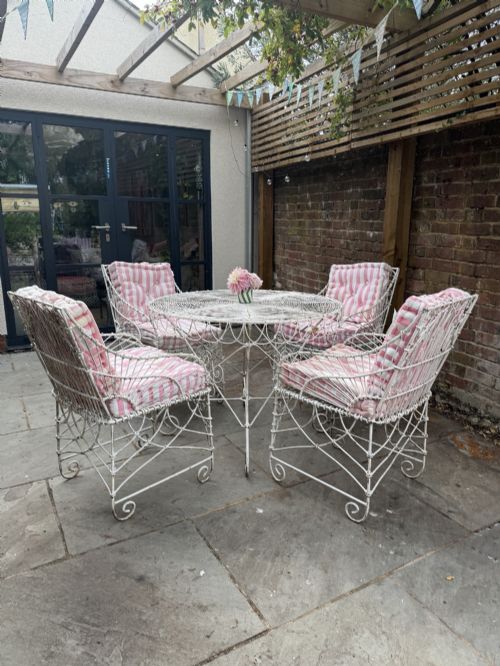
The forms encompass traditional bergere chairs with enclosed cane sides, open-armed fauteuils, and occasional garden sets. Origins stretch across French chateau styles and regional European workshops, offering carved woodwork paired with upholstery in linen, fabric, or velvet.
How they were made
The construction of these armchairs relies primarily on solid wood frameworks, predominantly beech, shaped through traditional joinery and detailed hand carving. Artisans applied successive layers of paint over the wooden structure, sometimes over older gilding or preparatory grounds.
Upholstery methods varied from traditional horsehair stuffing beneath linen or velvet coverings to woven cane panels fitted into bentwood or carved frames. Later decorative schemes often involved building up layers of paint to achieve a distressed patina.
Some nineteenth-century makers evidently decided that if you cannot travel to a bamboo grove, your parlour chair simply must pretend you did.
What varies in quality
Quality in these armchairs rests upon the crispness of the original wood carving and the integrity of the structural joints. Finer examples display deeply sculpted foliage and balanced proportions that reflect rigorous cabinet-making standards.
The character of the paint surface also dictates distinction, separating pieces with organic, aged wear from those with heavier modern overpainting. Original construction details, such as tight cane work and robust underframes, further distinguish the finer pieces.
The White Painted French Armchair Glossary
- Fauteuil
- An open-framed upholstered armchair originating in France, characterised by exposed wooden arms and a padded back. These chairs were designed for formal reception rooms.
- Bergere
- An enclosed armchair featuring solid upholstered sides or cane panels set within a wooden frame. This form provides a deeper, more enclosed seat than an open fauteuil.
- Louis XVI Style
- A neoclassical design vocabulary marked by straight tapered legs, geometric symmetry, and classical carved motifs such as fluting and ribbon twists. This aesthetic emerged in the late eighteenth century and saw frequent revival periods.
- Cane
- Woven rattan or split reed material used to form supportive panels for the back and sides of seating. It offers a light, breathable texture distinct from solid upholstery.
- Faux Bamboo
- Wood turned and carved to imitate the segmented stalks of natural bamboo. This decorative technique appeared frequently in nineteenth-century seating.
White Painted French Armchair: Frequently Asked Questions
How do I clean a painted wooden frame?
Dust the carved surfaces gently with a soft, dry cloth to remove surface particles without disturbing the painted finish. Avoid harsh chemical cleaners that might strip historical layers or soften the underlying paint.
For stubborn marks, use a slightly damp cloth with mild soap, drying the wood immediately afterwards. Preserving the patina requires a light touch and regular, careful maintenance.
Where should I place an antique armchair?
Position these chairs away from direct sunlight and strong heat sources to protect both the painted wood and delicate textiles like linen or velvet. Direct thermal changes can cause the timber to warp and the paint finish to flake over time.
A corner of a bedroom, a reading nook, or a drawing room provides a suitable environment where the proportions can be appreciated. Ensure the surrounding floor space allows the open arms and carved details to remain unobstructed.
How can I tell a revival piece from an earlier one?
Examine the tool marks on the underside of the frame and the composition of the wood beneath the paint layers. Earlier pieces often display hand-cut joinery and older timber species that differ from later industrial manufacturing methods.
Stylistic cues also help, as nineteenth-century revival makers occasionally exaggerated classical proportions or combined motifs from different reigns. Comparing the carving depth and the wear patterns on the painted surface offers further guidance on age.
What maintenance do cane panels require?
Keep cane work slightly hydrated by wiping it with a damp sponge every few months to prevent the natural fibres from becoming brittle. Avoid placing heavy, concentrated weight on the cane panels to prevent sagging or snapping.
If the cane does slacken slightly, gentle moisture applied to the underside can sometimes encourage the fibres to tighten as they dry. Protect the woven areas from sharp objects and abrasive clothing.