


White Painted Armchairs
White painted armchairs bring architectural clarity and historic character to a room, ranging from grand French salons to robust garden settings.
White Painted Armchairs
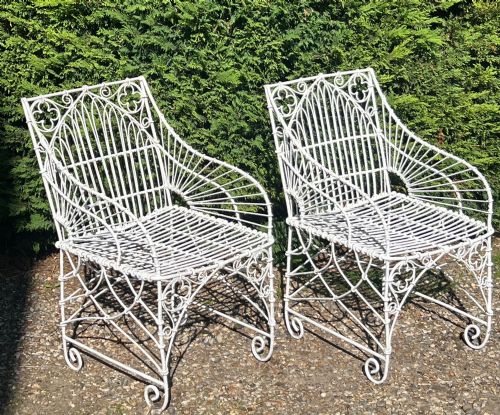
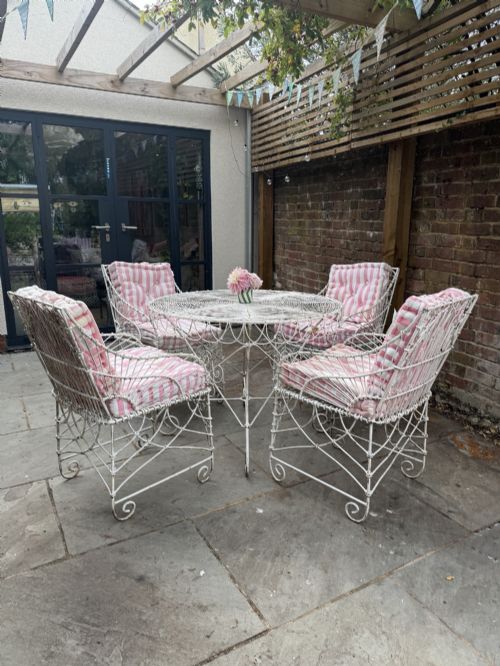
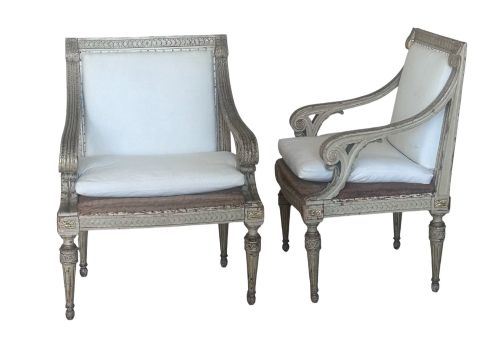
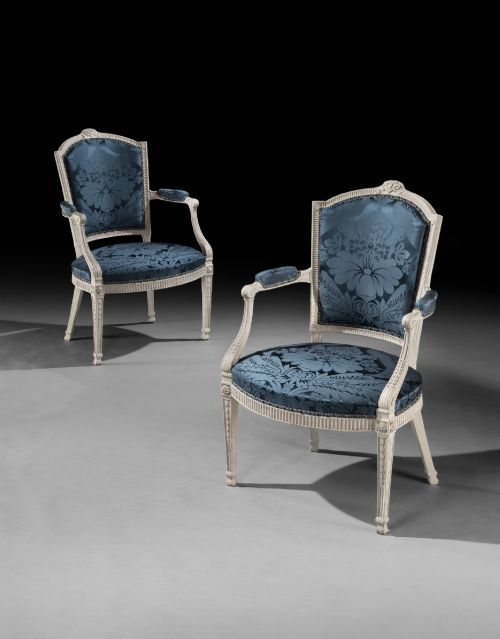
White painted armchairs encompass a diverse group of seating spanning the eighteenth, nineteenth, and twentieth centuries, uniting domestic comfort with a painted finish. When searching for white painted armchairs, buyers encounter indoor fauteuils, bergères, and shield-backs alongside sturdy cast iron garden seating.
The domestic examples originate predominantly from French and British workshops, often reflecting classical revivals such as Louis XVI, George III Neoclassical, and Arts and Crafts design. Alongside these interior forms, heavy wirework and cast iron garden chairs appear frequently, demonstrating the versatility of the painted surface across both indoor and outdoor environments.
Makers and designers ranging from large firms to individual architects contributed to this category, utilising beech, wood, and cane alongside later applied coats of paint. The surface treatments vary from original historic pigment to distressed finishes and later decorative layers applied over mahogany or fruitwood.
How they were made
The structural framework of these chairs relies on traditional timber joinery, utilising beech and assorted woods carved into specific period styles like Louis XVI or Gothic Revival. Garden variations diverge into robust metalwork, employing cast iron and wirework to withstand outdoor exposure.
Surface preparation involved applying foundational priming coats before adding layers of paint, occasionally incorporating parcel gilding to accentuate carved mouldings and floral motifs. Caning, rush seating, and upholstery in linen or fabric completed the construction, balancing rigid wooden and iron frames with flexible seating planes.
The listings span eight distinct decades of production, moving from eighteenth-century George III work through to twentieth-century garden settings.
What varies in quality
The distinction between tiers rests upon the crispness of the original carved woodwork and the authenticity of the surface finish. Pieces bearing early or original paint schemes hold greater material integrity than those subjected to repeated modern overpainting.
Structural heft and the fidelity of stylistic attribution also divide the selection, where workshop-attributed pieces display superior joinery and balanced proportions compared to standard commercial outputs. In iron garden variants, the clarity of cast details such as lion masks or Gothic tracery determines the grade.
Morris and Co·Liberty of London·White, Allom and Co·Anton Rosen
The White Painted Armchairs Glossary
- Fauteuil
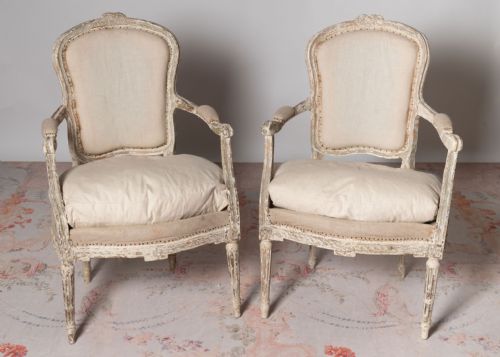
- An open-framed upholstered armchair with exposed wooden arms originating in France during the seventeenth century. These chairs typically feature carved frames and padded armrests.
- Bergère
- An enclosed upholstered armchair with solid upholstered sides and a loose seat cushion. They often incorporate cane panels along the back and arm components.
- Shield-back
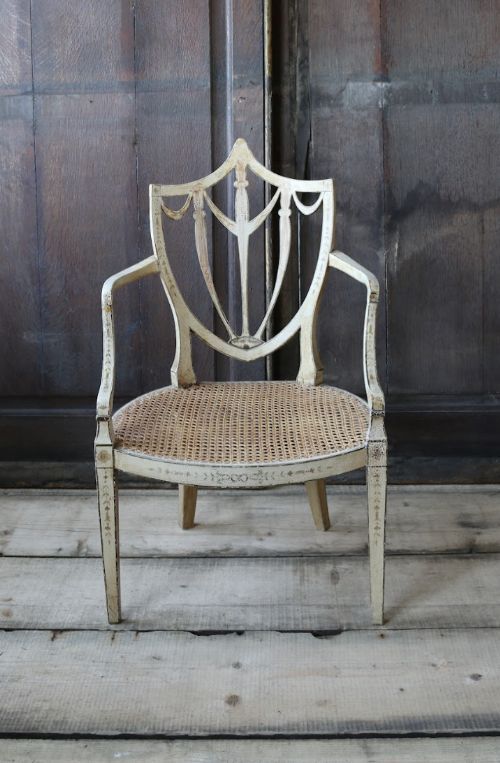
- A dining or occasional chair design featuring a backrest shaped like a heraldic shield, popularised during the late eighteenth century by makers such as George Hepplewhite.
- Gothic Revival
- An architectural and decorative style drawing inspiration from medieval design elements like pointed arches, tracery, and quatrefoils. This aesthetic remerged strongly during the nineteenth century.
- Parcel gilt
- A decorative technique where specific carved details or mouldings are partially covered in gold leaf while the remaining surface is painted or polished. It highlights ornamental highlights against a contrasting background.
White Painted Armchairs: Frequently Asked Questions
Can iron garden chairs be used indoors?
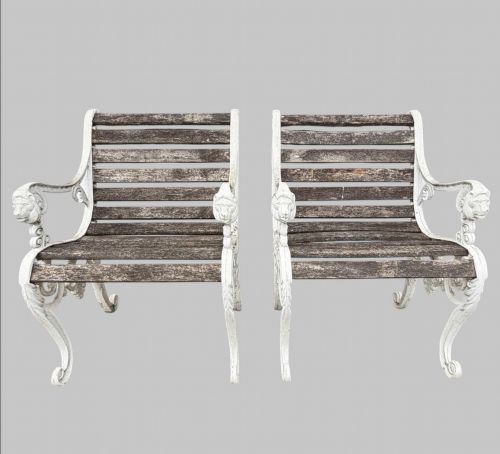
Cast iron garden chairs and dining sets were originally cast for outdoor use in parks and gardens during the nineteenth and twentieth centuries. Bringing them inside offers a striking sculptural contrast provided the floor surfaces are adequately protected.
These pieces often feature heavy cast iron frames and decorative motifs like lion masks.
How do I identify a bergere armchair?
A bergere is distinguished by its enclosed upholstered sides and solid padded back, setting it apart from the open wooden frame of a standard fauteuil. Many variants also include woven cane panels along the sides.
They emerged in French designs and frequently appear in twentieth-century iterations.
What is the difference between original and later paint?
Original paint consists of the historical pigment applied during the chair's initial period of manufacture, whereas later paint represents subsequent decorative updates. Many antique chairs received white or distressed coats long after their original creation, such as Victorian adaptations of earlier frames.
Evaluating the underlying wood and wear patterns helps determine the age of the surface layer.