

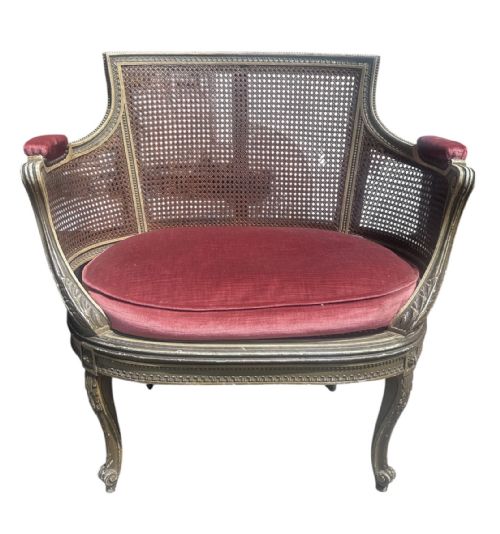


Cane Back Tub Chairs
These cane back tub chairs are deep, curved seats woven for comfort, bringing tactile rattan and sturdy wood frameworks into the sitting room.
Cane Back Tub Chairs
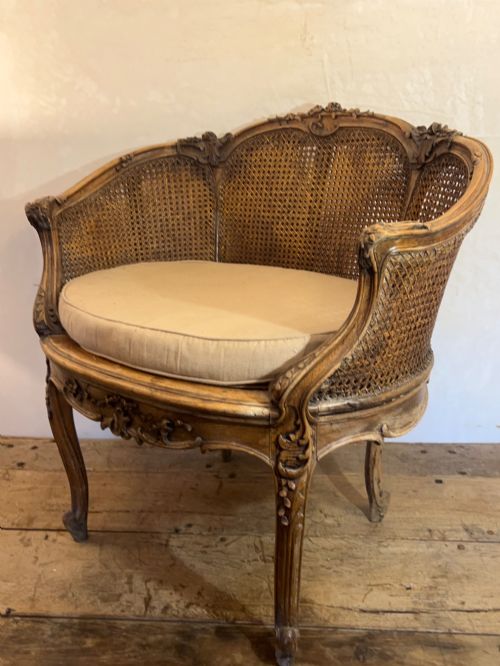
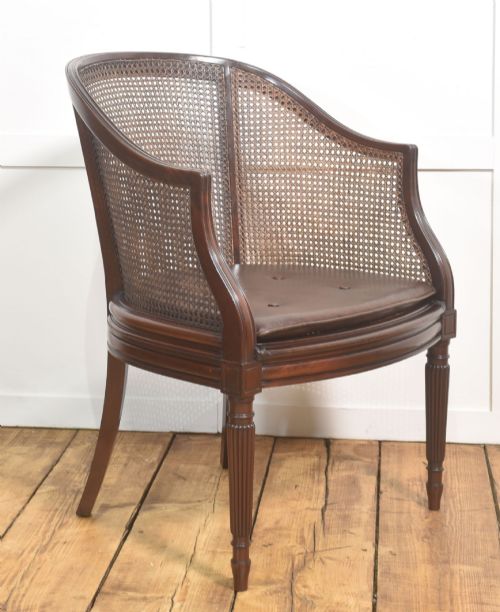
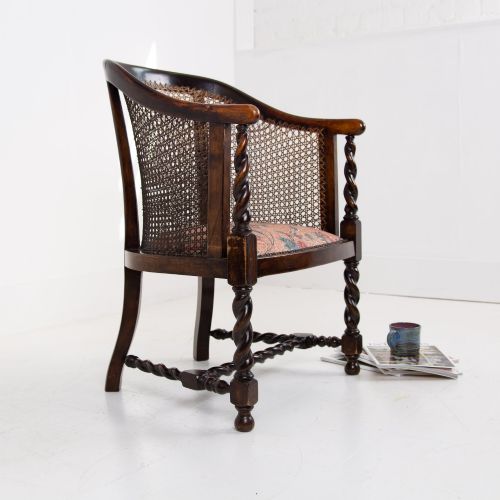
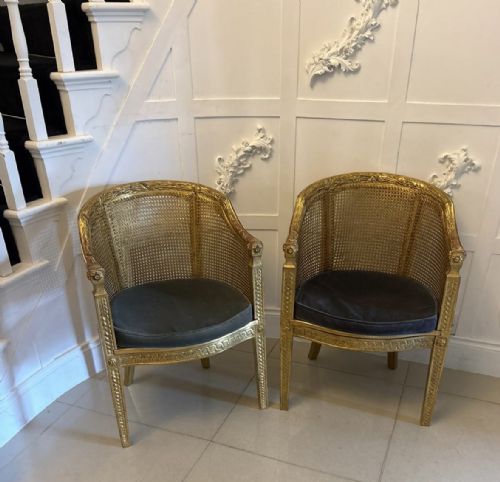
When you search for cane back tub chairs, you enter a territory of curved, enveloping armchairs designed to wrap around the seated figure. These pieces draw upon Regency, Victorian, and Edwardian traditions, often appearing in French Louis XV and Louis XVI styles with rounded backs and low profiles.
The selection ranges from substantial mahogany and walnut library armchairs to lighter oak, giltwood, and painted frames. You will also encounter child-sized armchairs and specialised forms like the Dryad of Leicester weave alongside classic bergères.
Origins span British workshops and French ateliers, bringing together diverse woods and woven panels. The unifying trait across these examples is the rounded tub or corbeille form married to a woven cane or rattan back.
What varies in quality
The standard of carving and the selection of timber dictate the distinction between everyday seating and superior library armchairs. Dense, richly figured mahogany or walnut frames demonstrate greater cabinet-making skill than simpler softwood or painted structures.
The tightness and regularity of the cane weaving also determine the grade of the piece. Uniform hand-drilling and meticulous tensioning in the rattan work separate fine workshop production from more basic utilitarian seating.
Musicians once perched sideways on narrow Victorian parlour chairs to play without bumping their instruments.
Gillows·Dryad of Leicester
The Cane Back Tub Chairs Glossary
- Bergère
- An enclosed armchair with upholstered seat and sides, usually featuring cane work on the back and occasionally the arms. This French seating form gained popularity during the eighteenth century and persisted through the Regency and Victorian eras.
- Tub chair
- An armchair with a continuous curved back and arms forming a deep, protective semicircle. The design derives its name from the resemblance to half a wooden tub.
- Corbeille
- A French term for a basket-shaped armchair with a curved, enveloping back. These seats often echo Louis XV styling with pronounced cabriole legs and carved frames.
- Ebonising
- The process of treating timber such as beech or mahogany to imitate ebony. Cabinet makers achieved this dark finish through chemical staining and polishing.
- Giltwood
- Wood that has been covered with a thin layer of gold leaf or gold paint. This decorative finish appears frequently on formal nineteenth-century French seating.
Cane Back Tub Chairs: Frequently Asked Questions
What is a bergere chair?
A bergere is an enclosed upholstered armchair featuring a solid wooden frame and cane panels on the back. These seats are designed for comfort with low, deep proportions.
They often include loose squab cushions filled with down or hair, making them suitable for libraries and drawing rooms.
How do I care for cane work?
Cane requires moderate humidity to prevent the rattan fibres from becoming brittle and snapping. Dust the woven panels regularly with a soft brush.
Avoid placing these chairs near direct heat sources or radiators, which dry out the natural materials.
Are these chairs comfortable for daily use?
The curved tub shape and supportive cane back provide an enveloping seat that naturally encourages relaxation. Many examples include plush leather or velvet cushions for added padding.
Their deep proportions make them well suited for reading and prolonged sitting.
How do I identify Regency style?
Regency style chairs typically feature classical restraint, clean architectural lines, and dark woods like mahogany or ebonised finishes. Brass mounts and reeded legs are common decorative motifs.
Designers of this period drew heavily on ancient Greek and Roman models.