



White Marble Washstand
A white marble washstand brings a solid stone top and timber frame together to anchor a bedroom or hall with practical surface space.
White Marble Washstand
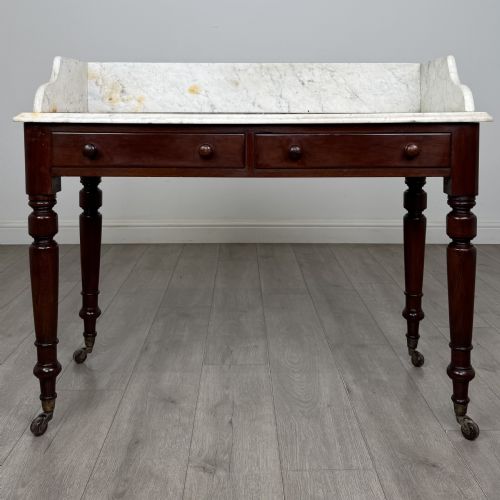
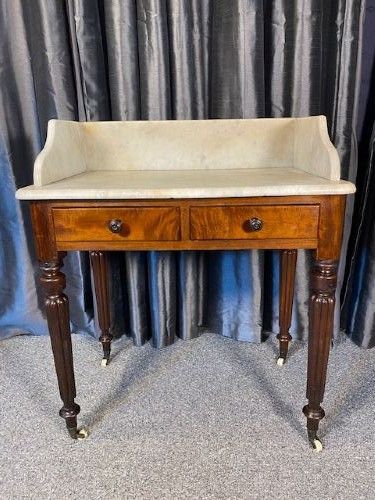
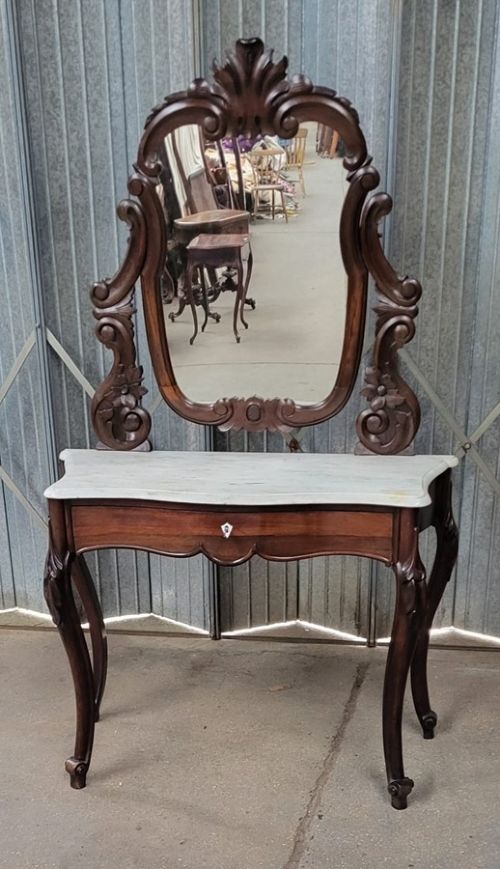
A white marble washstand is a functional bedroom or washroom furnishing topped with durable stone to withstand daily splashing and placement of water jugs. When you search for a white marble washstand, you encounter examples ranging from 19th-century mahogany and satinbirch pieces to later oak and walnut forms.
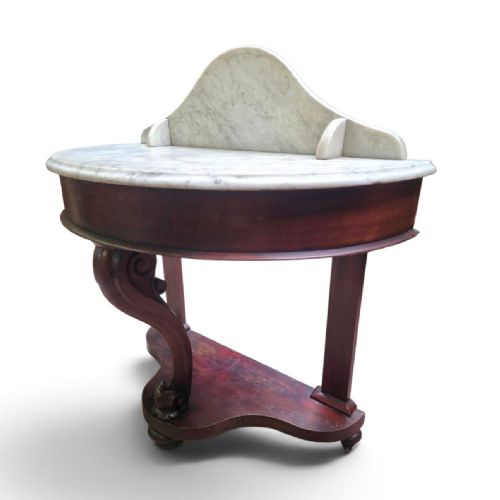
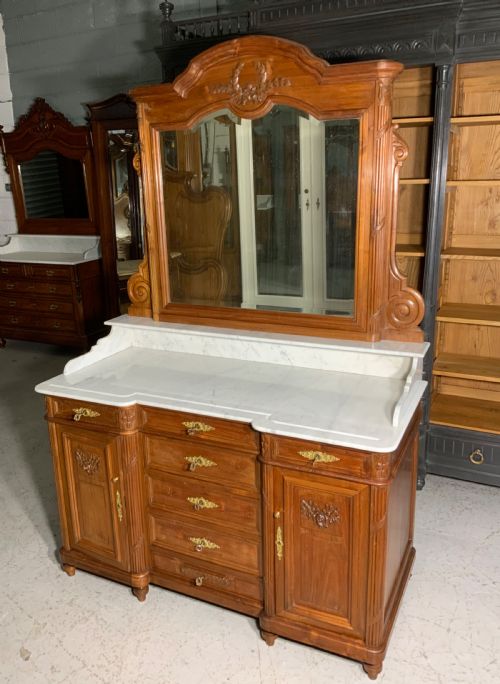
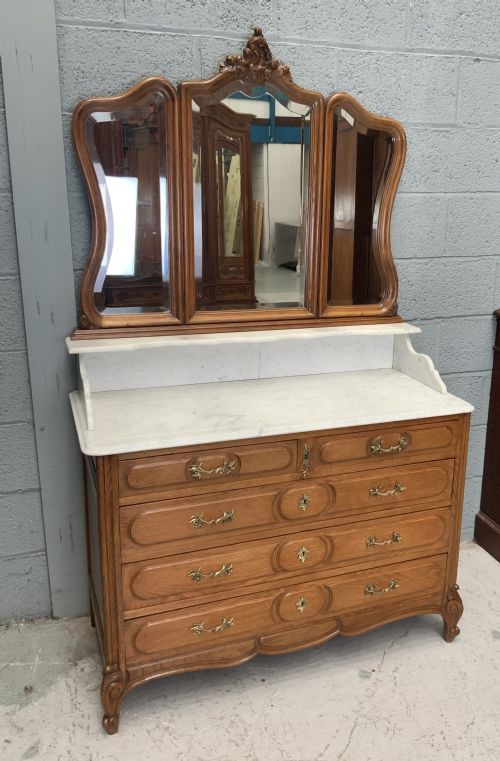
The most common versions on this page are Victorian and Edwardian iterations, alongside French provincial and Continental walnut or mahogany designs. These pieces often incorporate basins, tile backs, or simple timber frames beneath the characteristic white stone surface.
Makers and makers' retailers such as Maples produced these utilitarian items in formats that double as side tables, chests, or commodes. Their survival relies on the resilience of marble paired with sturdy hardwood carcasses.
Materials and construction
These pieces rely on heavy white marble, frequently Carrara, cut and polished to form a flat, water-resistant top slab. This stone is mounted onto timber carcasses built from mahogany, walnut, oak, satinbirch, or painted softwoods.
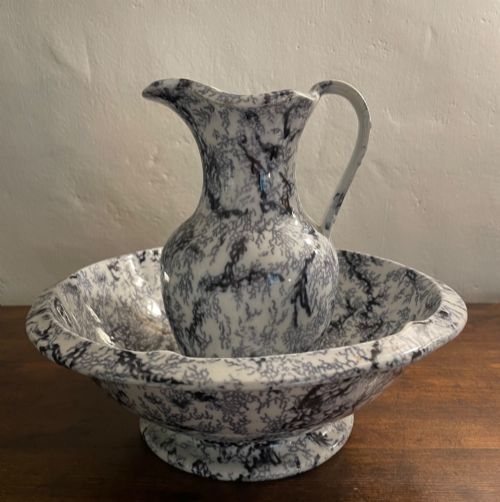
Joinery techniques follow period cabinet-making standards, utilising dovetailed drawers and panelled framing to support the substantial weight of the stone. Associated ceramic components, including earthenware jugs and basins with flow blue glaze, complete the functional assembly.
White Marble Washstand Retail Price Guide 2026
Typical asking prices for white marble washstand among the pieces listed under this phrase on Sellingantiques today, from the lower quarter to the upper quarter. They describe what is for sale here now, not the wider market.
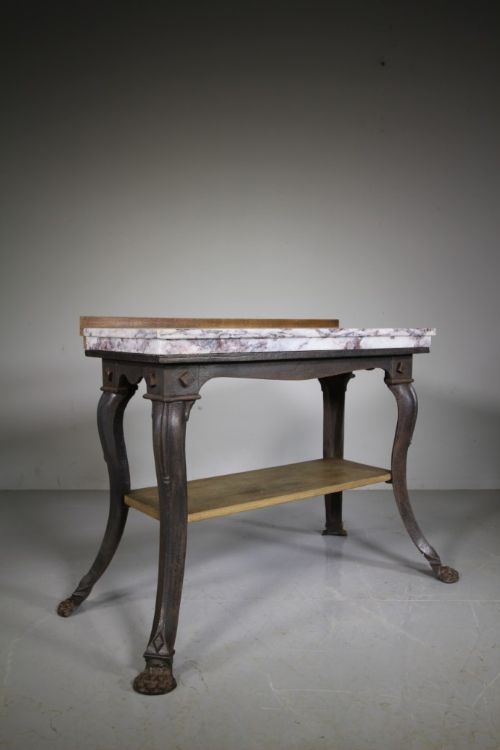
The furniture forms include commodes, side tables, and chests of drawers fitted with white marble tops.
Factors of quality
Quality rests in the selection of timbers and the density of the marble slab, where finer grain figures in the mahogany or walnut elevate the piece beyond utilitarian work. Well-defined carving on oak or walnut frames distinguishes finer workshops from plain provincial production.
The integration of the stone top into the wooden structure reveals the maker's care, particularly where marble meets moulded timber edges or fitted tile splashbacks. Original hardware, intact cabinet backs, and matching ceramic pitchers add architectural integrity.
Maples·Minton
The White Marble Washstand Glossary
- Carrara marble
- A type of white or blue-grey stone quarried in Italy, known for its fine grain and frequent use on washstand tops.
- Flow blue
- A ceramic printing style where cobalt blue glaze blurred during firing, common on earthenware jugs and basins found with these stands.
- Demi-lune
- A half-moon shape used for the footprint of specific washstands and side tables designed to sit flush against a wall.
- Satinbirch
- A pale, lustrous timber derived from birch trees, utilised by Victorian cabinet makers for light-coloured bedroom furniture.
- Aesthetic Movement
- A late 19th-century design style focusing on visual beauty over narrative function, visible in certain Victorian washstand forms.
White Marble Washstand: Frequently Asked Questions
What is a white marble washstand?
A white marble washstand is a period piece of furniture built to hold washing equipment, combining a stone top with a wooden base.
These items date predominantly from the 19th and early 20th centuries, serving bedrooms before plumbed bathrooms became standard.
How were washstands used originally?
They held earthenware basins and water jugs for morning and evening washing routines in domestic bedchambers.
The marble surface provided a waterproof area that resisted splashing and stood up to daily use.
Can I use one as a sideboard?
Their flat stone surfaces and sturdy timber frames make them suitable for modern hallways, living rooms, or dining spaces.
Many examples function effectively as side tables or console surfaces due to their dimensions and storage drawers.
How do I care for the marble?
The stone top requires gentle cleaning with mild soap and water to preserve the polished surface without scratching.
Avoid acidic cleaners and place protective pads under glasses or bottles to prevent staining the porous marble.
How do I distinguish Victorian from Edwardian stands?
Victorian examples tend to feature darker timbers like mahogany and walnut with heavier proportions and ornate detailing.
Edwardian and later 20th-century versions often display lighter woods, simpler lines, or influences from Art Deco and French provincial styles.