





White Marble Wall Table
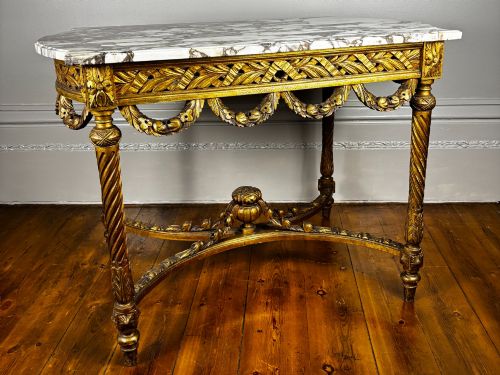
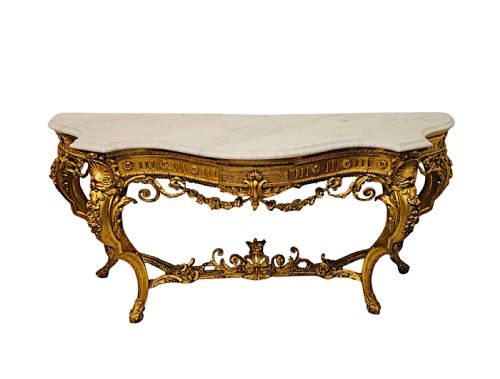
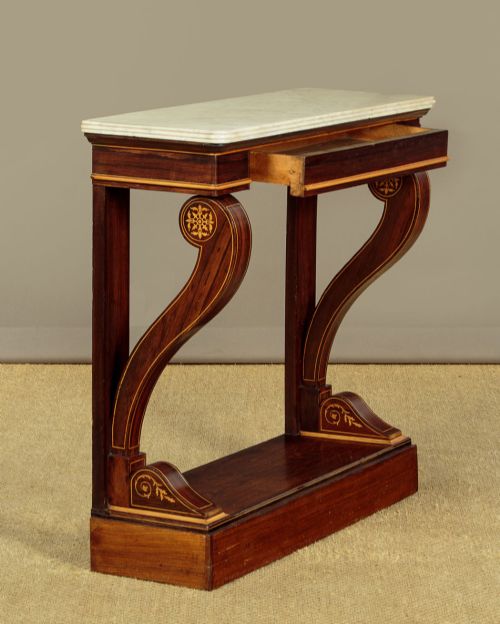
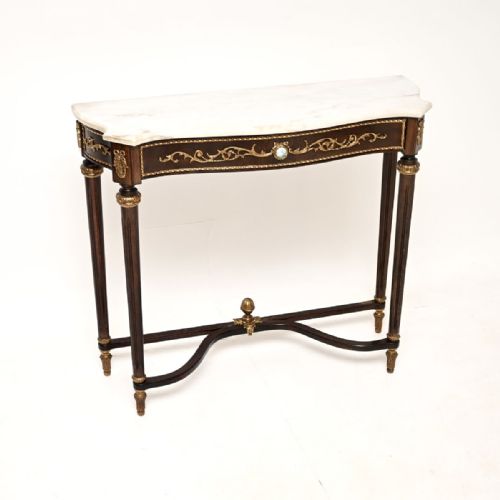
These white marble wall table examples combine sturdy structural timber with cool stone surfaces designed to anchor grand reception rooms.
White Marble Wall Table
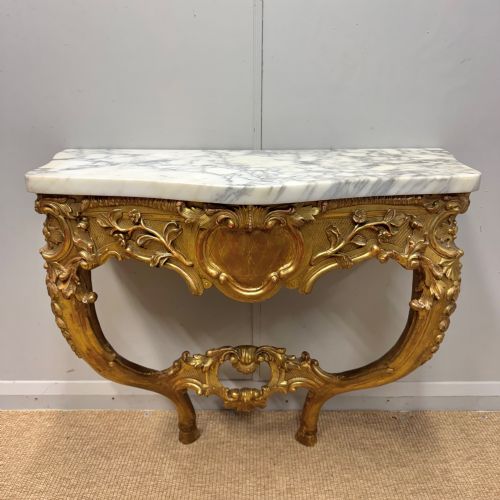
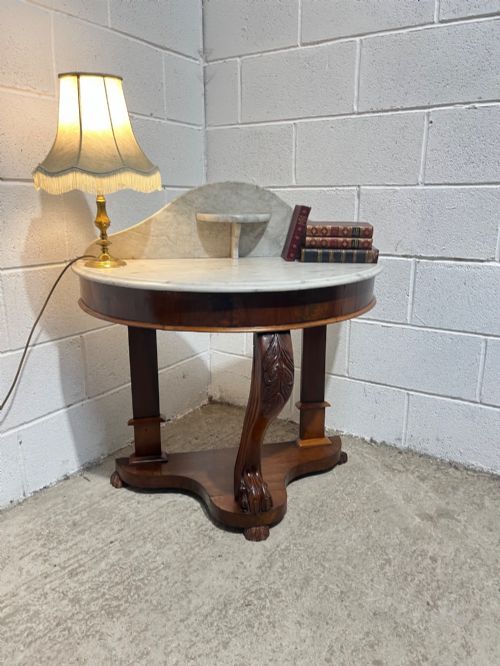
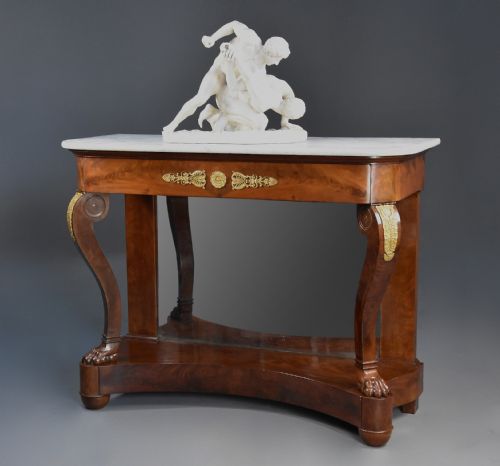
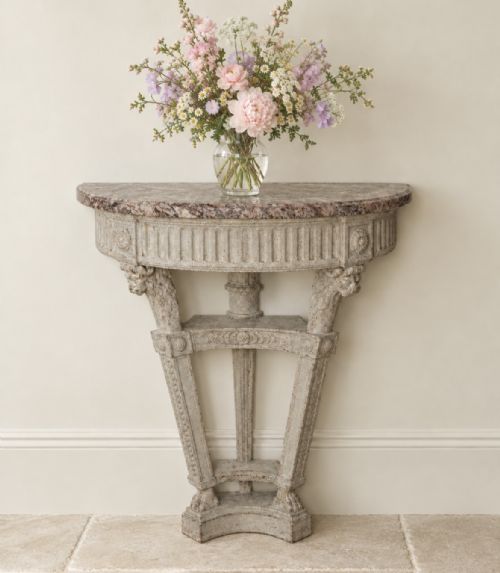
A white marble wall table functions primarily as a console or pier table, designed to sit flush against a wall beneath a mirror or window. The configuration typically involves a heavy stone slab resting upon a decorative wooden framework rather than standing entirely independently.
Nineteenth-century interpretations dominate the selection, spanning Victorian, William IV, and various revival movements. Buyers frequently encounter French models displaying elaborate carved profiles alongside British mahogany and giltwood variations.
The form developed to display decorative objects in formal reception spaces without obstructing heavy foot traffic. Their shallow depth distinguishes them from freestanding dining or centre tables.
Materials and construction methods
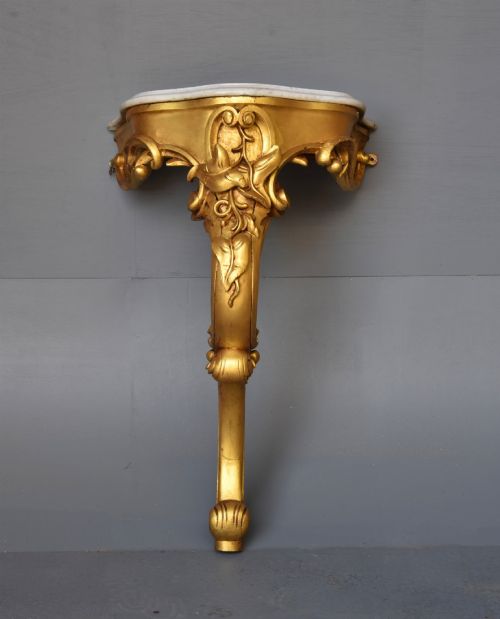
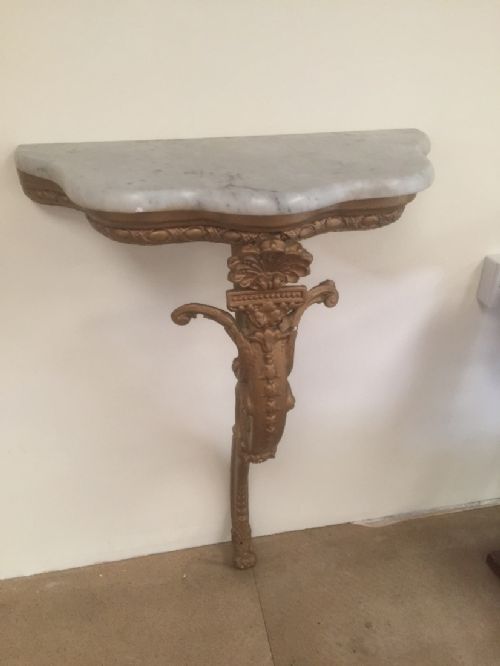
Construction relies upon heavy timber carcases made from mahogany or softwood heavily treated with gesso, paint, and gold leaf. Carved giltwood elements provide the ornate scrolling foliage seen on revival and rococo examples.
The defining feature rests on top: a heavy slab of white marble, occasionally specified as Carrara, shaped with flat or serpentine edges. Joinery must support the substantial weight of the stone top without requiring rear legs, relying instead on secure wall fixings or substantial console brackets.
White Marble Wall Table Retail Price Guide 2026
Typical asking prices for white marble wall table among the pieces listed under this phrase on Sellingantiques today, from the lower quarter to the upper quarter. They describe what is for sale here now, not the wider market.
Irish makers demonstrated a distinct fondness for serpentine fronts, creating dramatic wavy edges designed to catch candlelight in dimly lit halls.
Distinguishing quality across examples
Quality reveals itself in the crispness of the carved ornament on the wooden base and the depth of the gilding. Hand-chiselled gesso work retains sharp contours, whereas tired or heavily restored surfaces lose definition in the scrollwork.
The thickness and grain of the white marble slab also indicate the standard of production. Superior pieces feature well-fitted stone that sits flush to the timber frame with minimal bedding compound.
The White Marble Wall Table Glossary
- Console table
- A table designed to be fixed against a wall, traditionally supported on the front by legs or scrolls and at the back by the wall itself. They often feature prominent decorative carving beneath the top.
- Giltwood
- Timber coated with a thin layer of gold leaf over a prepared gesso ground. This finish provides a bright metallic sheen characteristic of formal nineteenth-century interior decoration.
- Gesso
- A plaster-like mixture applied to wood surfaces to create a smooth base for gilding or painting. It allows carvers to achieve fine relief details that timber alone cannot hold.
- Pier table
- A specific type of side table designed to stand against the wall between two windows, frequently paired with a matching wall mirror above. They share the shallow proportions typical of console tables.
- Serpentine
- A curved line that is convex in the middle and concave at the sides, often seen shaping the front edge of marble tops and wooden frames. This contour demands precise stone-cutting skill.
White Marble Wall Table: Frequently Asked Questions
How do I secure a wall table safely?
These tables rely on wall fixings or brackets because their heavy stone tops create an imbalance. Proper installation involves anchoring the wooden frame directly into masonry or solid studs.
Ignoring wall attachment risks tipping the heavy marble slab forward. Professional fitters use concealed metal straps to ensure stability.
Can I place these tables in a hallway?
Their shallow depth makes them suitable for narrow circulation spaces like hallways and landings. The slim profile prevents obstruction while offering a surface for everyday items.
Historical examples frequently served this exact domestic function in grand townhouses. They provide an architectural anchor without blocking passage.
What distinguishes Rococo Revival from other styles?
Rococo Revival pieces feature asymmetric scrolling, C-scrolls, and naturalistic plant motifs carved into the giltwood frame. The aesthetic rejects rigid symmetry in favour of flowing, organic movement.
This style gained immense popularity during the mid-nineteenth century. It contrasts sharply with the stricter classical geometry seen in earlier Georgian or later Victorian designs.
How do I clean a white marble top?
Routine maintenance requires only a damp cloth and mild, neutral soap to remove dust. Acidic substances like citrus juice or vinegar must remain away from the stone to prevent etching.
White marble is porous and absorbs staining liquids if left unattended. Prompt wiping preserves the pale, polished surface.