






White Marble Wall Console
A white marble wall console brings substantial stone and carved timber together, anchoring a room with classical balance and display space.
White Marble Wall Console
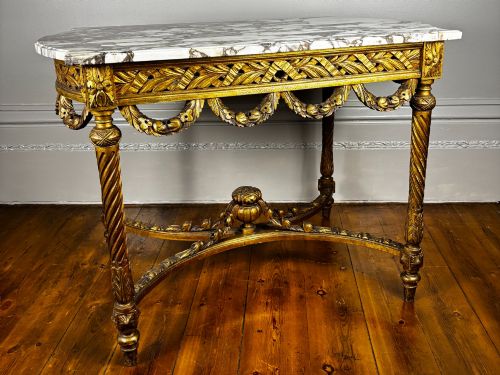
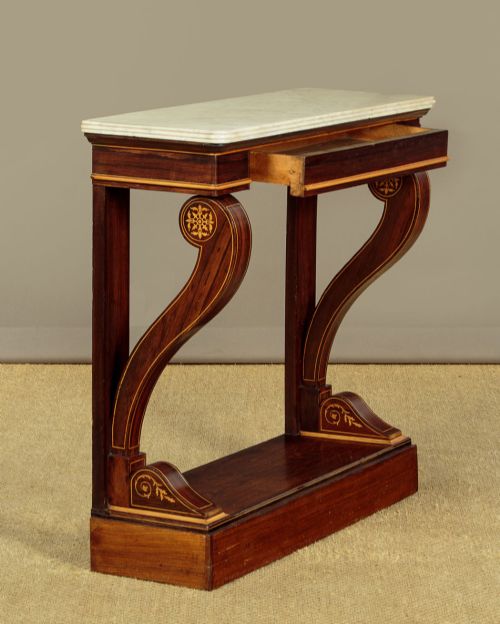
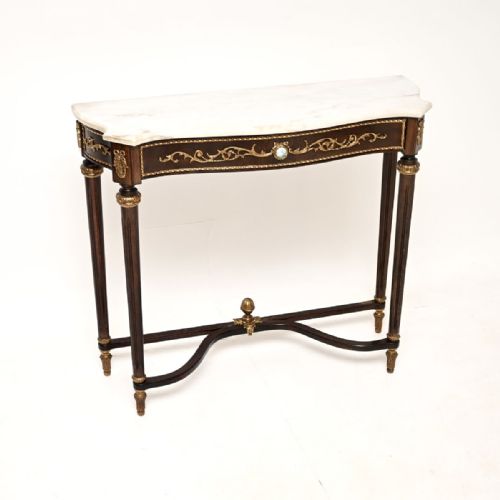
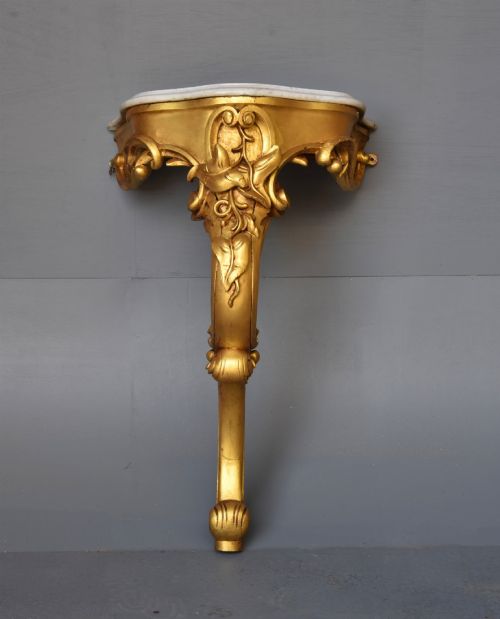
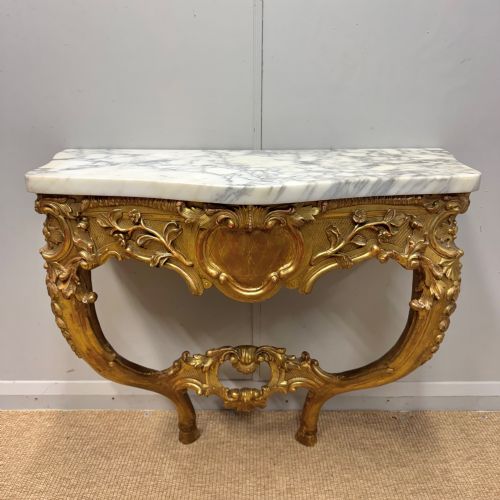
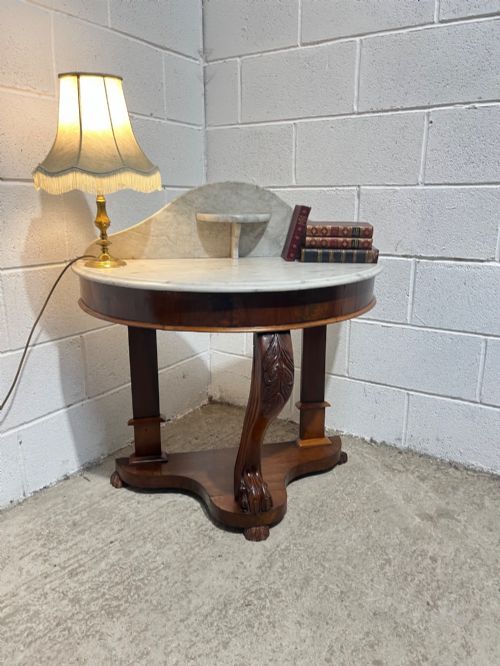
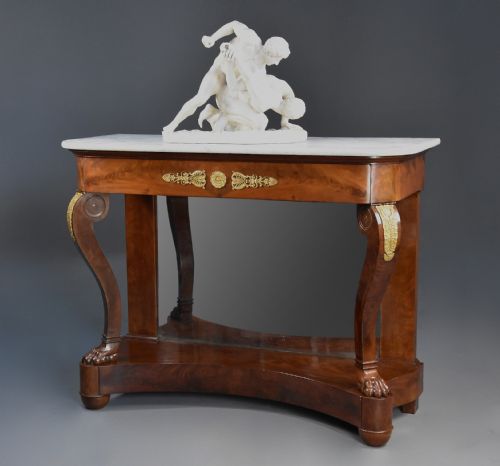
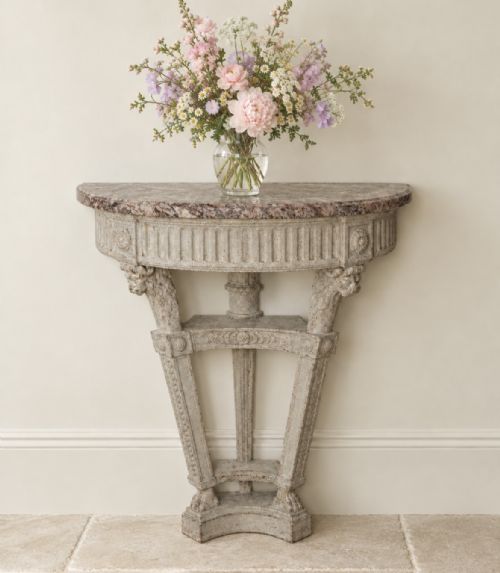
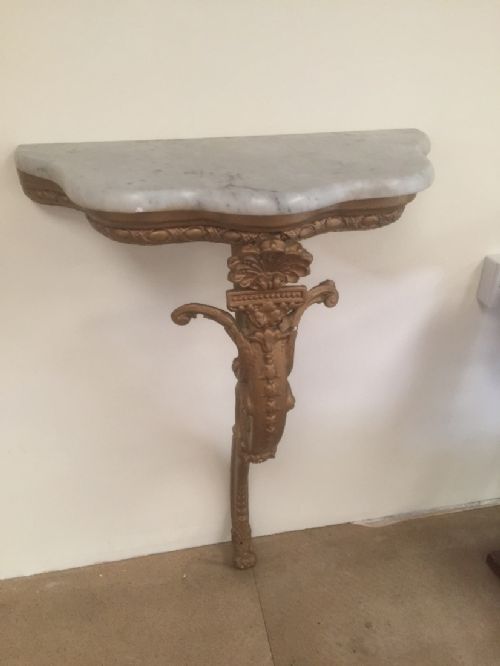
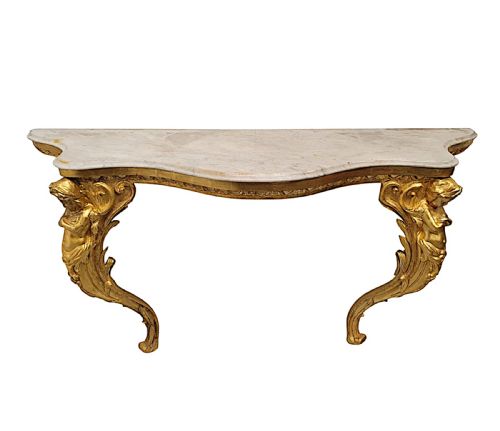
A white marble wall console is a substantial furnishing designed to stand flush against a vertical surface, frequently topped with heavy stone slab. The examples found here span the eighteenth, nineteenth, and early twentieth centuries, drawing on French Rococo, Victorian, and Louis XVI Neoclassical design vocabularies.
Most pieces combine timber structures with distinct console or pier table forms, often featuring serpentine fronts or architectural proportions. These surfaces provide firm display space for decorative objects, mirrors, and lighting within formal rooms and hallways.
Materials and construction methods
Makers built the structural frames of these tables using timber such as mahogany, wood, and carved giltwood, often applying gesso to prepare surfaces for gilding with gold leaf. Paint and glass also appear across certain regional interpretations and later nineteenth-century iterations.
Heavy white marble slabs form the characteristic tops, shaped to follow the complex curves or straight lines of the supporting bases. The integration of stone and carved wooden framing required precise joinery to bear the considerable weight of the marble top safely.
White Marble Wall Console Retail Price Guide 2026
Typical asking prices for white marble wall console among the pieces listed under this phrase on Sellingantiques today, from the lower quarter to the upper quarter. They describe what is for sale here now, not the wider market.
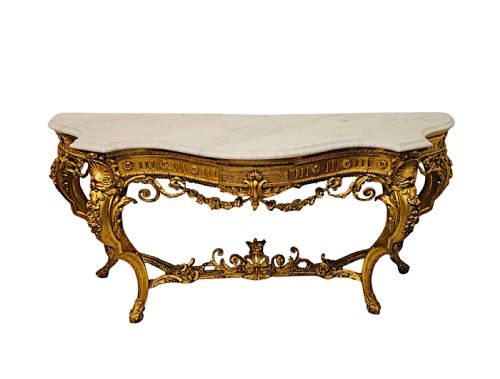
One towering nineteenth-century console carries enough carved giltwood and solid Carrara marble to test the floorboards of any stately hallway.
Determinants of craftsmanship and finish
The standard of carving in the wood and gesso frames separates ambitious workshop output from simpler domestic production, visible in the depth and crispness of Rococo scrolls and classical details. Gilding techniques also differentiate pieces, with genuine gold leaf retaining a warmer and more resilient finish than applied paint over base metals.
The quality of the marble top and its thickness relative to the base dictate overall structural integrity and visual proportion. Finer tables exhibit seamless alignment between the shaped stone edge and the timber apron beneath.
The White Marble Wall Console Glossary
- Console table
- A table designed to be fixed against a wall, traditionally supported by front legs or scroll brackets attached to the vertical surface. These pieces rely on the wall for absolute stability.
- Giltwood
- Timber that has been coated with a thin layer of gold leaf over a prepared base of gesso and size. This finish provides a bright, reflective surface that resists tarnishing over centuries.
- Gesso
- A plaster-like mixture applied to wood frames to create a smooth surface for subsequent gilding or painting. It allows craftsmen to achieve sharp, detailed relief ornamentation.
- Pier table
- A specialised console table designed specifically to stand against the wall space between two windows, frequently paired with a matching wall mirror above. They share the same architectural requirements as standard wall consoles.
- Serpentine front
- A furniture front characterised by a central convex curve flanked by two concave curves, or vice versa. This undulating shape demands advanced woodworking skill to match the marble top precisely.
White Marble Wall Console: Frequently Asked Questions
How do I secure a wall console?
Many wall consoles were originally designed to rely on wall brackets or structural fixings for complete stability, as they often feature only front legs. Proper installation into masonry or secure wall studs is essential to support the heavy marble top safely.
Consulting a professional conservator or installer ensures the weight is distributed correctly without putting undue stress on the antique timber frame or the historic wall surface.
Where should I place a console table?
These pieces suit entrance halls, drawing rooms, and dining spaces where their architectural presence and display surface can be appreciated. Placing them beneath a large mirror creates a traditional focal point within the room.
Because they sit flush against the vertical surface, they occupy minimal floor space while offering a distinct surface for lamps, ceramics, and other decorative objects.
How do I care for the marble top?
White marble is porous and sensitive to acidic substances like wine, citrus, and vinegar, which can etch the polished surface. Regular dusting with a soft, dry cloth is usually sufficient for day-to-day maintenance.
For cleaning, use a damp cloth with mild, pH-neutral soap, avoiding harsh chemical cleaners or abrasive scouring pads that might dull the historic stone polish.
What defines the Rococo Revival style?
Rococo Revival design draws heavily on the asymmetrical scrolls, naturalistic shell motifs, and exuberant curves of the eighteenth-century French movement. This style experienced a major resurgence during the nineteenth century, particularly in elaborate giltwood and carved furniture.
Pieces from this era often display deep undercutting in the woodwork and dynamic serpentine shapes that emphasise movement and theatrical display.