





White Marble Top Chest
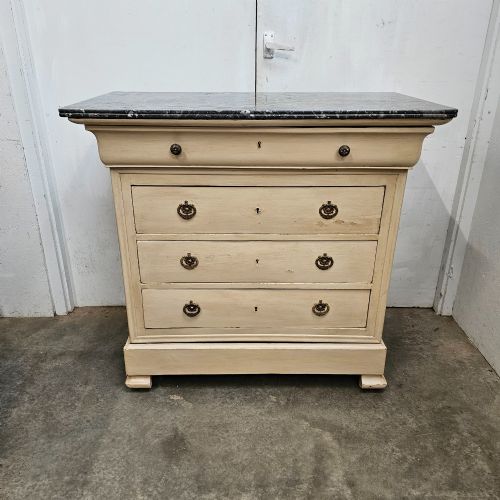
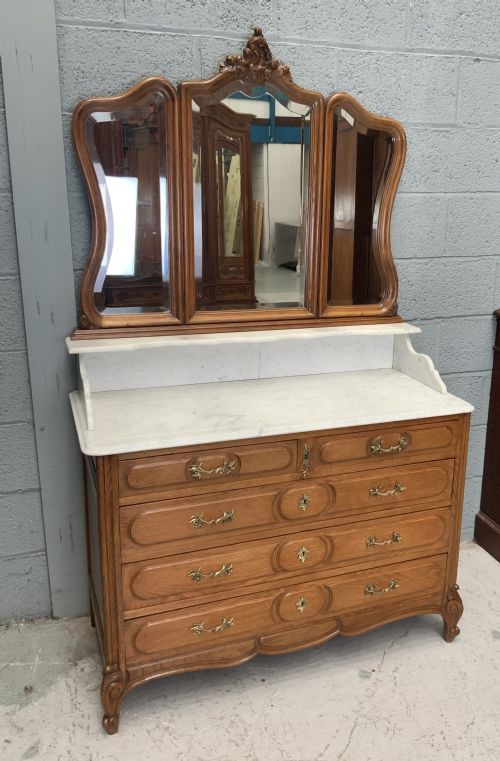
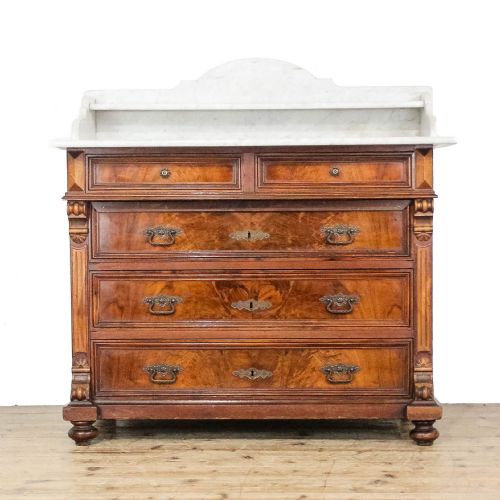
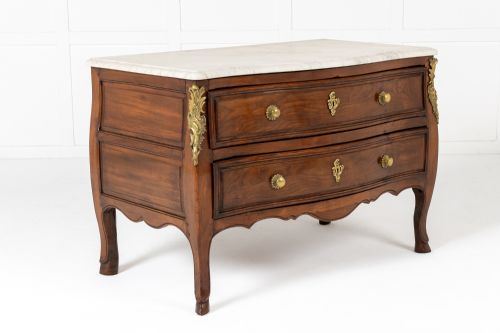
A white marble top chest brings cool stone and rich timber together in one substantial bedroom piece.

White Marble Top Chest
When you search for a white marble top chest, you encounter sturdy storage furniture topped with polished stone slabs designed for everyday use. These pieces serve as functional bedroom or dressing room storage while offering a durable, cool surface.
You are most likely to meet 19th century Continental examples on this page, alongside earlier 18th century pieces and early 20th century variants. The selection spans straightforward chests of drawers and fitted washstands.
Styles range from restrained classical proportions to ornate revival designs reflecting regional European cabinetmaking traditions. Walnut, oak, mahogany and cherrywood provide the timber carcasses beneath the heavy stone plates.
How these pieces were made
Cabinetmakers constructed the main carcase using solid timbers such as oak, walnut, mahogany and cherrywood, often shaped into serpentine or bow front profiles. Drawers feature traditional joinery to support the weight of the timber framing.
Heavy marble slabs sit directly upon the wooden top, shaped with moulded edges to follow the contours of the commode or washstand beneath. Brass hardware frequently appears on drawer fronts as handles and escutcheons.
White Marble Top Chest Retail Price Guide 2026
Typical asking prices for white marble top chest among the pieces listed under this phrase on Sellingantiques today, from the lower quarter to the upper quarter. They describe what is for sale here now, not the wider market.
Periods represented span from the 18th century through the 19th century into the early 20th century.
What varies in quality
The sophistication of the timber carving and the subtlety of the serpentine or bow front shaping distinguish finer examples from plain utilitarian chests. Cabinetmakers who invested time in sculptural relief work produced pieces of superior visual weight.
The thickness, figuring and colour variation of the marble top also influence the overall character of the piece. Well-matched stone slabs that integrate harmoniously with the underlying wood elevate the piece.
The White Marble Top Chest Glossary
- Commode
- A low chest of drawers, often of continental European origin. The term frequently describes ornate French bedroom storage with a stone top.
- Serpentine
- A shape involving a wavy front with a convex centre flanked by concave curves. This contour requires precise woodworking skills.
- Washstand
- A piece of furniture designed to hold a basin and pitcher, frequently fitted with a stone top to resist water damage. These often double as general chests of drawers.
- Escutcheon
- A protective plate surrounding a keyhole on a drawer front. Brass versions are typical on these pieces.
White Marble Top Chest: Frequently Asked Questions
How do I clean the marble top?
Use a damp cloth with mild, non-acidic soap to wipe the stone surface gently. Avoid harsh chemical cleaners that can etch the polished finish.
Dry the marble thoroughly with a soft towel to prevent water spots and maintain the natural lustre of the stone.
Are these pieces heavy?
Yes, the combination of solid wood carcasses and thick stone slabs makes these chests remarkably heavy. Moving them requires at least two people to avoid damaging the joints or dropping the stone.
Many examples feature removable marble tops, which simplifies transport by separating the heavy stone from the wooden base.
Can I use a washstand as a chest?
Washstands function similarly to standard chests of drawers and offer practical storage space for clothing or linens. Their internal drawer dimensions remain comparable to traditional commodes.
While originally built to hold washing equipment, they adapt easily to modern bedrooms as decorative storage furniture.
How do I date a commode?
Examine the timber construction methods, drawer dovetails and overall style to estimate the period of manufacture. 18th-century pieces often display hand-cut joinery and specific regional French or Italian proportions.
Revival pieces from the 19th and early 20th centuries incorporate historical design elements like Rococo curves or Empire classical symmetry while retaining later manufacturing clues.