




White Marble Lamp
A white marble lamp brings a cool, solid presence to a room, combining natural stone with period metalwork.
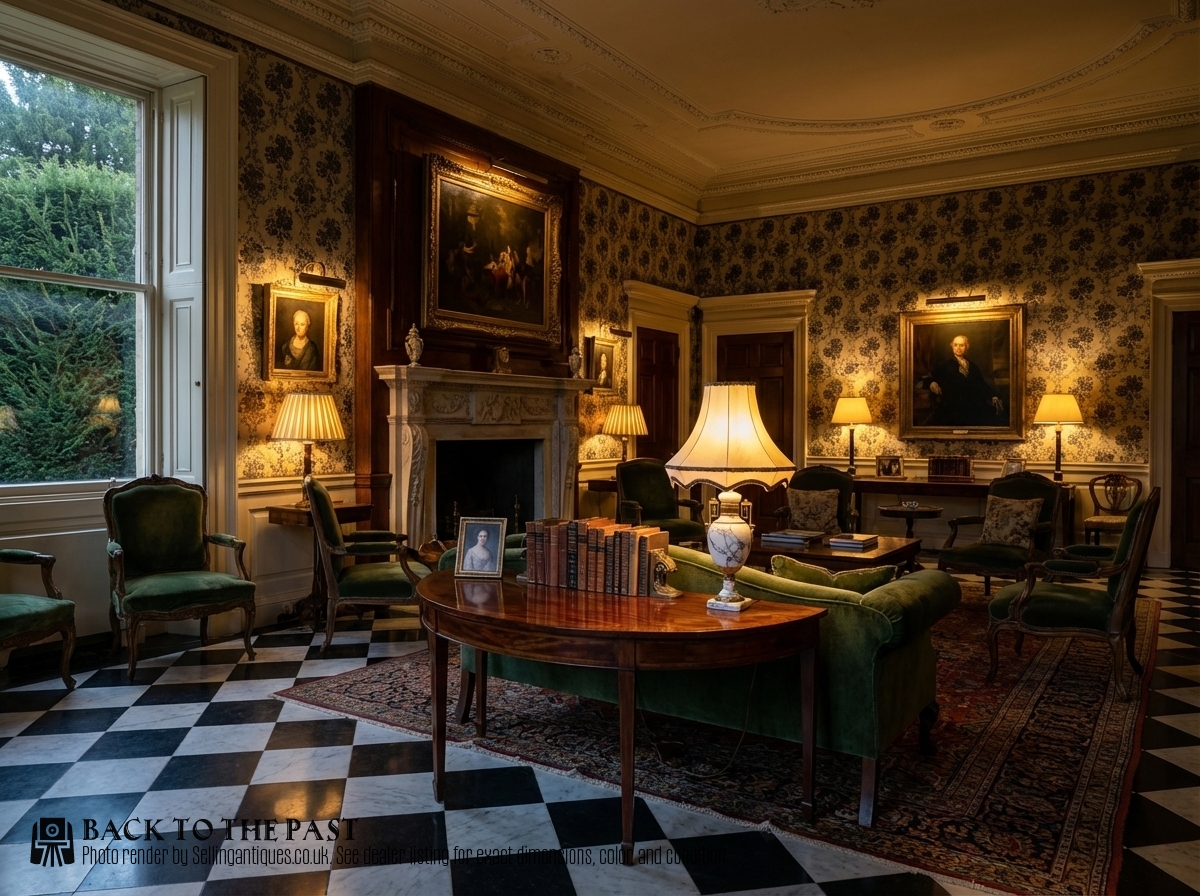
White Marble Lamp
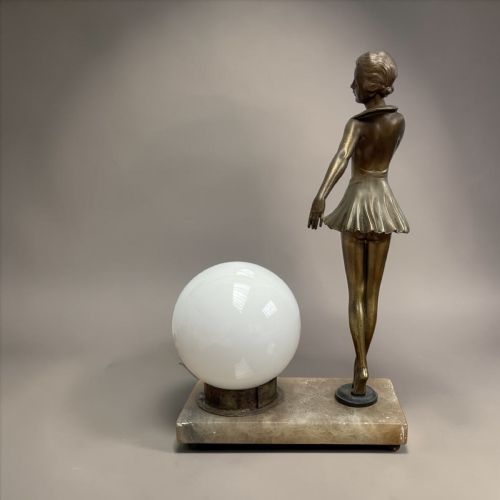
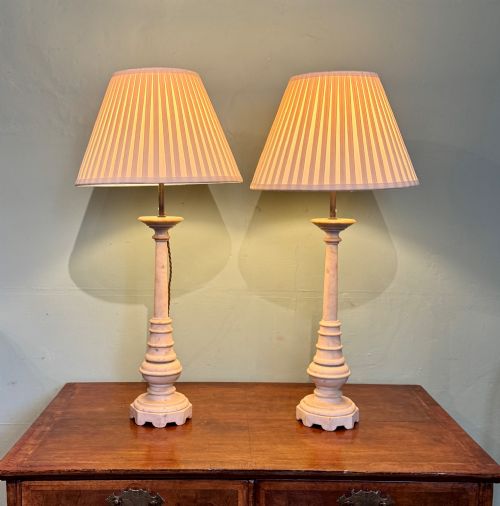
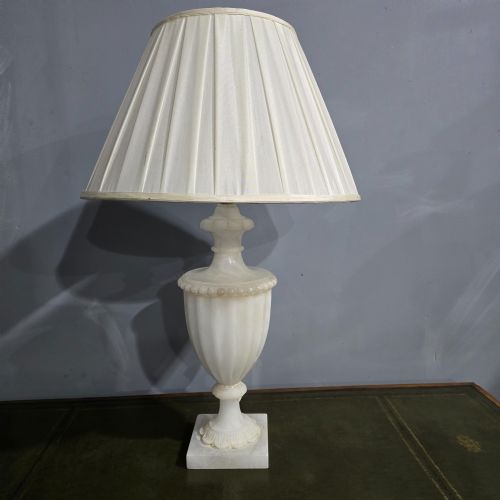
A white marble lamp is a sturdy lighting fixture shaped from natural stone, frequently paired with metal mounts or fabric shades. When searching for a white marble lamp, you encounter pieces spanning the nineteenth and early twentieth centuries, including Victorian, Regency, and Art Deco designs.
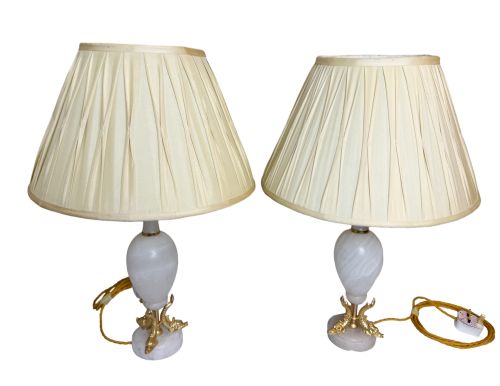
The selection ranges from simple neoclassical columns to figural pieces and amphora shapes resting on paw feet. Many examples incorporate brass, ormolu, or gilt bronze trim, reflecting French Empire and Neoclassical Revival styles.
Pairs appear frequently alongside single larger lamps, providing symmetrical options for side tables or mantels. Materials often extend beyond pure white stone to include veined varieties and related minerals like alabaster and onyx.
Materials and construction
The primary stone components are turned, carved, or polished from solid white marble, occasionally complemented by translucent alabaster or onyx. Artisans shaped these heavy minerals into slender columns, urns, and figurative bases using traditional stonemasonry techniques.
Metal elements such as brass, gilt bronze, and ormolu were cast and applied as mounts, collars, and feet to accent the stone. Fabric shades and wiring were later additions, adapting these nineteenth and twentieth-century objects for modern interior lighting.
Listings for a white marble lamp span the Victorian era, Regency period, and the 1920s Art Deco movement, incorporating brass, gilt bronze, and alabaster.
Quality variations
Quality rests in the precision of the stone turning, the crispness of the cast metal mounts, and the purity of the marble. Superior pieces display seamless joins between the heavy stone body and the decorative bronze or brass hardware.
The refinement of the carving dictates the distinction between standard utilitarian lighting and finer decorative objects. Well-executed pieces integrate the marble and metal components harmoniously without obscuring the natural grain of the stone.
The White Marble Lamp Glossary
- Ormolu
- A gilding technique utilising a mercury and gold amalgam applied to bronze, commonly found trimming nineteenth-century stone bases. It provides a bright, durable metallic finish.
- Gueridon
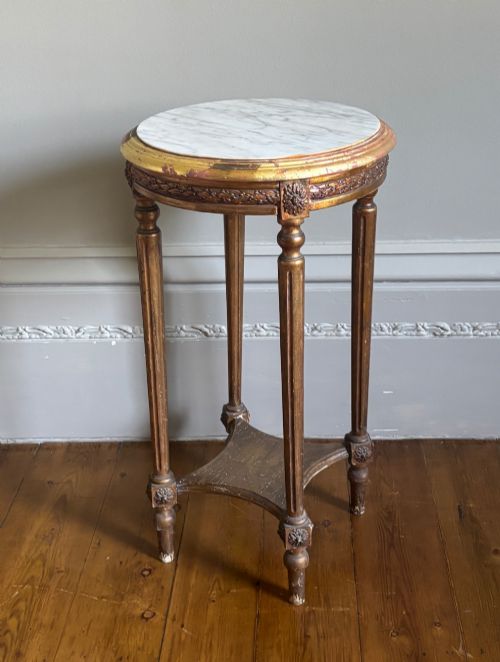
- A small circular table often featuring a marble top, frequently adapted or associated with lamp placement in period interiors. Originating in seventeenth-century France, these tables returned in various revival styles.
- Alabaster
- A fine-grained mineral softer than marble, utilised for lamps due to its translucent qualities. When illuminated, it diffuses a soft, even glow through the stone.
- Neoclassical Revival
- An architectural and decorative style drawing on classical Greek and Roman motifs, prominent in many nineteenth-century lighting designs. It favours symmetry, columns, and crisp detailing.
White Marble Lamp: Frequently Asked Questions
How do I date a marble lamp?
Dating relies on stylistic clues such as Neoclassical columns, Art Deco figural elements, or Victorian brass mounts. The wiring and fittings also offer hints, though most antique pieces have been rewired for contemporary use.
Examining the underside and the method of stone turning helps distinguish nineteenth-century examples from early twentieth-century reproductions.
Are these lamps heavy?
Natural stone and metal mounts make these lamps considerably heavier than ceramic or glass alternatives. Solid marble and alabaster bases provide a stable centre of gravity, preventing accidental tipping.
This weight requires sturdy placement surfaces, such as heavy side tables or deep consoles.
Can I find matching pairs?
Pairs of lamps appear regularly in both current listings and past archives, particularly in classical and nineteenth-century styles. Symmetrical lighting was favoured for grand rooms and sideboards.
Single lamps also feature prominently, often serving as statement pieces on occasional tables.
What metal trims are used?
Brass, gilt bronze, and ormolu are the primary metals used to accent the stone bodies. These mounts protect the edges of the marble and add decorative contrast through classical motifs.
The metalwork often indicates the regional origin, with French pieces frequently featuring finely chased gilt bronze.