



Carved Alabaster Lamp
These carved alabaster lamps bring a soft, translucent glow to a room, cast through fine stone carved into urns, figures, and bowls.
Carved Alabaster Lamp
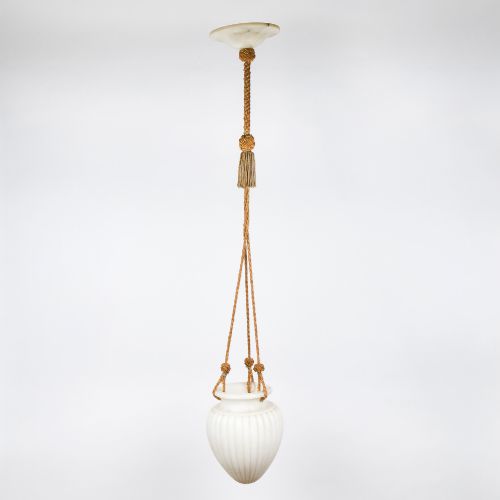
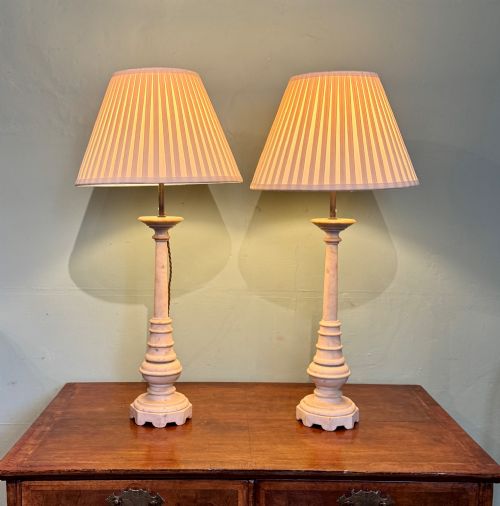
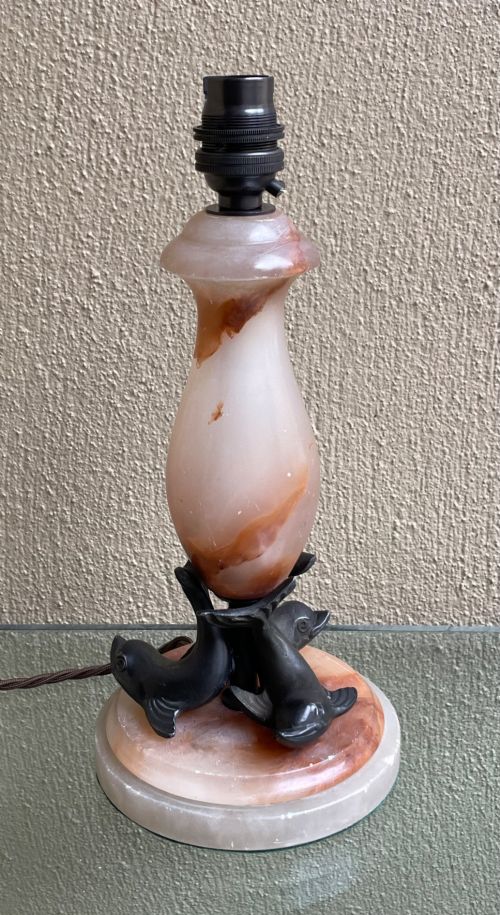
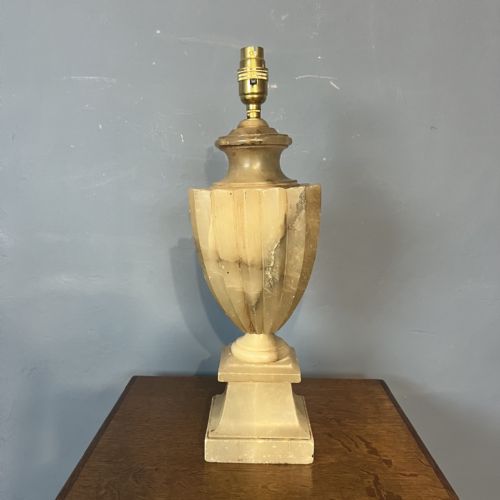
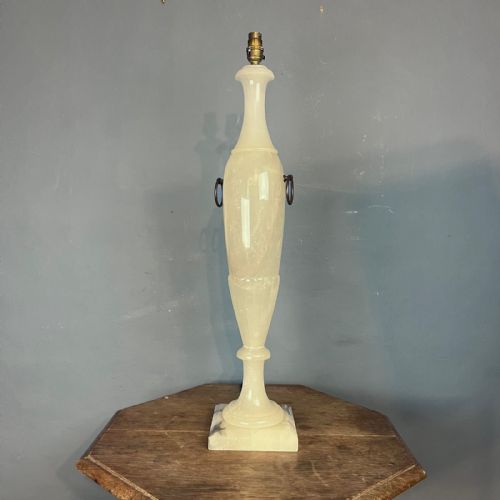
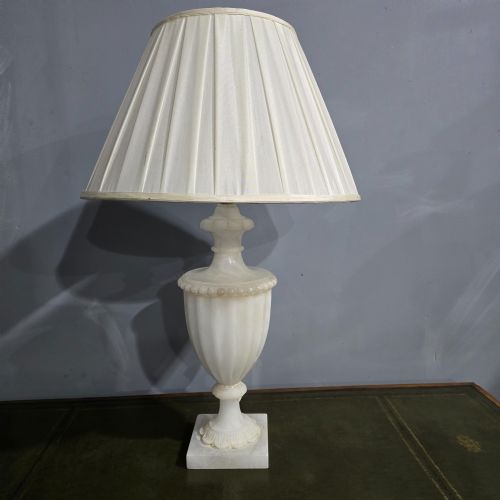
A carved alabaster lamp takes many sculptural forms, ranging from table lamps and pedestal columns to hanging ceiling lights and floor standing models. The table lamp is the most common version you will meet on this page, often built with a substantial urn or figural base.
The objects span several decades and styles, including Victorian, Edwardian, and Art Deco periods, alongside Neoclassical and Classical Revival designs. Many pieces originate from Italy or Sweden, reflecting European craftsmanship of the late nineteenth and early twentieth centuries.
Makers utilised the natural translucency of the stone to diffuse light effectively, whether in a simple white alabaster hanging light or an elaborate figural piece. These lamps serve as both functional lighting and sculptural centrepieces in a room.
What varies in quality
The refinement of the carving separates finer examples from simpler production, particularly in figural lamps and detailed botanical motifs. Finer pieces display crisp lines and deliberate proportions, whereas basic versions rely solely on the natural grain of the stone for visual interest.
The integration of secondary materials such as brass fittings, metal mounts, and glass elements dictates the overall harmony of the piece. Superior examples maintain a balance between the heavy alabaster body and the supporting hardware.
Listings feature items spanning from the late nineteenth century through the 1930s, incorporating alabaster, marble, onyx, brass, and fabric.
The Carved Alabaster Lamp Glossary
- Alabaster
- A fine-grained, translucent stone that transmits light when carved thin. It is easily worked and has been used for centuries for decorative vessels and lighting.
- Campana Urn
- A bell-shaped vessel with a flared lip and a footed base. This classic form frequently serves as the body for table lamps.
- Art Deco
- A design style from the early twentieth century characterised by sleek geometric shapes and stylised motifs. Pieces from this era often feature clean, streamlined silhouettes.
- Neoclassical Revival
- An architectural and decorative style drawing inspiration from classical antiquity. Lamps in this style incorporate classical columns, urns, and formal symmetry.
Carved Alabaster Lamp: Frequently Asked Questions
How do I clean a carved alabaster lamp?
Alabaster is a relatively soft and porous stone that absorbs liquids easily. Dust the surface gently with a dry, soft cloth and avoid using water or chemical cleaners.
If the stone requires deeper cleaning, consult a specialist conservator rather than attempting DIY methods. Moisture can stain or dissolve the surface finish permanently.
Are these lamps heavy?
Solid stone construction makes these lamps substantially heavier than ceramic or metal alternatives. Table lamps and floor standing models require a sturdy surface or a secure floor area to support their weight safely.
When positioning a hanging light or pendant, check that the ceiling fixings and electrical drops can bear the load of the stone bowl.
How do I date a carved alabaster lamp?
Stylistic clues such as Art Deco geometric lines or Victorian ornamentation help narrow down the period. The wiring style and fabric cords also offer evidence, though many older pieces have been re-wired for modern use.
Italian and Swedish origins appear frequently across different decades, with turn-of-the-century pieces often showing heavier neoclassical influences.
Do these lamps give off bright light?
Alabaster diffuses light rather than projecting a direct beam, creating a warm, ambient glow through the stone itself. The thickness of the carved body determines how much light filters through the material.
They function best as atmospheric room lighting or accent pieces rather than stark task lights for reading.