





Alabaster Bedside Lamps
Alabaster bedside lamps bring a warm, translucent glow to a room, pairing carved stone with period metalwork.
Alabaster Bedside Lamps
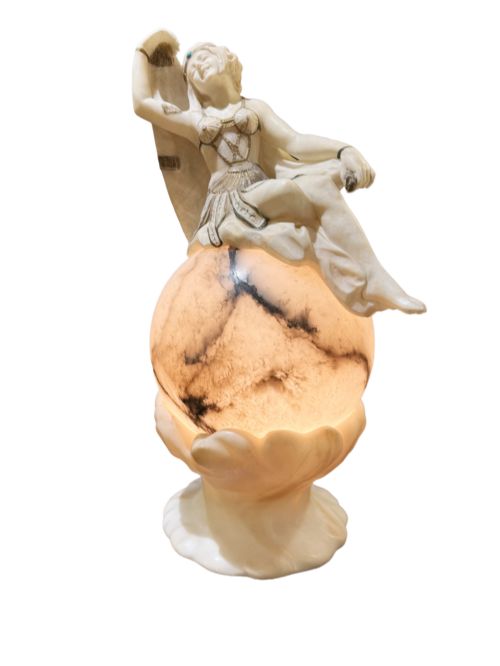
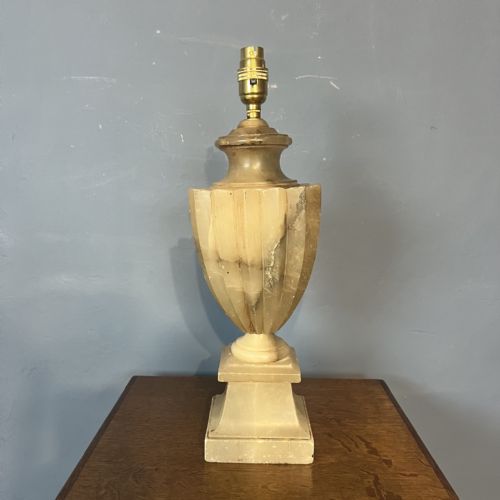
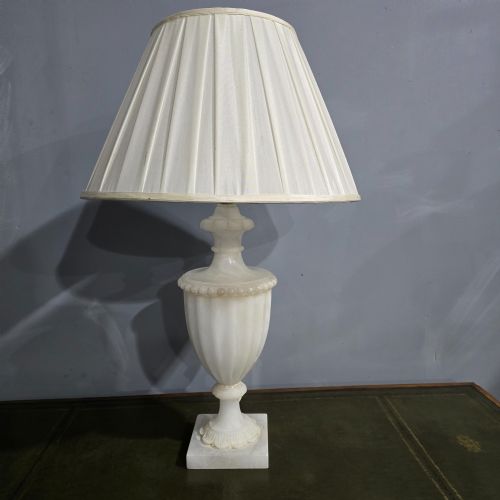
When you search for alabaster bedside lamps, you are looking at solid stone table lamps designed for domestic lighting, usually featuring carved columns, urns, or figural subjects. These pieces predominantly date from the late nineteenth century through to the 1930s, spanning the Edwardian era and the Art Deco period.
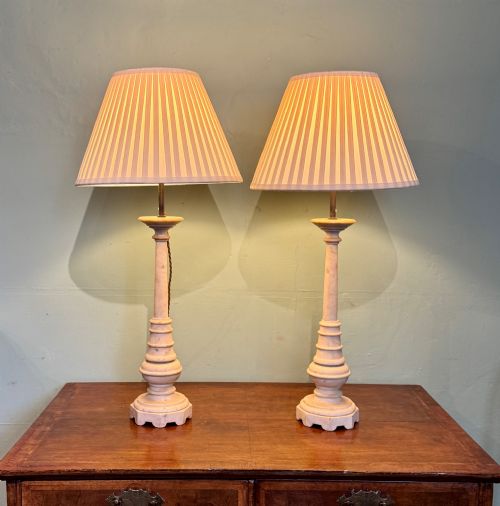
The versions you are most likely to meet on this page include pairs of classical columns and single sculptural pieces. They draw on Neoclassical, Classical Revival, and Art Deco styles, originating from workshops that utilised fine Italian stone.
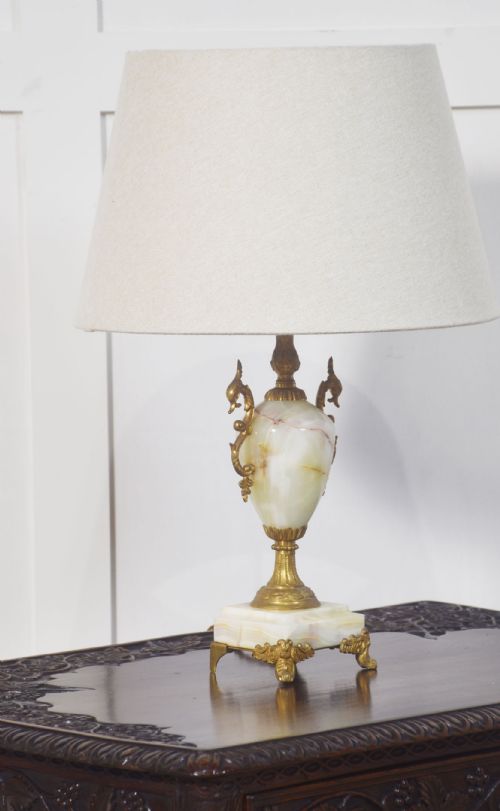
The forms function primarily as table lamps or bedside lights, often combining translucent stone bodies with brass, patinated metal, or glass elements. They offer a soft, diffused illumination that highlights the natural veining and warmth of the material.
How they were made
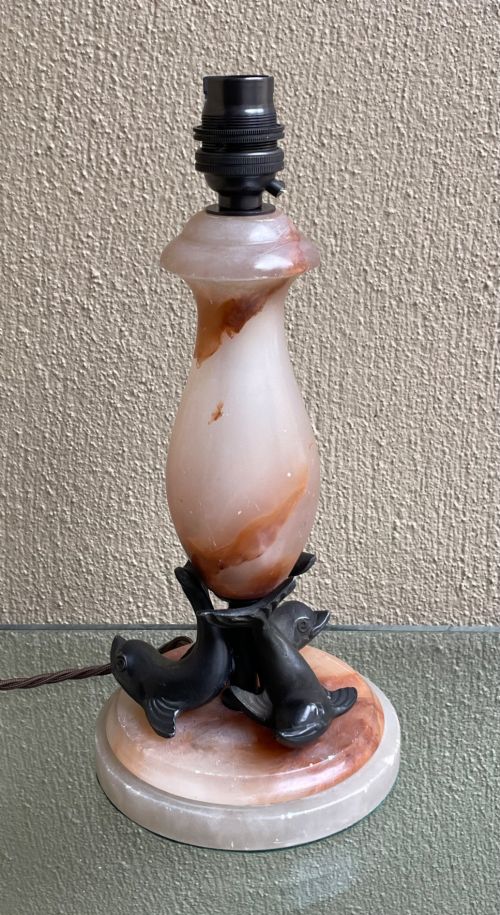
The makers of these lamps turned and carved alabaster, white onyx, and marble on lathes or shaped them by hand to achieve smooth columns and urn bodies. This stonework was then mounted with brass or patinated metal hardware, securing the electrical fittings and bases.
Many examples incorporate fabric shades or glass components to complete the assembly. The natural translucency of the stone allows light to pass directly through the body when illuminated.
Alabaster Bedside Lamps Retail Price Guide 2026
Typical asking prices for alabaster bedside lamps among the pieces listed under this phrase on Sellingantiques today, from the lower quarter to the upper quarter. They describe what is for sale here now, not the wider market.
Current listings span five distinct periods, reaching from the 19th Century through the 1930s.
What varies in quality
The standard of carving and the clarity of the stone separate the finest examples from standard production pieces. Finer lamps display crisp architectural details, balanced proportions, and striking natural veining without distracting inclusions.
The quality of the metal mounts and the integration of the brass or patinated hardware also determine the character of the piece. Substantial metalwork and well-matched pairs demonstrate superior craftsmanship from the period.
The Alabaster Bedside Lamps Glossary
- Alabaster
- A fine-grained, translucent stone prized for its ability to diffuse light softly. It is softer than marble and takes a smooth polish.
- Neoclassical
- A revival style drawing on classical Greek and Roman architecture. It appears in columns, urn shapes, and symmetrical geometric designs.
- Art Deco
- A design style from the early twentieth century characterised by streamlined forms and geometric motifs. It influences the cleaner, more stylised lamp bases from the 1920s and 1930s.
- Patinated metal
- Metal surfaces treated with chemical processes or age to produce a specific aged finish. It provides a dark or metallic contrast to the pale stone.
Alabaster Bedside Lamps: Frequently Asked Questions
What periods do alabaster bedside lamps come from?
The pieces available span from the nineteenth century through the Edwardian period and into the 1930s. The selection includes examples from 1900, 1910, 1920, and 1930.
Most items reflect the design movements of their respective decades, ranging from ornate classical revivals to cleaner Art Deco silhouettes.
How do I identify white onyx versus alabaster?
Alabaster and white onyx both offer a pale, translucent appearance when lit, but onyx typically displays distinct linear banding. Alabaster tends to have a more uniform, cloudy texture with subtle veining.
Both materials were worked into similar forms during the early twentieth century, often mounted on brass or patinated metal bases.
Are these lamps usually found in pairs?
The inventory includes both individual table lamps and matched pairs. Pairs are particularly common among nineteenth-century and early twentieth-century examples.
Matching sets often feature identical stone turning and corresponding brass mounts designed to flank a bed or sideboard.
How do these lamps light a room?
The stone bodies allow light to diffuse directly through the material itself, producing a gentle, ambient glow. This makes them well-suited for bedside use where harsh direct light is undesirable.
Many designs combine this stone illumination with traditional fabric shades to direct light upward and downward.