


White Glass Oil Shade
These white glass oil shade examples diffuse paraffin lighting evenly across Victorian and Edwardian rooms, offering both functional brightness and period charm.
White Glass Oil Shade
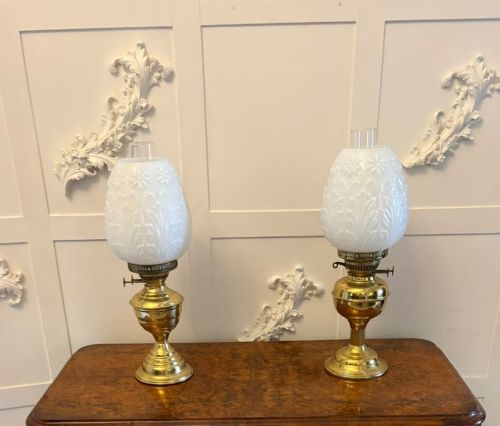
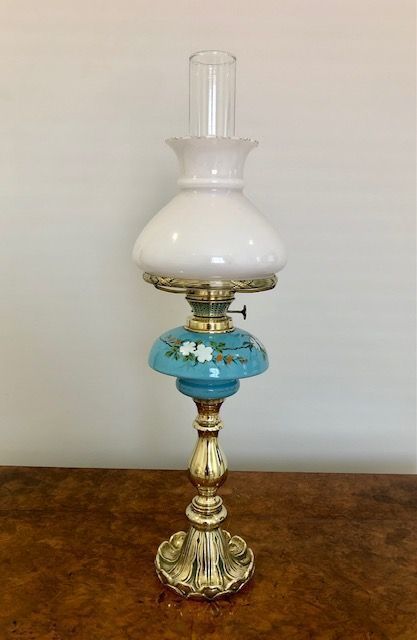
When you search for a white glass oil shade, you encounter functional lighting components dating from the Victorian and Edwardian eras. These pieces sit atop brass or ceramic oil lamps, softening the glare of the burner while casting a steady downward illumination.
The selections on this page span the late nineteenth century into the early twentieth century, featuring opaque, opaline, and milk glass variants. Many survive paired with brass columns or porcelain bases from the same period.
How they were made
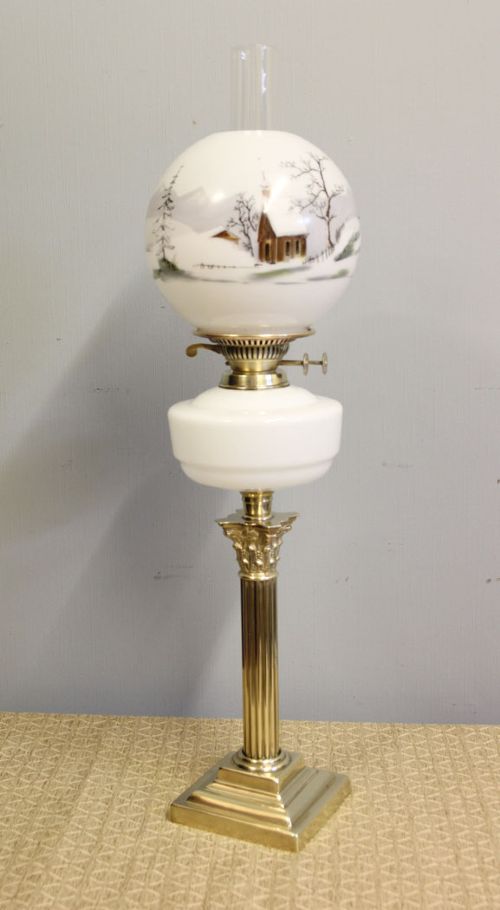
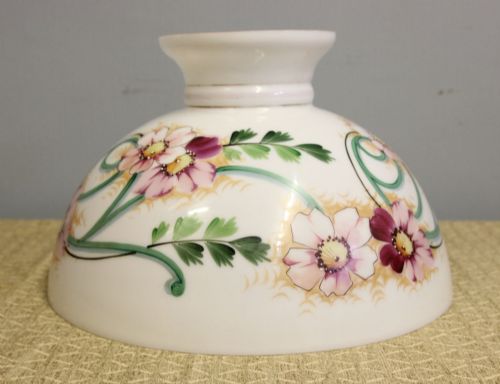
Glassmakers utilised mould-blowing and hand-finishing techniques to shape opaque and opaline glass into globes and fluted shades. Enamel and hand-painted motifs were sometimes applied to the exterior surface before a secondary firing.
Mounting rings made of brass frequently secure the lower collar of the shade, designed to fit standard burner galleries on nineteenth-century paraffin lamps.
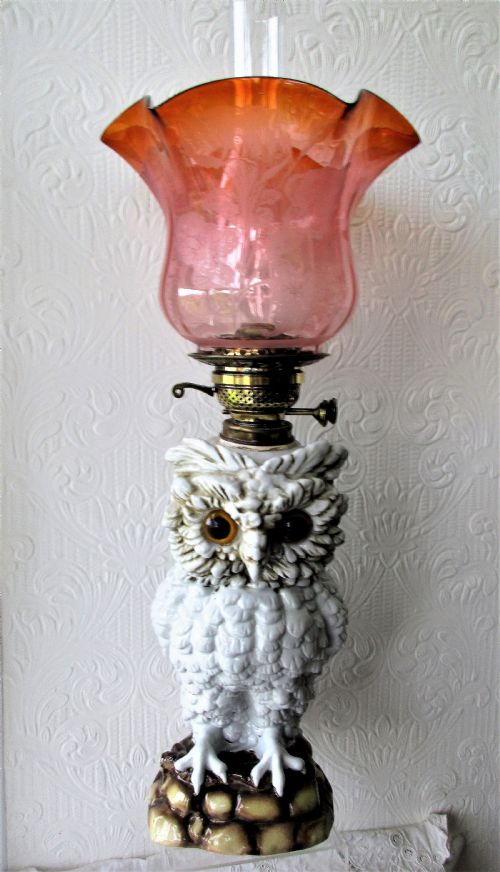
Listings feature materials such as brass, opaline glass, milk glass, and Sitzendorf porcelain across the Victorian and Edwardian periods.
What varies in quality
The distinction between standard utility shades and finer examples lies in the weight of the glass and the crispness of any hand-painted enamel decoration. Heavier opaline or milk glass displays a more even density when lit.
Superior execution shows in the smooth ground rims and precise fitter collars that sit level within the brass burner gallery, avoiding any wobble during use.
Sitzendorf·Wild and Wessel
The White Glass Oil Shade Glossary
- Opaline glass
- A pale, translucent white glass that diffuses light softly without total opacity. It became widely popular during the Victorian period for lamp shades and globes.
- Milk glass
- An opaque white glass that can be translucent or solid in appearance. It was frequently moulded into various decorative shapes for nineteenth-century lighting.
- Collar
- The narrow lower ring of a lamp shade designed to slide into a brass gallery or holder. Proper sizing ensures the shade remains secure above the burner.
- Gallery
- The metal collar atop an oil lamp that holds the glass shade in place using thumbscrews. Brass is the most common metal found in these listings.
White Glass Oil Shade: Frequently Asked Questions
How do I measure for a replacement shade?
Measure the outside diameter of the fitter collar at the base of the shade to ensure it matches your lamp gallery. Standard nineteenth-century burners required specific opening sizes to sit securely.
Check the height of the globe as well to maintain correct proportions with the brass or ceramic font below.
Were these shades always white?
Victorian and Edwardian makers produced these lighting components in opaline, milk, and opaque white glass to maximise light reflection. Painted floral scenes and winter motifs were often added over the white background.
White glass remained the standard choice for functional interior lighting before the widespread adoption of electricity.
Can I use these on converted electric lamps?
Many period shades fit modern brass hardware if the fitter dimensions align with contemporary gallery sizes. Care must be taken with vintage glass to avoid over tightening any retaining screws.
Ensure the bulb wattage matches the thermal tolerances of antique opaline or milk glass.
How do I clean nineteenth-century glass shades?
Wash the glass gently in warm, soapy water using a soft cloth, avoiding abrasive pads that can damage hand-painted enamel details. Vintage painted surfaces require particular care during cleaning.
Dry thoroughly before placing the shade back onto a brass gallery.