



Edwardian Oil Lamp Globe
These edwardian oil lamp globe examples bring soft period light and decorative glasswork to a room.
Edwardian Oil Lamp Globe
An edwardian oil lamp globe provides the protective and diffusing cover for nineteenth and early twentieth century lighting. Buyers examining this page encounter glass shades paired with brass stands, onyx bodies, and ceramic or faience bases.
The selections span the late nineteenth century through to the early decades of the twentieth century. Forms range from standalone shades with brass rings to complete table lamps featuring etched designs, opaline glass, and milk glass.
How They Were Made
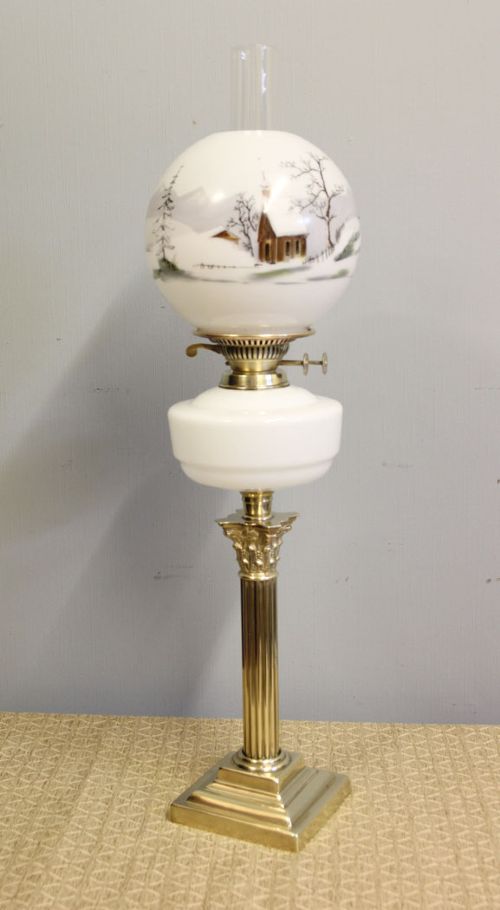
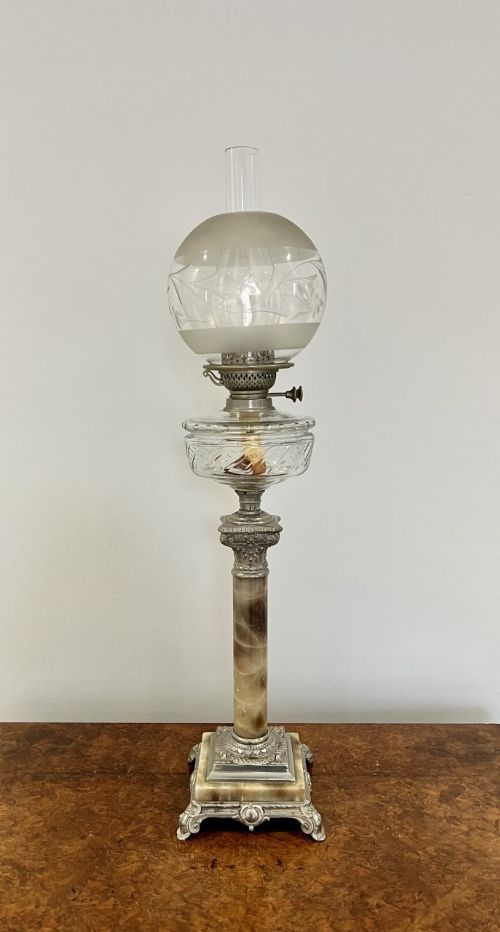
Glassmakers shaped opaline, milk, and cut glass to form the spherical and flared shades required for oil burning. Artisans employed etching techniques to produce decorative winter scenes and botanical motifs across the surface of the glass.
Metalworkers utilised brass, bronze, and heavy stands to support the fonts and burners. Certain pieces incorporate ebonised wood or onyx columns, demonstrating the mixed media assembly typical of the period.
Edwardian Oil Lamp Globe Retail Price Guide 2026
Typical asking prices for edwardian oil lamp globe among the pieces listed under this phrase on Sellingantiques today, from the lower quarter to the upper quarter. They describe what is for sale here now, not the wider market.
Listings for this phrase feature glass shades paired with brass, onyx, and bronze across the nineteenth and twentieth centuries.
What Varies in Quality
The refinement of the glasswork distinguishes superior examples from simpler ones. Crisp etching and smooth, evenly coloured opaline or milk glass indicate careful production by skilled artisans.
The weight and finish of the metal mounts determine the overall substance of the piece. Substantial brass components and integrated bronze or faience elements elevate the presence of the lamp.
Messengers·Harrods
The Edwardian Oil Lamp Globe Glossary
- Opaline glass
- Opaque or translucent glass with a milky appearance, commonly used for soft light diffusion in period shades.
- Etched shade
- A glass globe decorated by acid or abrasive techniques to create frosted patterns against clear or tinted backgrounds.
- Art Nouveau
- A decorative style characterised by flowing, organic lines, frequently seen in the metalwork and floral motifs of these lamps.
Edwardian Oil Lamp Globe: Frequently Asked Questions
What periods do these globes come from?
The pieces span the late nineteenth century through to the Edwardian era and the early decades of the twentieth century. They reflect the manufacturing standards and stylistic preferences of those specific decades.
Design influences range from Victorian interpretations to distinct Art Nouveau aesthetics, showing how domestic lighting evolved during this transitional period.
How were these globes originally used?
These glass globes sat atop oil lamps to steady the flame, protect the open fire, and diffuse the harsh glare of burning oil into a softer illumination for parlours and dining rooms.
Many examples paired blown or etched glass with heavy brass stands, creating stable table lighting before the widespread adoption of electricity.
Can these antique lamps still use oil?
While some retain their original oil-burning mechanisms, a significant portion found today has been converted to electricity for modern household use. This conversion allows them to function safely as decorative table lamps.
Buyers should examine the wiring and fittings of any converted lamp to ensure it meets current safety standards before plugging it in.
What materials make up these lamps?
The globes themselves consist of glass, most commonly found in opaline, milk, cut, or opaque varieties with etched surface decoration. These sit above bodies constructed from brass, bronze, onyx, or faience ceramics.
Additional structural elements occasionally include ebonised wood and heavy adjustable metal stands designed to support the weight of the font and shade.