
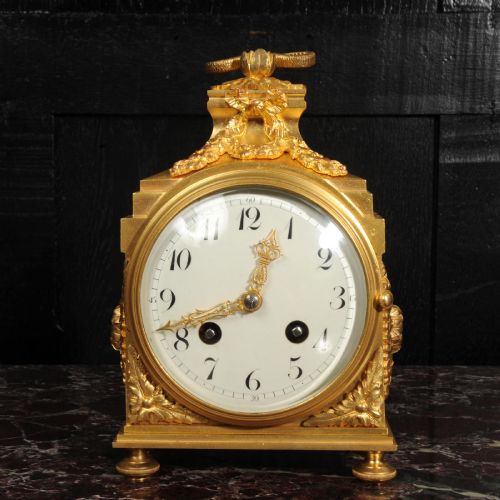

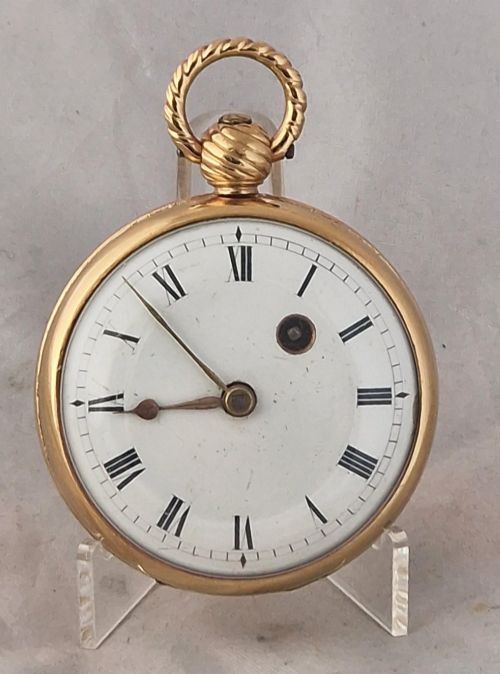


White Gilt Timepiece
A white gilt timepiece brings together pale stone and gleaming metal, offering refined mechanical precision for the mantel or desk.
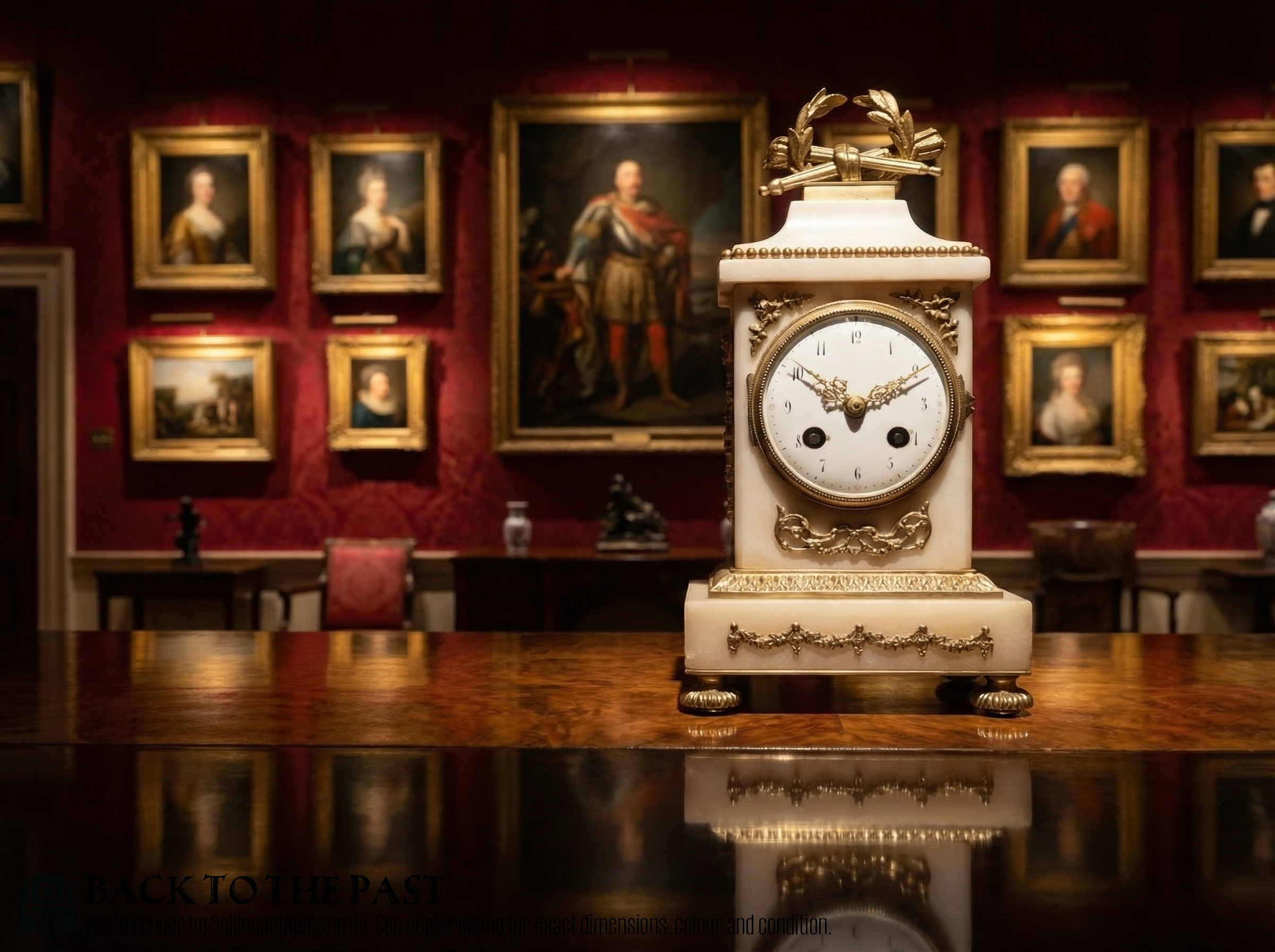
White Gilt Timepiece
When you search for a white gilt timepiece, you encounter horizontal mantel clocks, upright carriage clocks, and pocket watches originating largely from the nineteenth century. These objects combine pale white marble or alabaster with gilt bronze, ormolu, or brass mounts.
The pieces on this page lean heavily towards French mantel clocks and carriage clocks, alongside Georgian pocket watches and Comtoise wall clocks. You will frequently find white marble bodies paired with fire-gilded brass or ormolu detailing.
Makers and retailers such as Paul Garnier, AD Mougin, and James Ritchie feature among these horological items. The forms range from miniature gilt brass carriage cases to substantial marble and ormolu clock garnitures.
Materials and construction
The structural bodies of these clocks rely on carved white marble, alabaster, or glass domes protecting delicate movements. Stonemasons shaped the marble and alabaster into architectural or serpentine forms to house the brass clockworks.
Metal components utilise brass, gilt bronze, and ormolu, often finished with mercury gilding to impart a durable brilliance. Dial faces incorporate enamel with hand-painted numerals, paired with blued steel hands and engine-turned masks.
Listings feature white marble and alabaster bodies paired with ormolu, gilt bronze, and brass across nineteenth-century French and British periods.
Distinctions in quality
The standard of a white gilt timepiece rests upon the crispness of the gilt bronze or ormolu casting and the precision of the stone carving. Higher-grade examples display sharp chisel work on the metal mounts and flawless polish on the white marble or alabaster.
Internal mechanics dictate a significant portion of value, distinguishing standard movements from those featuring platform escapements, striking trains, or repeater complications. Original gilding and signed dial faces further separate standard production items from workshop masterworks.
Louis Goret Paris·Gontard and Bolviller Paris·Paul Garnier·Charles Frodsham and Holingue Freres·Joseph Soldano·Baltazart·AD Mougin Paris·James Ritchie and Son Edinburgh
The White Gilt Timepiece Glossary
- Ormolu
- A method of applying finely ground high-carat gold to a bronze object using a mercury amalgam. This technique creates a rich, lasting golden sheen on metal mounts.
- Carriage clock
- A small, portable spring-driven clock designed for travel during the nineteenth century. They usually feature glass panels allowing the movement to be seen.
- Fusee
- A conical pulley used in older clocks and pocket watches to equalize the declining pull of the mainspring as it unwinds. This mechanism ensures consistent timekeeping.
- Gorge case
- A distinct rectangular brass carriage clock case design with stepped top and bottom mouldings. It is frequently associated with quality nineteenth-century French makers.
- Pendule d'Officier
- A French military officer style of portable clock often housed in a leather travel case. These typically display robust movements suited for transport.
White Gilt Timepiece: Frequently Asked Questions
How do I wind a carriage clock?
Most carriage clocks require a specialised key inserted into the winding arbor located on the base or backplate. Turn the key gently clockwise until resistance indicates the mainspring is fully tensioned.
Avoid overwinding the mechanism, as this can strain the internal spring. Regular servicing every few years ensures the gear train operates smoothly.
What is a clock garniture?
A clock garniture is a matched set consisting of a central mantel clock accompanied by side ornaments such as urns or candelabras. These decorative suites were designed to sit harmoniously on a fireplace mantel or sideboard.
Materials usually match the central timepiece, combining white marble and ormolu or gilt bronze. They gained widespread popularity during the nineteenth century in formal European interiors.
How do I tell if a carriage clock is antique?
Examine the construction of the movement, the escapement type, and the hand-cut screws or pillars inside the case. Nineteenth-century examples often feature platform escapements and numbered serial plates rather than mass-produced modern components.
Look for maker signatures engraved on the backplate or enamel dial. The presence of hand-cut engraving and original mercury gilding also points towards an authentic period origin.