




Ornate White Mantel Clock
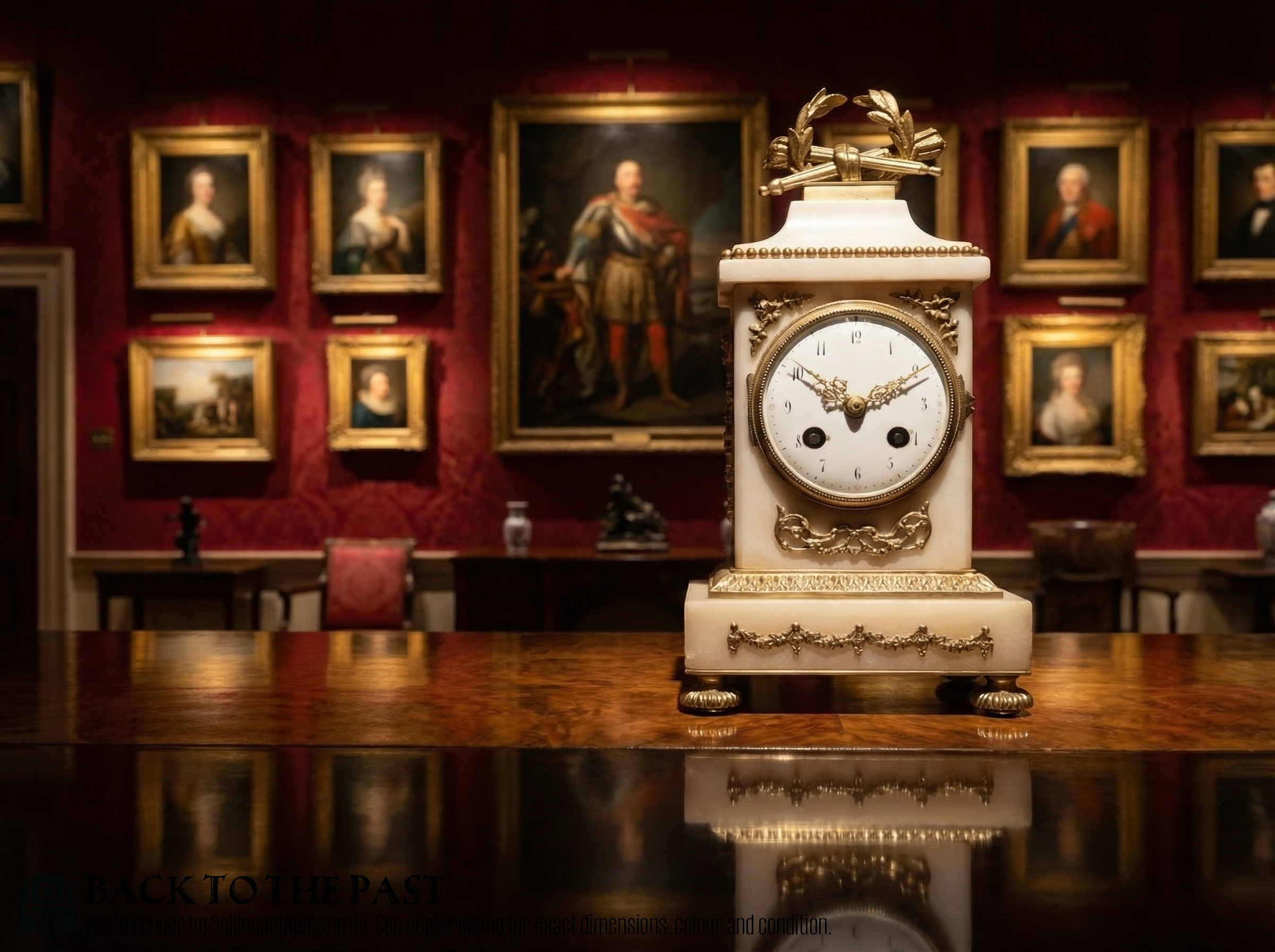
An ornate white mantel clock brings architectural presence and classical French styling to a room, combining polished stone and gilt metal.
Ornate White Mantel Clock
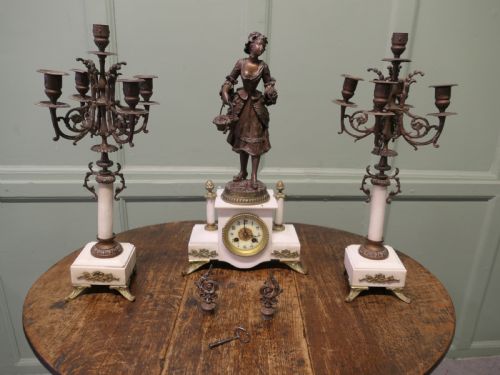
When you search for an ornate white mantel clock, you encounter nineteenth-century timepieces shaped by French Louis XVI, Louis XIV, and Rococo design traditions. These decorative objects combine pale stone bodies with metallic ornamentation, often appearing alongside matching garniture sets.
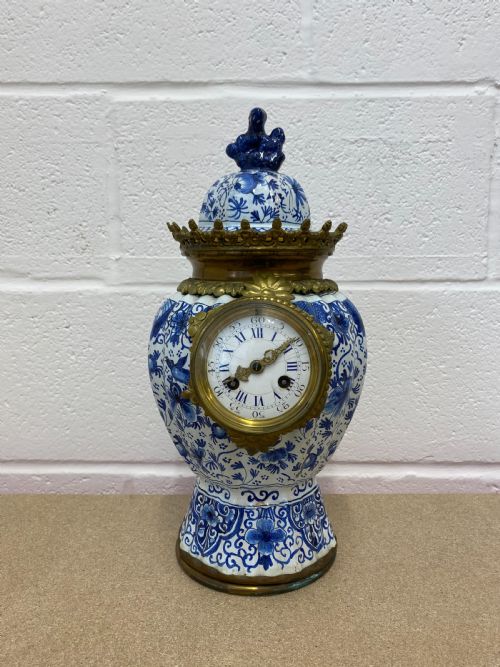
The selections on this page span the mid-nineteenth century through the Edwardian period, featuring white marble and alabaster bodies paired with brass, ormolu, and gilt bronze mounts. Enamel dials and glass bezels complete the standard format of these domestic timepieces.
Portico clocks, boudoir clocks, and carriage clocks represent the main object types available. Many pieces originate from French workshops, while English examples also appear among the listed items.
How they were made
Makers shaped white marble and alabaster into architectural columns, portico frames, and solid plinths to form the heavy structural core of each clock. These stone bodies required precise cutting and polishing to achieve smooth surfaces.
Cast brass and gilt bronze elements, often referred to as ormolu, were applied as decorative mounts, feet, and bezels. Enamel dials were painted with numerals and fitted behind protective glass.
Some tiny boudoir clocks are so petite they look as though they belong in a dollhouse for exceptionally wealthy clockmakers.
What varies in quality
The refinement of the cast metal mounts distinguishes high-grade examples from simpler production. Crisp chiselling in the gilt bronze and ormolu reveals the skill of the bronzier, whereas softer definition indicates a commercial casting.
The quality of the marble body and the harmony of the garniture sets influence the overall visual impact. Uniformity in the white stone and complete matching sets command greater attention than mismatched components.
St James London
The Ornate White Mantel Clock Glossary
- Ormolu
- Gilded bronze, where a layer of gold amalgam is applied to a bronze base. This technique creates a rich golden finish on decorative mounts.
- Garniture
- A set of matching decorative objects, typically comprising a central clock flanked by two matching vases or candelabra. These sets balanced mantelpiece arrangements in formal rooms.
- Portico clock
- A clock featuring a architectural frame supported by four columns, resembling a classical portico. This symmetrical form gained popularity during the nineteenth century.
- Boudoir clock
- A small, intimate timepiece designed for private rooms rather than large reception spaces. These clocks often feature delicate porcelain or alabaster cases.
- Enamel dial
- A metal dial face covered in fused glass powder to create a glossy, white surface. Numerals are painted onto this smooth layer.
Ornate White Mantel Clock: Frequently Asked Questions
Where did ornate white mantel clocks go?
These timepieces sat upon marble or wooden mantelpieces in nineteenth-century drawing rooms and parlours, serving as both functional timekeepers and decorative centrepieces.
Today, collectors place them on mantel shelves, sideboards, or console tables where their pale stone and gilt mounts catch the light.
How do I identify French Louis XVI style?
French Louis XVI style pieces display classical symmetry, straight architectural lines, and restrained ornamentation. You will often see urn motifs, columns, and gilt bronze mounts on a white marble base.
This aesthetic contrasts with the more asymmetrical and exuberant curves found in earlier Rococo designs.
What is a clock garniture set?
A clock garniture set includes a central clock accompanied by matching side pieces such as vases, urns, or candelabra. These matched items created a balanced display across a fireplace mantel.
Finding a complete set together remains a key consideration for collectors of nineteenth-century decorative arts.
How do I care for white marble?
White marble requires gentle dusting with a soft, dry cloth to prevent the accumulation of dirt on its polished surface. Avoid using harsh chemical cleaners or abrasive pads, which can damage the stone and strip the gilt mounts.
Keeping the clock away from direct sunlight and damp environments preserves both the marble and the delicate enamel dial.