





White Garden Urns
White garden urns bring classical presence to terraces and lawns through enduring metal, stone, and earthenware forms.
White Garden Urns
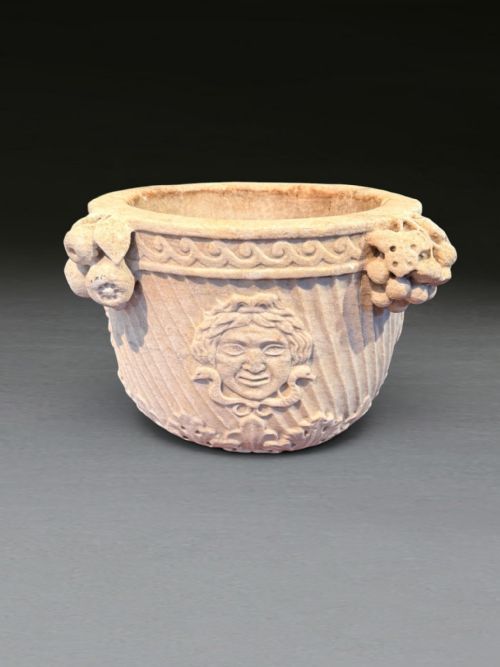
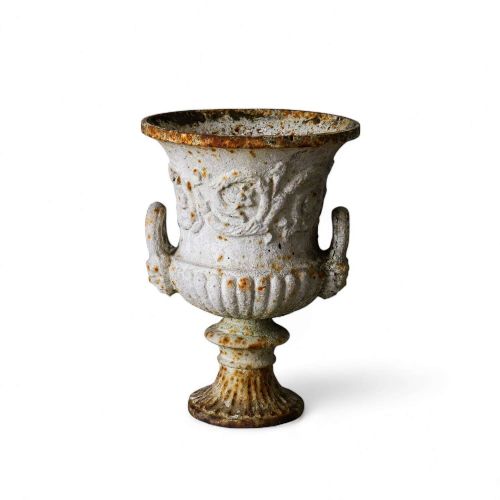
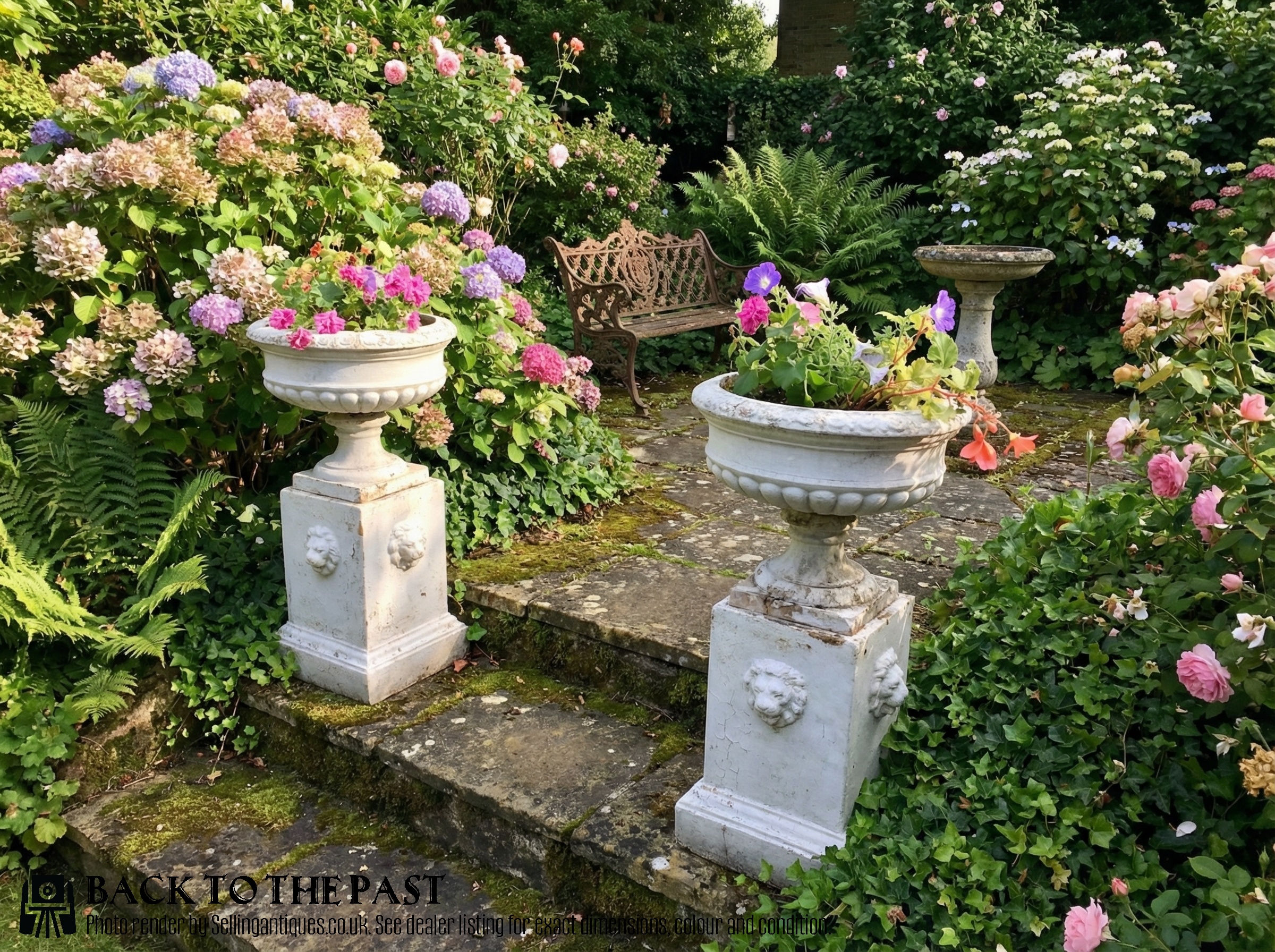
White garden urns span substantial cast iron, marble, terracotta, and earthenware forms designed for outdoor planting and display. These pieces draw on Victorian, Regency, and Italian Renaissance styles, often taking the classic campana or tazza shape atop matching pedestals.
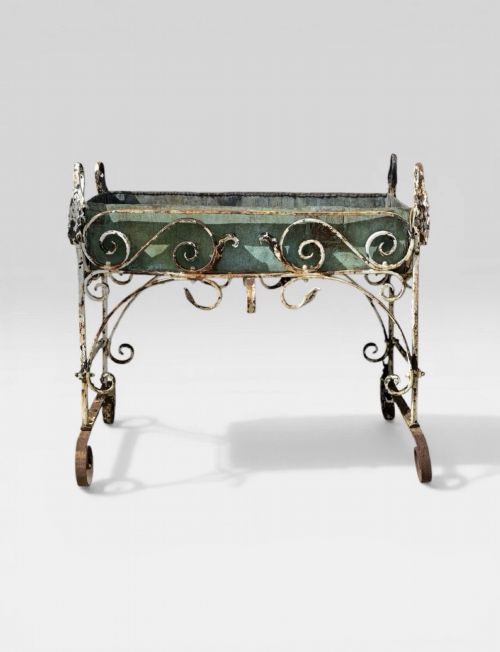
The selection on this page relies heavily on nineteenth-century examples alongside earlier Italian marble and eighteenth-century Delft pieces. Buyers frequently encounter robust cast iron vessels featuring painted or weathered surfaces alongside carved marble and terracotta garden planters.
Materials and Construction
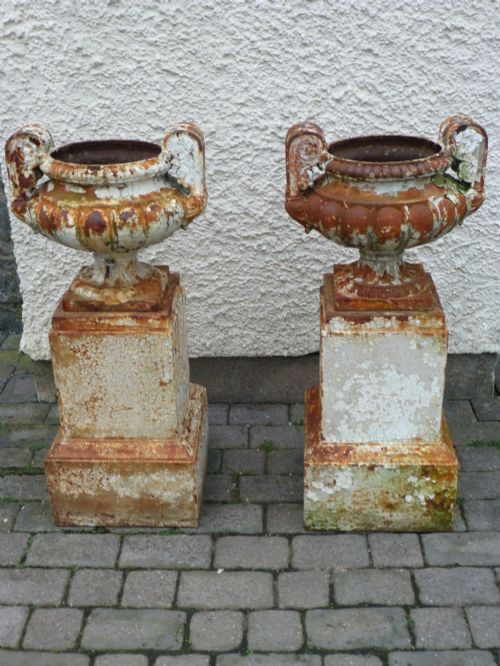
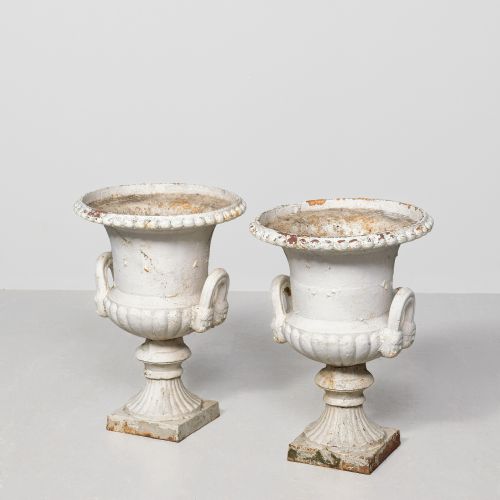
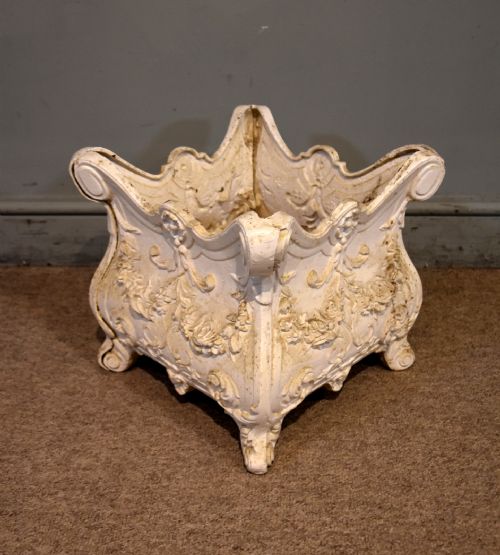
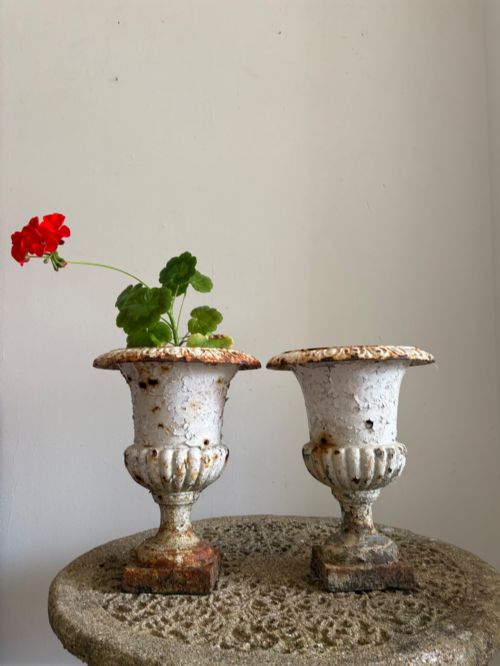
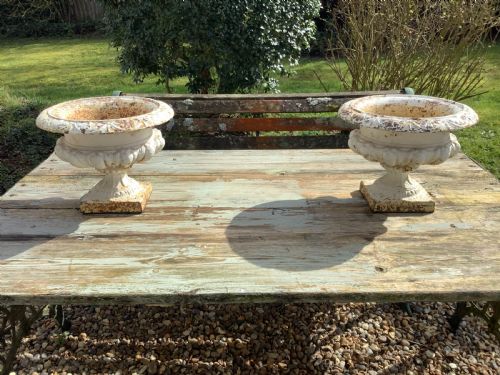
Foundries produced heavy metal urns by pouring molten cast iron into sand moulds, creating crisp relief details such as acanthus leaves and gadrooned rims. Iron pieces often received protective coats of paint that have since weathered or flaked away over decades outdoors.
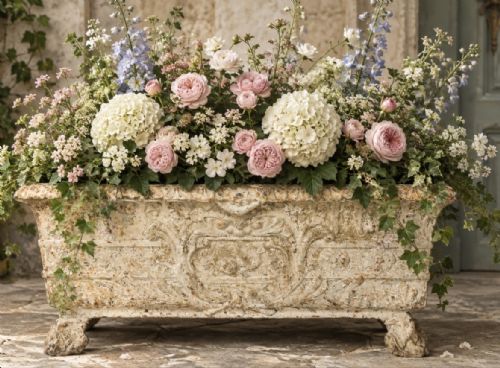
Stone and earthenware vessels required manual carving or throwing, utilising white marble, limestone, terracotta, and tin-glazed clay. These natural materials acquire distinct patinas through exposure to weather, plant roots, and soil.
Several heavy iron urns retain layers of old white paint that stubbornly survived decades of rain, mud, and climbing ivy.
Assessing Quality and Character
The distinction between ordinary and exceptional pieces lies in the crispness of the cast or carved ornament and the presence of matching original plinths. Master founders and stonemasons achieved sharper definition in classical motifs like acanthus foliage and egg-and-dart borders.
Integrity of form and surface age define desirability, particularly where original pedestals remain paired with their respective urns. Surviving layers of early paint or natural stone weathering add depth that machine-finished reproductions cannot replicate.
Dunfermline Clay Company·Falkirk Carron foundry·Coalbrookdale·Andrew Handyside
The White Garden Urns Glossary
- Campana
- A bell-shaped vessel form popular in classical architecture and garden ornamentation. These urns typically feature a wide flared rim tapering down to a narrow base.
- Tazza
- A shallow bowl or cup resting on a stem and foot, often used for garden planting. This classical form sits low and wide compared to traditional upright urns.
- Gadrooned
- Ornamented with a series of convex curves or flutes moulded in a parallel pattern. This decorative band often encircles the rim or body of an urn.
- Plinth
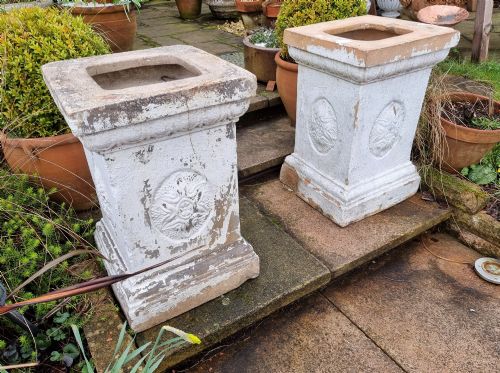
- A heavy rectangular or square block base supporting an urn or pedestal. It elevates the vessel to improve garden sightlines and stability.
- Tin-Glazed Earthenware
- Pottery coated with a white tin oxide glaze providing an opaque surface for decoration. Examples include historical Delft garden vessels.
White Garden Urns: Frequently Asked Questions
What plants suit deep cast iron urns?
Deep iron vessels accommodate substantial root systems for box balls, trailing ivy, and seasonal floral displays. Their weight provides stable anchorage for topiary.
Adequate drainage and internal protection help maintain both the planting medium and the interior metal condition over years of exposure.
How do I protect stone urns in winter?
Porous materials like terracotta and limestone require protection from freezing moisture that can cause cracking. Raising vessels off the ground on feet prevents water retention.
Moving vulnerable pieces under shelter or wrapping them securely during harsh frost safeguards the historical material against structural damage.
Are original painted surfaces worth preserving?
Original distressed paint finishes record the age and decorative history of metal garden antiques. Collectors value authentic surface patinas accumulated through decades outdoors.
Preserving these layers maintains the historical character of pieces produced by nineteenth-century foundries.
Do heavy urns need permanent foundations?
Large cast iron and marble urns weigh considerable amounts and require level, firm ground to prevent shifting or subsidence. Stone plinths distribute the load evenly across patios or lawns.
Proper site preparation ensures tall classical compositions remain upright and secure in exposed garden positions.