


Large Stone Urns
Large stone urns are substantial vessels carved or cast for display, bringing sculptural weight and classical proportion to gardens and interior spaces.
Large Stone Urns
When you search for large stone urns, you encounter robust garden ornaments and interior display pieces drawn from eighteenth, nineteenth, and early twentieth century traditions. These objects encompass carved marble garden vessels, weathered cast stone planters, and monumental neoclassical campana forms designed to anchor a terrace or hall.
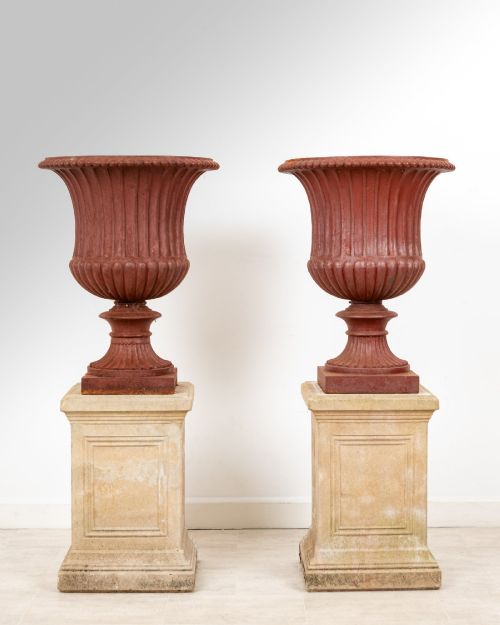
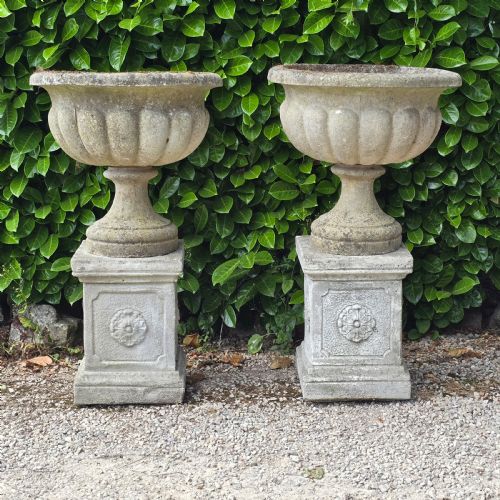
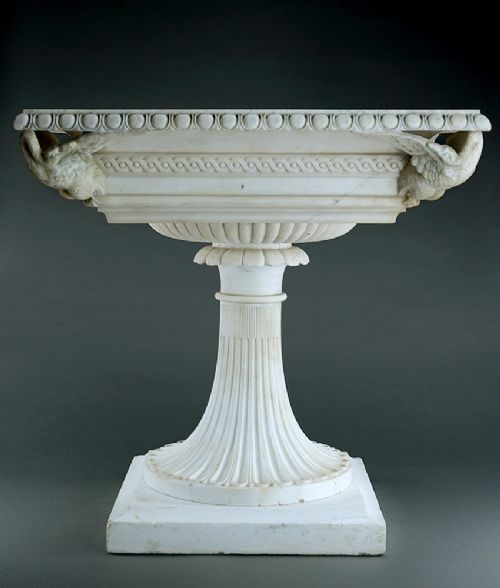
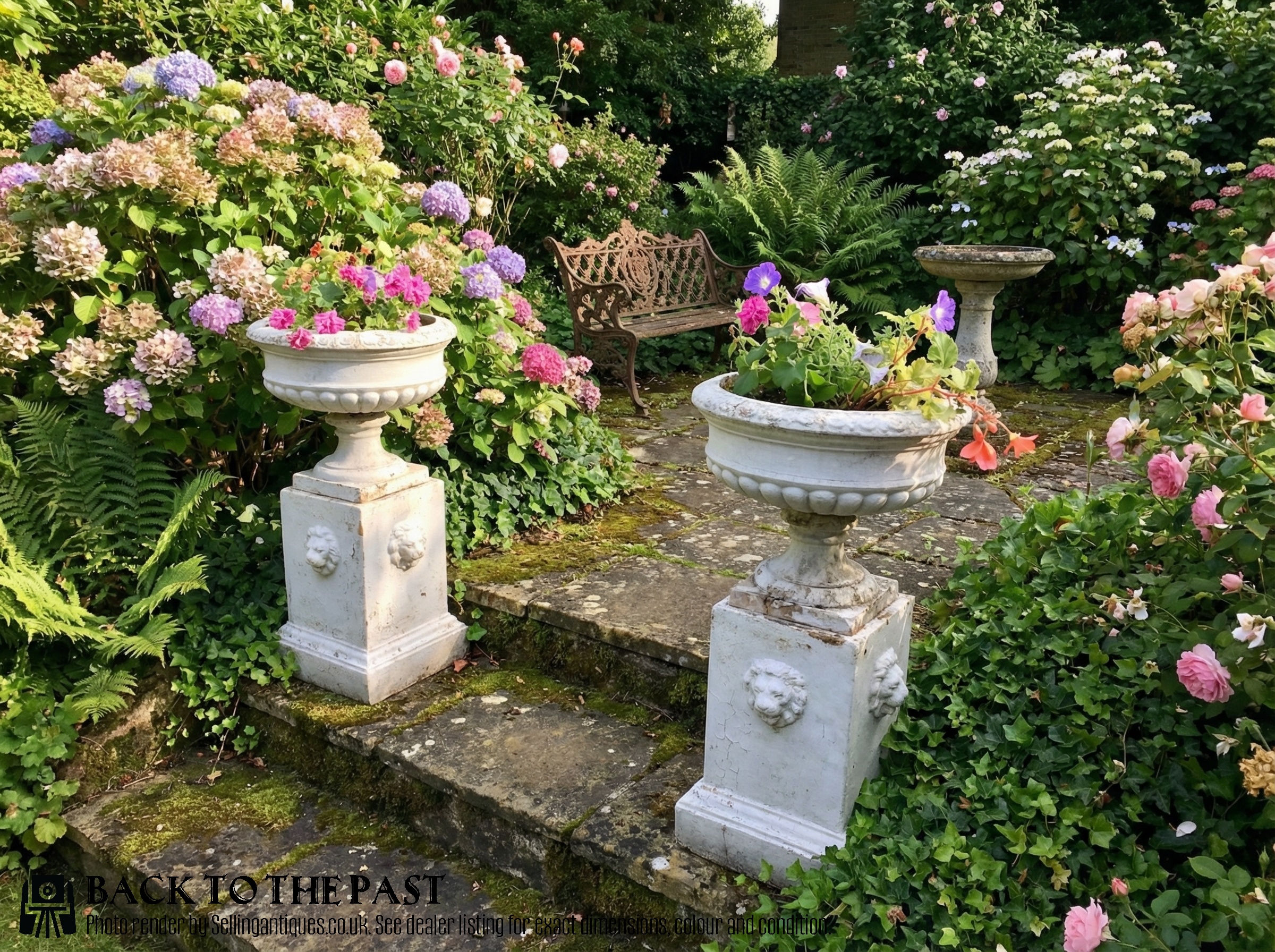
The selections available here lean heavily toward classical revival designs, alongside rustic Mediterranean oil jars and grand tour marble labrum types. You find pairs resting on stone pedestals alongside single seven-sided vessels showing decades of environmental weathering.
Originating largely from British, European, and Italian workshops, these items serve as focal points in landscape architecture and grand interiors. Their utility spans from garden planters holding seasonal greenery to decorative architectural elements placed upon plinths.
How they were made
Makers shaped these pieces through direct stone carving, hand-chivelling blocks of marble, alabaster, and various stones to achieve crisp classical detailing. Other examples utilise cast stone, reconstituted stone, and cast iron poured into moulds to replicate heavy masonry forms.
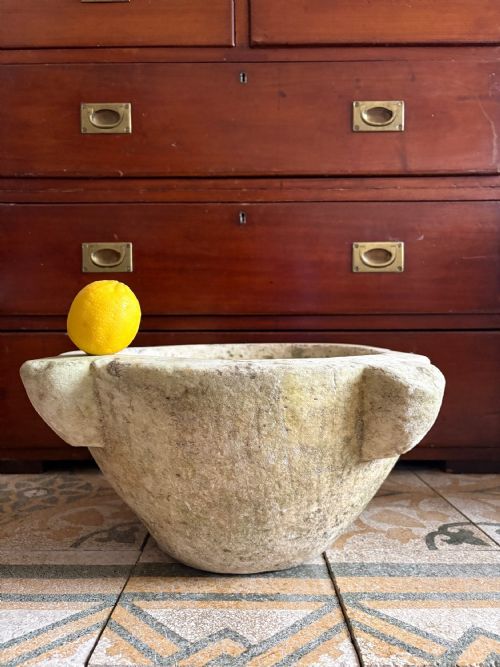
Surface finishes result from both intentional hand-polishing on interior decorative items and natural weathering accumulated over decades on exterior garden vessels. Artisans also utilised turning lathes for circular items like tazzas and mortars, combining mechanical precision with hand-finished surfaces.
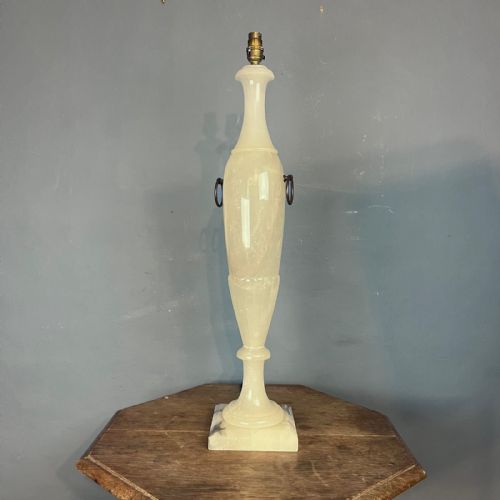
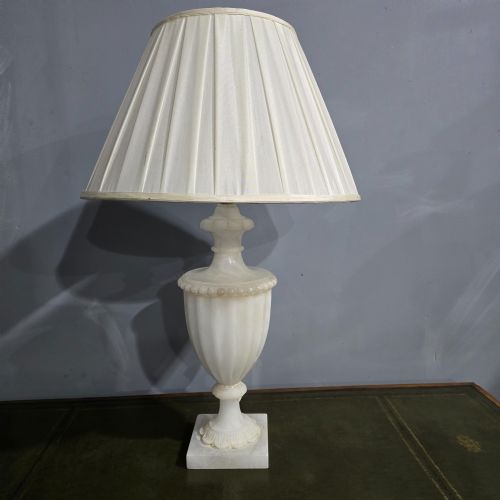
Object types range from shallow tazzas and mortar bowls to monumental campana urns and interior alabaster table lamps.
What varies in quality
The distinction between ordinary and exceptional pieces lies in the crispness of the carving and the architectural proportion of the vessel. Superior examples exhibit deeply undercut foliage, balanced handles, and harmonious lines that reflect academic study of classical antiquities.
Material integrity and geological patterning also dictate value, with fine-grained marbles and unblemished alabaster commanding greater attention than coarse or heavily repaired masonry. Furthermore, uniform patination and natural lichen growth accrued through weathering elevate the visual weight of exterior pieces.
Boschetti·Coalbrookdale
The Large Stone Urns Glossary
- Campana form
- A bell-shaped vessel with a flaring rim and a tapering lower body, commonly seen in classical garden urns. This silhouette originates from ancient bronze and ceramic drinking vessels.
- Labrum
- A large shallow basin or washing vessel associated with classical antiquity, often adopted for grand tour decorative pieces. These items sit on low pedestals or feet.
- Tazza
- A shallow saucer-like cup or vase mounted on a stem and foot, used for display rather than utility. They appear in marble, malachite, and cast stone variants.
- Grand tour
- A cultural journey undertaken by wealthy Europeans in the eighteenth and nineteenth centuries, bringing home souvenir antiquities and classical copies. These objects often display high craftsmanship and academic styling.
- Plinth
- A heavy base or pedestal upon which an urn or statue stands to elevate it within a garden or room. They provide structural stability and visual presence.
Large Stone Urns: Frequently Asked Questions
Can large stone urns stay outside all winter?
Most cast stone, reconstituted stone, and heavy masonry urns tolerate winter weather well, provided they have adequate drainage holes to prevent trapped water from freezing and cracking the material. Porous stones and alabaster pieces benefit from winter storage in a dry shed or greenhouse.
Elevating the base slightly off the ground on pot feet prevents moisture absorption from frozen soil. Regular clearing of fallen leaves prevents staining and moisture retention on the exterior surfaces.
How do I clean an antique stone urn?
Gentle brushing with a soft bristle brush and warm water removes loose dirt and surface debris without harming the stone or its accumulated weathering. Harsh chemical cleaners and pressure washers strip away historic patination and erode the outer surface.
Allowing natural lichen and moss to remain on garden urns is standard practice, as it highlights the age of the piece. Interior decorative urns require only a dry cloth to keep dust at bay.
How do I secure a heavy stone urn?
Due to their considerable weight and top-heavy proportions, large urns require a level, stable foundation such as a paved patio, reinforced terrace, or dedicated stone plinth. Securing them with discreet stainless steel dowels or masonry adhesive prevents accidental tipping in high winds.
When placing pairs on pedestals, ensure the weight distribution is centred evenly. Consulting a professional installer is advisable for monumental pieces exceeding normal lifting capacities.
Are these urns solid marble or cast?
Materials vary significantly across the inventory, ranging from hand-carved natural marble and alabaster to cast stone, reconstituted stone, and cast iron. Examining the underside, rim, and interior reveals tool marks from chisels or the uniform texture of cast moulds.
Carved pieces display unique veining and individual chisel scars, whereas cast items often show consistent aggregate textures throughout the body. Each material responds differently to placement and care.