
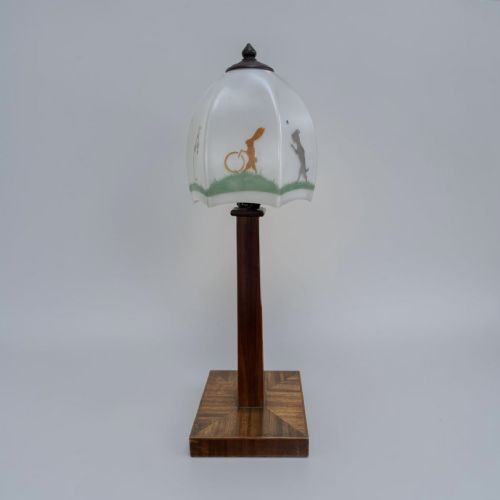
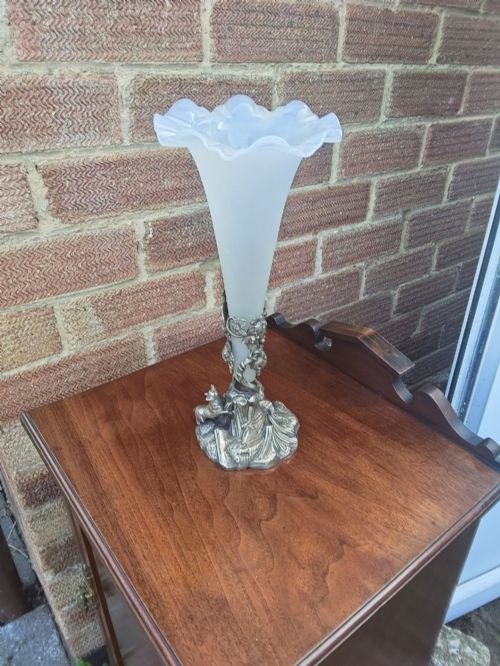


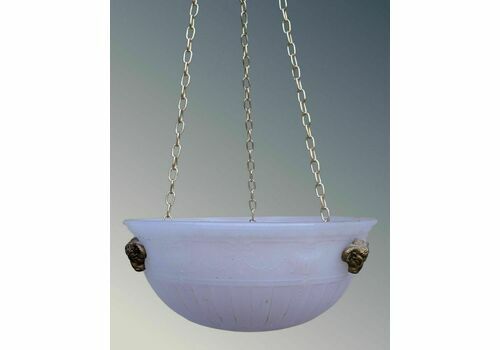

White Frosted Glass
White frosted glass items bring soft diffusion and tactile texture to interiors, spanning Victorian lighting through to sleek Art Deco pieces.
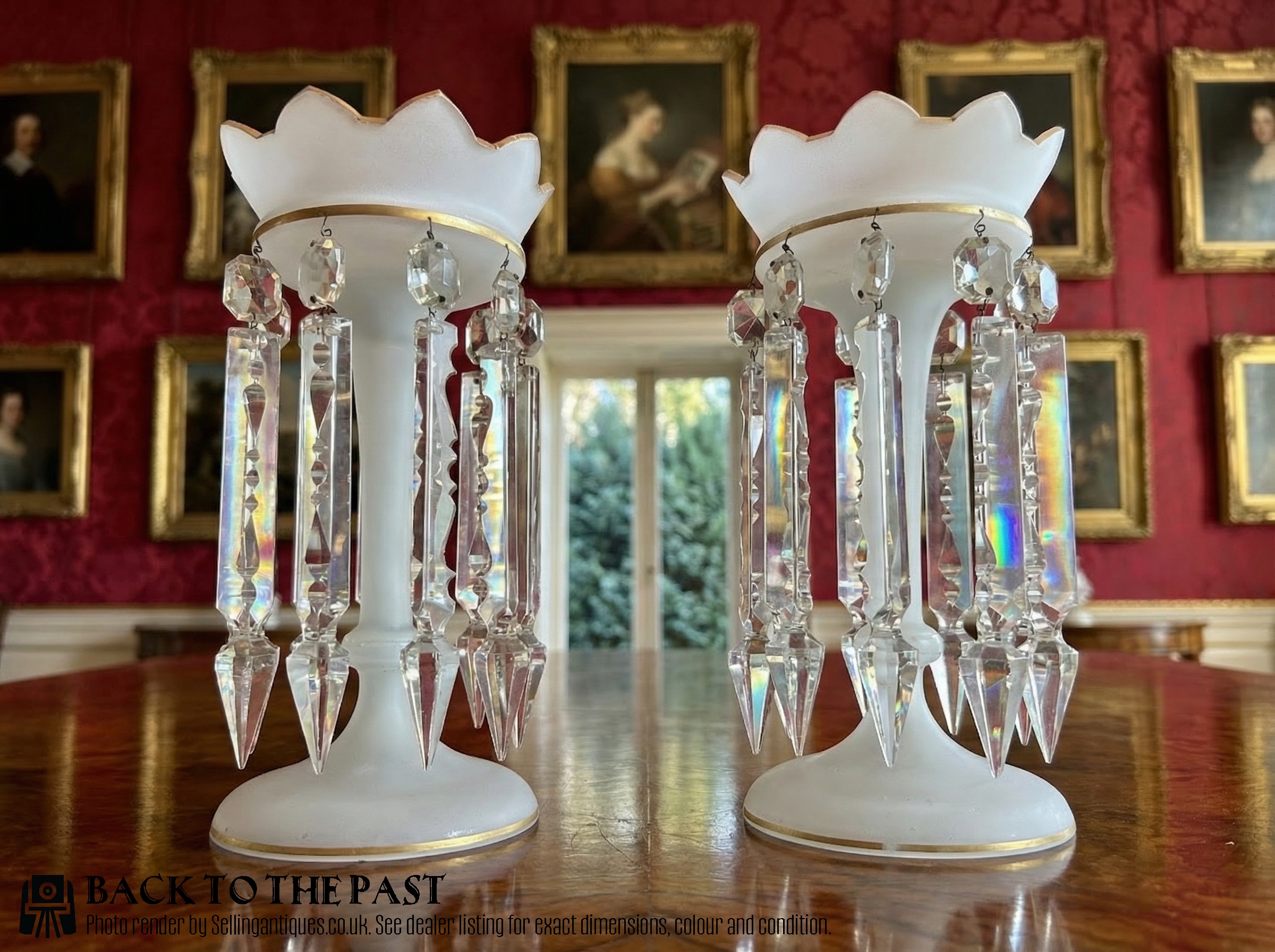
White Frosted Glass
White frosted glass encompasses a diverse array of decorative and functional objects, most notably lighting fixtures, vases, and table lustres. When exploring white frosted glass, buyers encounter pendant lights, ceiling lights, and table lamps alongside opalescent bowls and epergnes.
The selection ranges from Victorian Rococo Revival oil lamps and Arts and Crafts pendants to French Art Deco vessels bearing the signatures of renowned makers. These pieces originate from the nineteenth century, the Edwardian era, and the nineteen-thirties, showcasing shifts in domestic illumination and ornamental design.
Materials and Techniques
The manufacturing process relies primarily on frosted, opalescent, and opaque glass paired with supporting metal elements such as brass, copper, bronze, and white metal. Glassmakers utilised moulding and chemical or mechanical etching to achieve the characteristic translucent or milky surface texture.
Many lighting items and decorative vessels incorporate mixed media, combining porcelain, mahogany, and chrome frames with the central glass component. These materials provide structural stability while enhancing the visual contrast against the muted white glass.
Materials paired with the glass include brass, copper, bronze, mahogany, and porcelain.
Assessing Quality
Quality in these objects is evident in the crispness of moulded or etched motifs, the weight and clarity of the glass, and the integration of metal mounts. Superior examples demonstrate refined handling of opalescence and smooth, even frosting across the surface.
The distinction between standard production items and finer pieces often rests upon the presence of authentic signatures, artistic provenance, and the harmonious balance between the glass shade and its original metal or porcelain base.
G Vallon·R Lalique·Karl Ens·Anton Buschelberger·Richardson
The White Frosted Glass Glossary
- Frosted glass
- Glass that has been rendered opaque and non-transparent through acid-etching or sandblasting. This treatment diffuses light evenly and softens the visual impact of the material.
- Opalescent glass
- Glass exhibiting a milky, iridescent appearance that shifts in tone when lit from different angles. It is a defining characteristic of many twentieth-century decorative vessels.
- Table lustre
- An ornamental mantlepiece or table decoration featuring hanging glass prisms. These pieces often incorporate coloured or frosted glass bodies to catch and refract ambient light.
- Epergne
- A central table centerpiece designed with multiple branching holders or horns for fruit, flowers, or sweetmeats. Examples in the evidence combine metalwork with opaque glass elements.
White Frosted Glass: Frequently Asked Questions
How do I clean white frosted glass?
Use warm water and a mild detergent with a soft cloth to remove dust and grime without damaging the surface texture. Avoid harsh abrasives that might alter the finish.
Ensure metal mounts or porcelain sections stay dry during cleaning to protect historical hardware and joined components.
Can I rewire vintage glass pendant lights?
Most antique and vintage lighting fixtures require professional rewiring to meet modern safety standards before installation. A qualified electrician can adapt old fittings safely.
Retaining the original ceiling rose and shade while updating internal wiring preserves the aesthetic integrity of the piece.
How do I distinguish Victorian from Art Deco pieces?
Victorian examples often display ornate detailing, heavy brass, and elaborate forms such as oil lamps or lustres with classical revival motifs. Art Deco items favour geometric symmetry, stylised flora, and streamlined metal frames.
Examining the supporting hardware alongside the glass silhouette usually clarifies the period of manufacture.
Where should I place a table lustre?
Table lustres suit surfaces where they receive direct ambient light, allowing the hanging prisms and frosted bodies to function visually. Mantlepieces and sideboards provide traditional settings.
Keep them away from high-traffic edges to protect the delicate hanging glass components from accidental knocks.