



White Fireplace Mirror
A white fireplace mirror sits above the hearth, reflecting light and grounding the room with period presence.
White Fireplace Mirror
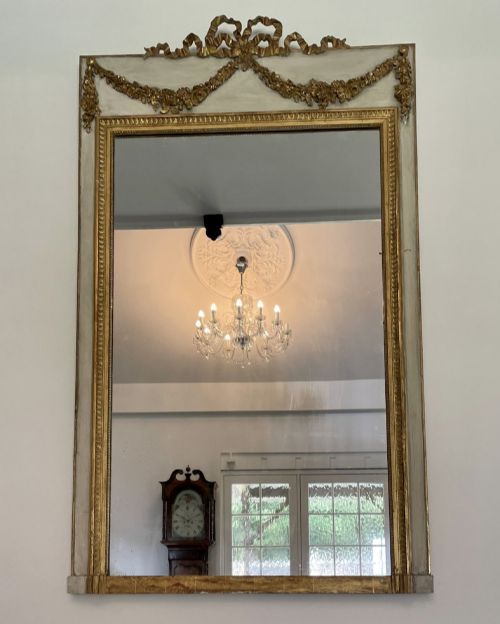
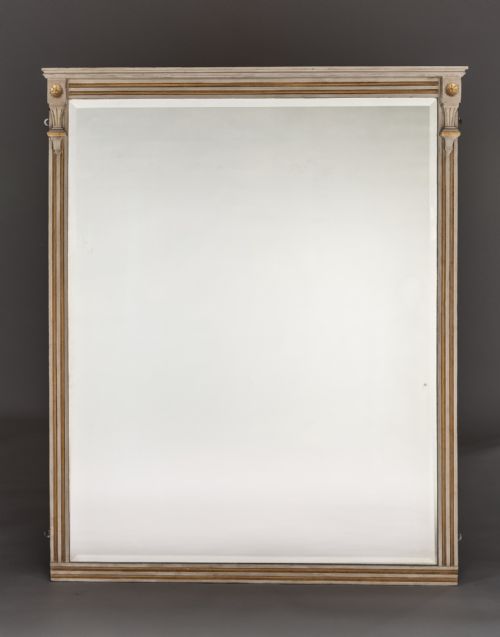
A white fireplace mirror typically takes the form of an overmantel mirror designed to hang directly above a mantelpiece. The pieces seen here span the Victorian era, the Edwardian period, and the early twentieth century, originating from English and French workshops.
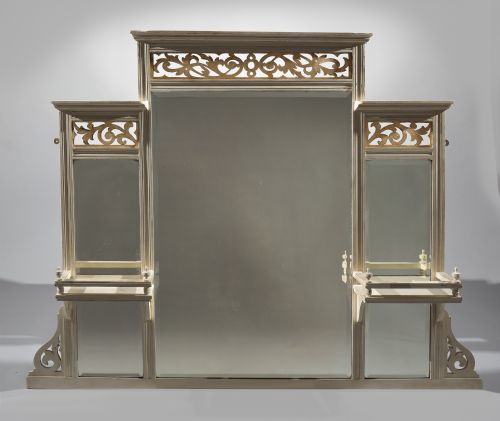
Most examples present substantial proportions intended to anchor a principal reception room. Forms range from shaped tops and arched designs to column-framed structures and triptych formats.
Stylistic influences draw upon French chateau aesthetics, rococo revival, neoclassical traditions, and regency revivals. The surviving inventory relies heavily on nineteenth-century craftsmanship adapted with painted finishes.
Materials and construction methods
Makers constructed the structural frames using carved wood and applied gesso to build up decorative moulding and classical details. Paint finishes were then applied over the timber and gesso substrate, often combined with parcel-gilt highlights.
Mirror glass was set into the frames, sometimes utilising segmented plates or large single sheets depending on the period. Gold leaf was frequently laid onto specific areas of relief to catch the light from the fireplace below.
Current listings feature pieces spanning the Victorian period, Edwardian era, and the early twentieth century, utilising wood, gesso, paint, and gold leaf.
Factors that define quality
The sophistication of the carved wood and gesso ornamentation dictates the primary tier of craftsmanship. Crisp relief work on shaped or arched tops demonstrates a higher standard of hand-carving than simpler moulded profiles.
The integrity of the painted surface and the subtlety of parcel-gilt detailing influence the overall depth of the object. Heavier structural construction using solid timber rather than composite builds marks the superior tier of these mirrors.
The White Fireplace Mirror Glossary
- Overmantel mirror
- A large wall mirror specifically proportioned to hang above a fireplace mantel. These pieces often feature horizontal emphasis to match the width of the hearth below.
- Gesso
- A plaster-like mixture applied to wood frames and carved or moulded into decorative relief details. It provides a smooth base for subsequent painting and gilding.
- Parcel-gilt
- A decorative technique where only specific portions of an object are highlighted with gold leaf. This method leaves the surrounding painted wood exposed to create visual contrast.
- Giltwood
- Timber frames that have been entirely covered in thin sheets of gold leaf. This material reflects candlelight and daylight within the room.
- Triptych
- A mirror divided into three distinct vertical sections or panels. The flanking sections are frequently hinged or angled relative to the central plate.
White Fireplace Mirror: Frequently Asked Questions
Where should a white fireplace mirror hang?
These mirrors traditionally mount on the wall directly above a fireplace mantelpiece to reflect room light.
They also function effectively on principal walls in reception spaces without a hearth.
How do I identify a Victorian mirror?
Victorian examples often display heavy carved wood frames finished with gesso and paint, referencing neoclassical or rococo styles.
Construction details and period timber characteristics help distinguish nineteenth-century work from later revivals.
What is parcel-gilt finish?
Parcel-gilt describes a painted wooden frame where selected decorative motifs receive applications of gold leaf.
This technique accentuates specific carved details while keeping the main painted surface in white or cream.
Are these mirrors French or English?
The inventory includes pieces originating from both English workshops and French sources, particularly from the nineteenth century.
French pieces frequently draw on chateau and rococo design traditions, while English versions often incorporate classical columns and arched tops.
How do I care for antique glass?
Original mirror glass requires gentle cleaning with a soft cloth and minimal moisture to protect the silvering underneath.
Harsh chemical cleaners should be avoided to prevent damage to the surrounding painted and gilt gesso frame.