
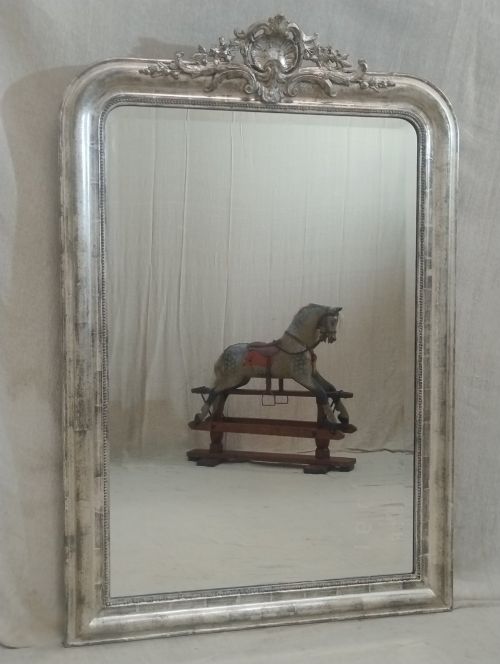
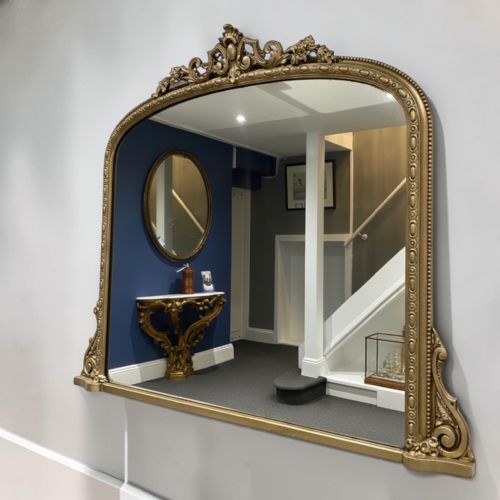
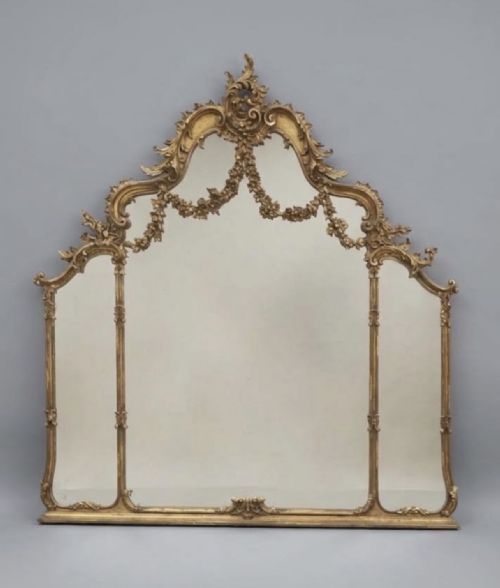
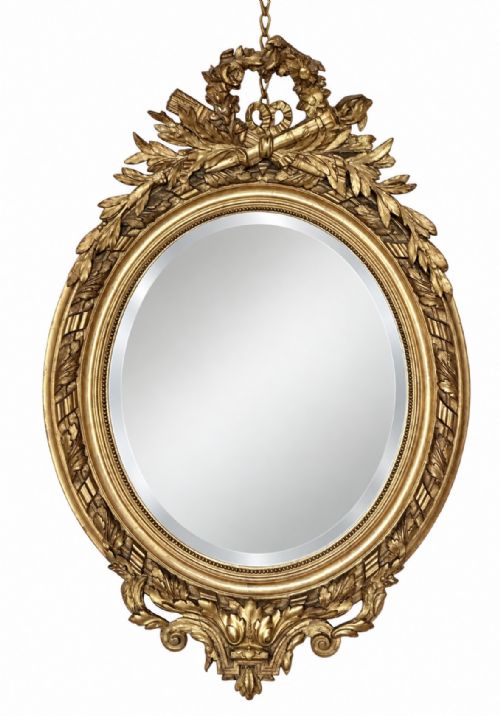
Gilt Crest Overmantel Mirror
A gilt crest overmantel mirror brings proportion and reflected light to a high chimney breast.
Gilt Crest Overmantel Mirror
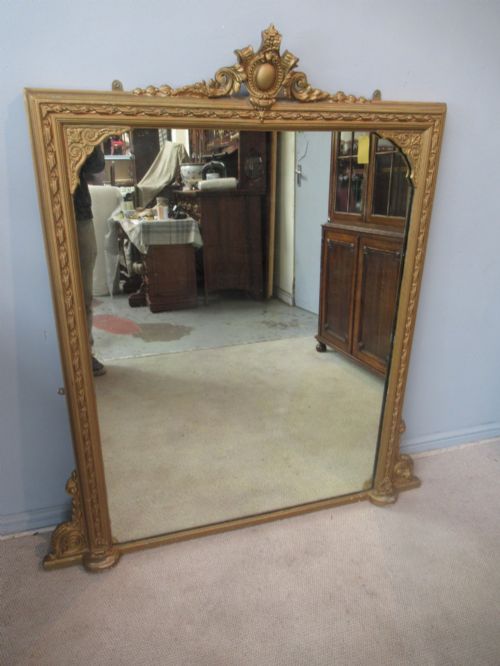
A gilt crest overmantel mirror is designed specifically to hang above a fireplace mantelpiece, filling the wide wall space below the ceiling with reflected light. These pieces originate across the eighteenth, nineteenth, and early twentieth centuries, drawing on French, English, and Italian design traditions.
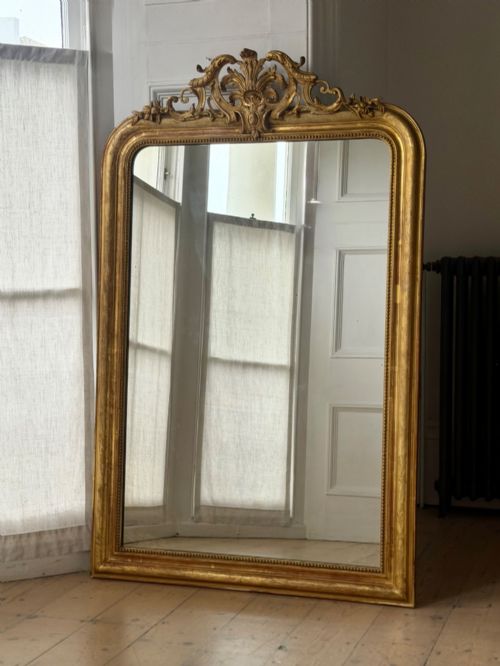
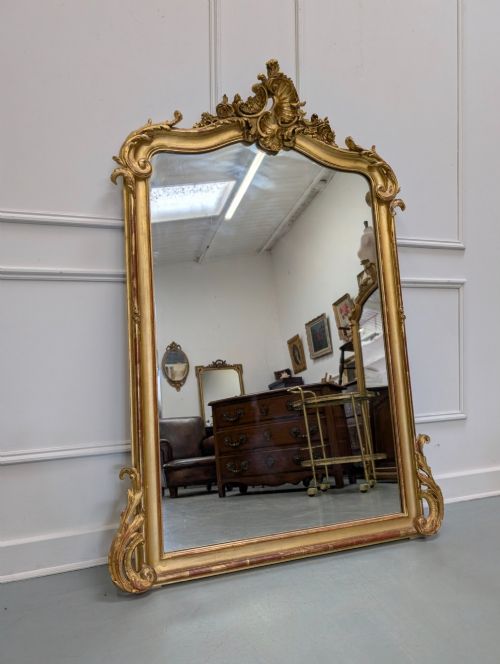
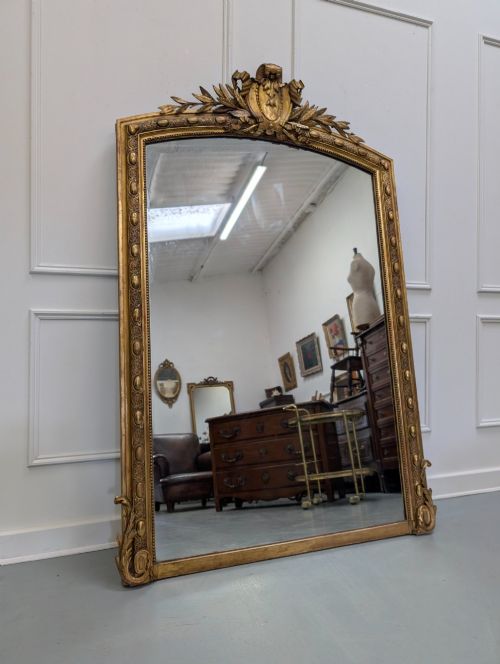
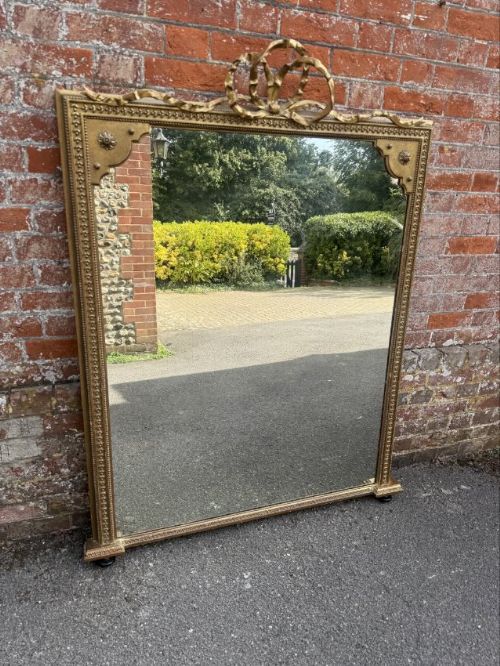
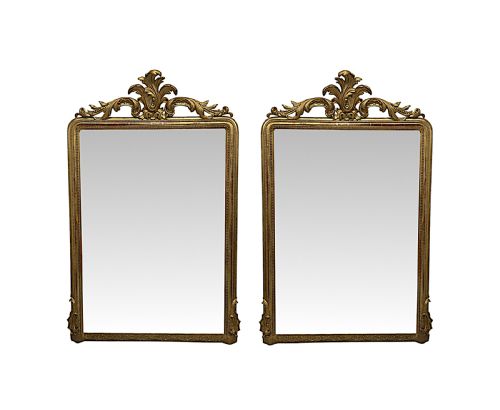
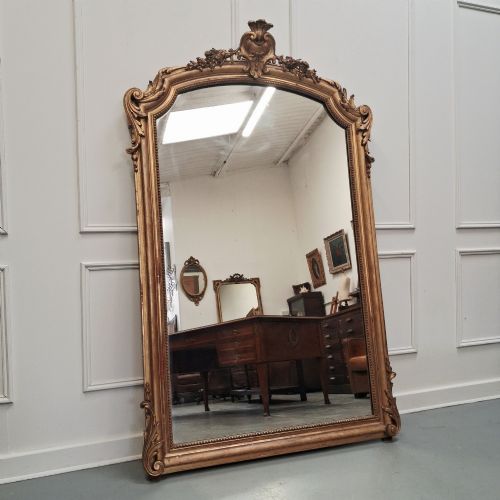
The most common examples on this page date from the nineteenth century, including Victorian, Napoleon III, and various revival styles like Louis XV, Louis XVI, and Adam. They range from modest domestic pieces to tall, imposing formats over one hundred and eighty centimetres in height.
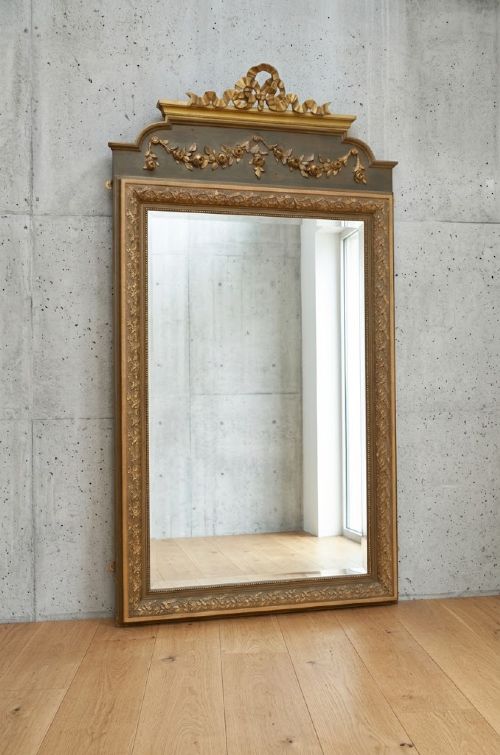
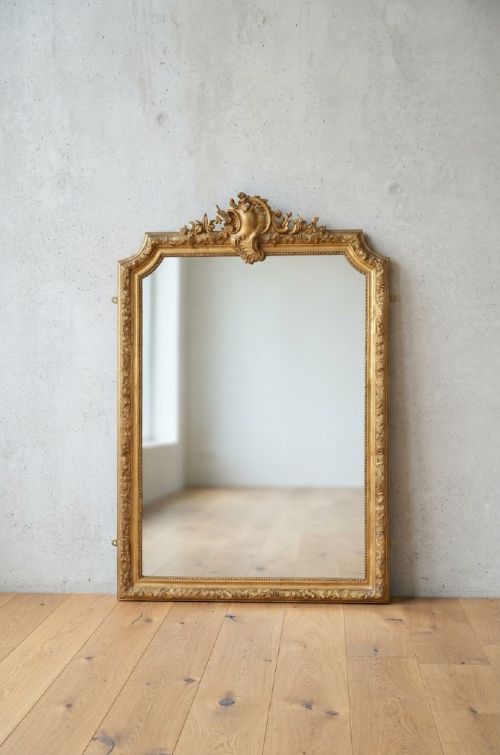
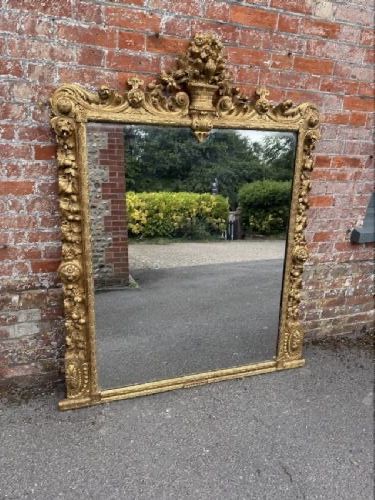
Many feature prominent decorative crests at the top, incorporating carved woodwork, ribbon motifs, or birds. The glass is often set within heavy frames designed to command attention above a hearth.
Materials and Construction
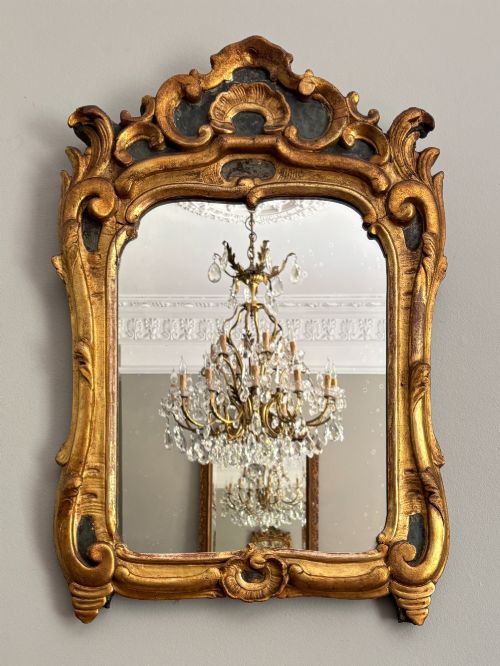
Makers built these frames using timber such as mahogany, pine, or general carved wood as a structural base. Over this wood, artisans applied layers of gesso, a plaster-like mixture, to create smooth surfaces for intricate relief carving.
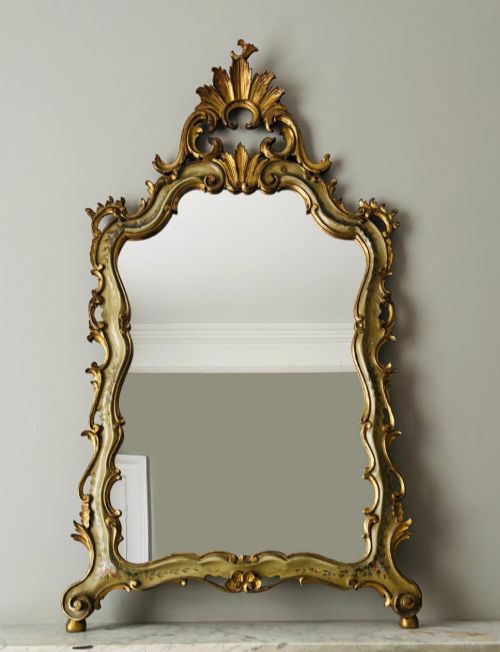
Gold leaf or metallic gilding was then laid over the gesso, sometimes combined with black ebonised sections or olive green paint. The mirror glass itself is held securely behind the frame, with older examples occasionally displaying foxing or mercury backing.
Listings feature items from the eighteenth, nineteenth, and early twentieth centuries, incorporating materials such as gesso, gold leaf, mahogany, and mirror glass.
Distinctions in Manufacture
The standard of a gilt crest overmantel mirror depends heavily on the depth and crispness of the carved ornamentation on the wooden frame. Hand-carved relief work exhibits sharp detail in motifs like scrolls, cartouches, and crests, whereas lesser pieces rely on simpler moulded composition ornament.
The preservation of the original gold leaf surface also dictates the character of the object, showing how well the piece has aged over the centuries. Original mirror plates with authentic age spots carry distinct visual depth compared to modern replacement glass.
The Gilt Crest Overmantel Mirror Glossary
- Overmantel mirror
- A large mirror designed to hang horizontally or vertically on the wall directly above a fireplace mantel. These pieces anchor the visual weight of a chimney breast.
- Gesso
- A plaster mixture applied to wood frames to provide a smooth base for gilding and relief carving. It allows intricate decorative motifs to be moulded onto the wood.
- Gold leaf
- Extremely thin sheets of beaten gold applied to a prepared surface for gilding. This material provides the brilliant reflective finish characteristic of antique frames.
- Foxing
- Small dark spots and speckling that develop on antique mirror glass over time due to the degradation of the backing. This ageing process alters the reflection.
- Cartouche
- An ornamental frame or tablet resembling a scroll or unfurled sheet of paper, often placed centrally on the crest. It frequently bears decorative carvings.
- Pier mirror
- A tall mirror designed specifically to hang on the narrow wall space between two windows. These tall formats share construction methods with overmantel mirrors.
Gilt Crest Overmantel Mirror: Frequently Asked Questions
How do I hang a heavy overmantel mirror safely?
These large framed mirrors require secure fixings anchored directly into the masonry or heavy wall studs behind the plaster. Because many pieces utilise solid wood and gesso, professional installation ensures the weight is distributed properly.
Position the mirror at a height that balances the mantelpiece below and the ceiling height above. This creates a grounded focal point in the room without crowding the fireplace opening.
What periods do these mirrors come from?
The selection includes pieces spanning from the eighteenth century through the Victorian era and into the early twentieth century. Makers drew inspiration from French chateau styles, Louis XVI aesthetics, and English Regency or Chippendale traditions.
Identifying the period usually involves examining the style of the crest, the type of wood used in the backing, and the characteristics of the glass plate.
Are the mirror plates original?
Many older pieces retain their original glass plates, which often display signs of age such as foxing, light clouding, or subtle distortions. These characteristics confirm the historical continuity of the object.
Some mirrors have received replacement glass over the centuries to maintain a clearer reflection. Checking the backboards and the seating of the glass helps determine its age relative to the frame.
How do I clean a gilded frame?
Gilded wood and gesso surfaces require gentle dusting with a soft, dry brush to remove particles without disturbing the finish. Avoid using liquid cleaners, moisture, or chemical polishes, as these can strip the gold leaf.
Take care around carved crests and delicate relief work where the gilding may be thin or fragile. Regular, careful maintenance preserves the historical surface layer.