




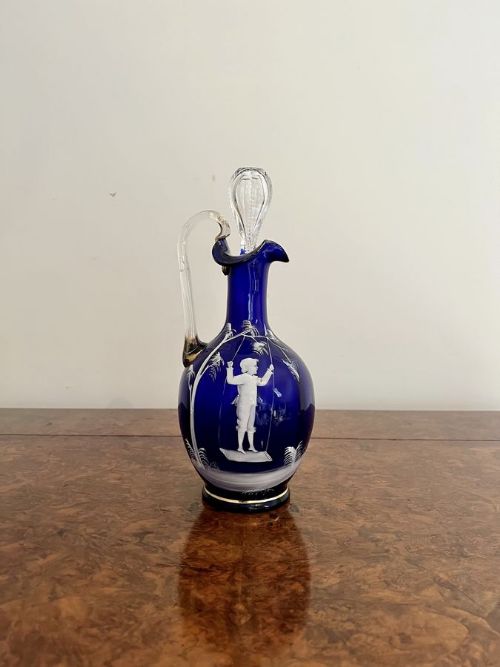


White Enamel Painted Glass
White enamel painted glass brings rich Victorian and Edwardian decorative colour to a room, offering striking contrast against deep cranberry, blue, green, and opaline bodies.
White Enamel Painted Glass
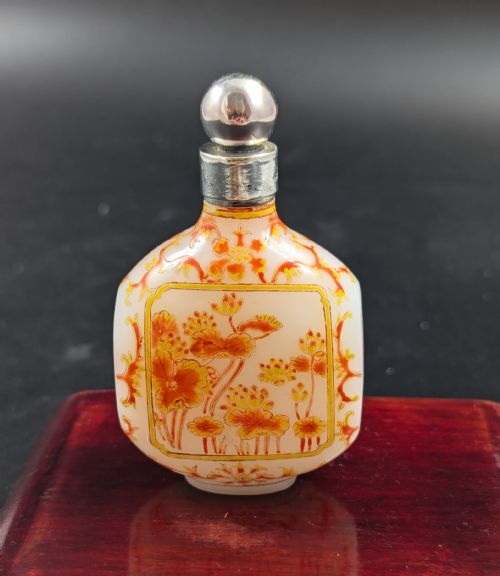
White enamel painted glass encompasses a range of decorative vessels from the eighteenth century onwards, with nineteenth-century Victorian and Edwardian examples dominating the field. Buyers searching this phrase encounter diverse forms including vases, mantle lustres, decanters, biscuit barrels, ewers, jars, snuff bottles, and ceiling lights.
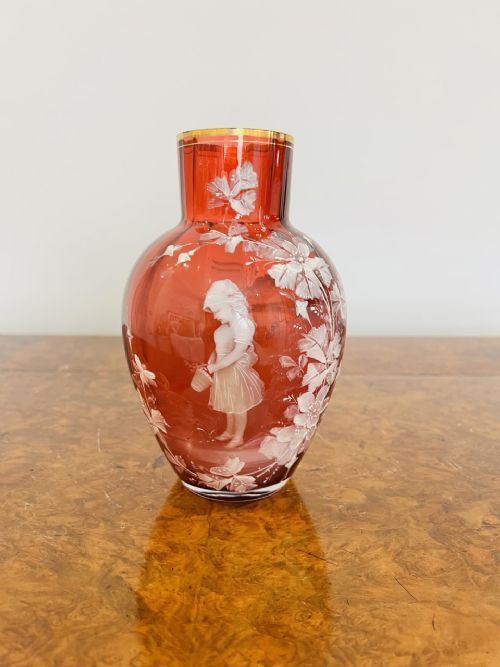
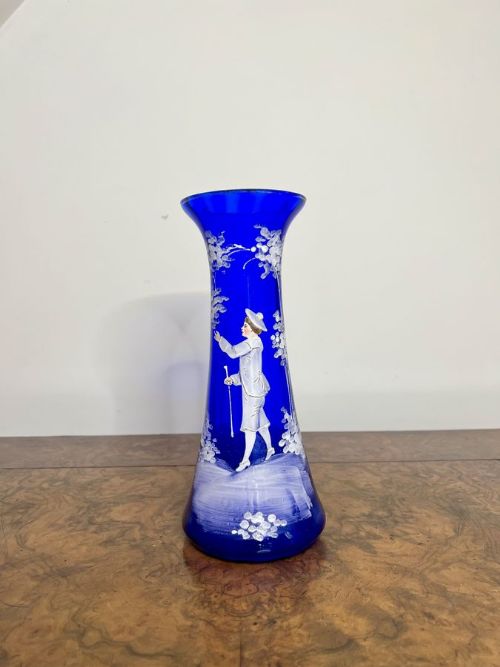
The aesthetic frequently leans towards figurative subjects or floral motifs rendered in white paint upon coloured glass grounds such as cranberry, blue, green, and opaline. Pieces originating from Bohemia and England appear alongside items bearing stylistic influences from Qing Dynasty styles and Art Nouveau.
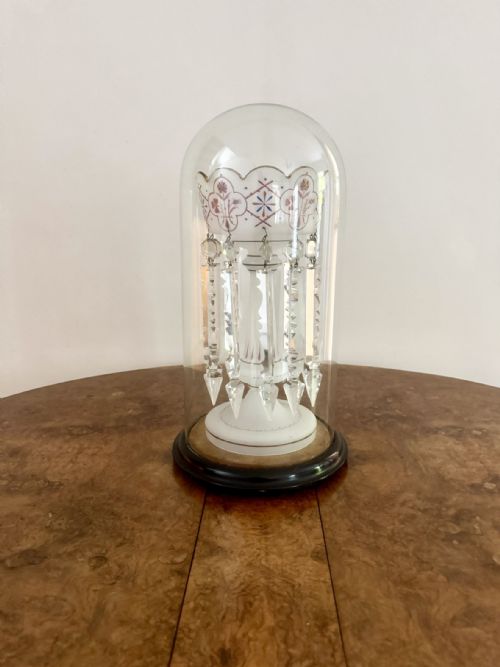
Vases and mantle lustres represent the most common forms available, often displaying the characteristic white enamel work associated with Mary Gregory designs. These items serve primarily as decorative mantelpiece or tabletop ornaments rather than utilitarian vessels.
How white enamel painted glass was made
Makers applied opaque white enamel directly onto blown glass bodies, sometimes incorporating gold leaf highlights to enhance the visual depth of the painted scenes. The underlying glass itself was produced in various saturated colours including cranberry, cobalt blue, forest green, and milky opaline.
Techniques varied from freehand floral decoration to detailed silhouetted figures painted against contrasting backgrounds. The enamel required careful firing to bond permanently with the glass substrate without distorting the vessel shape.
Listings feature items spanning the eighteenth, nineteenth, and early twentieth centuries, encompassing Victorian, Edwardian, Art Nouveau, and eighteenth-century Bohemian styles.
What varies in quality
Quality rests upon the precision and delicacy of the enamel work, where finer pieces display crisp detailing in faces, foliage, and garments rather than heavy, flat brushstrokes. The purity and colour saturation of the underlying glass body also dictate the standing of a piece.
Completeness alters desirability significantly, particularly for mantle lustres that rely on matching hanging glass drops or covered jars that require original lids. Superior items maintain their gilding and enamel intact without rubbing or loss from cleaning.
The White Enamel Painted Glass Glossary
- Mary Gregory
- A term commonly applied to glassware decorated with white enamel silhouettes of children amidst foliage, though much of it originated in Victorian England and Bohemia rather than the American artist herself.
- Opaline glass
- An opaque or translucent pale glass developed in France and popular throughout the nineteenth century for decorative vases and tableware.
- Mantel lustre
- A decorative glass vase fitted with a fringe of hanging glass prisms designed to catch the light on a fireplace mantel.
- Biscuit barrel
- A ceramic or glass container with a metal lid and swing handle, used in the late nineteenth and early twentieth centuries for storing dry biscuits.
- Ewer
- A large jug with a wide spout and looped handle, originally used for pouring water but frequently produced purely for display.
White Enamel Painted Glass: Frequently Asked Questions
What is Mary Gregory glass?
Mary Gregory glass refers to nineteenth-century glassware painted with white enamel depicting Victorian children in pastoral settings. The name serves as a widely accepted trade descriptor rather than an attribution to a specific maker.
Most pieces originated in English and Bohemian factories during the Victorian era, utilising characteristic cranberry, blue, or green glass grounds beneath the opaque white enamel silhouettes.
How do I clean antique enameled glass?
Antique enameled glass requires gentle cleaning with warm water and a mild detergent, avoiding harsh abrasives that can damage the surface enamel. Submerging pieces for extended periods or using chemical cleaners can strip away delicate gold leaf and weaken the painted design.
Dry the glass thoroughly with a soft lint-free cloth immediately after washing to prevent water spots on coloured and opaline surfaces.
How are mantle lustres used?
Mantle lustres were designed to sit upon fireplace mantels, where their hanging glass prisms reflected candlelight and daylight to brighten Victorian parlours. Today they function primarily as decorative centrepieces on sideboards or mantelpieces.
Collectors look for sets that retain their original crystal prisms, as missing drops diminish the visual impact of the piece.