
White Enamel Chain
White enamel chain pieces are wearable brass, silver, gold filled, and platinum links and timepieces from the early twentieth century.
White Enamel Chain
When you search for white enamel chain, you are looking at early twentieth century jewellery, pocket watches with albert chains, and compacts. These objects span the Edwardian era, 1900, 1910, and 1920, with distinct styles including Late Victorian, Edwardian, Art Nouveau, and Art Deco. Most examples combine metal links or watch chains with white enamel detailing, often paired with silver, steel, brass, nickel, or platinum.
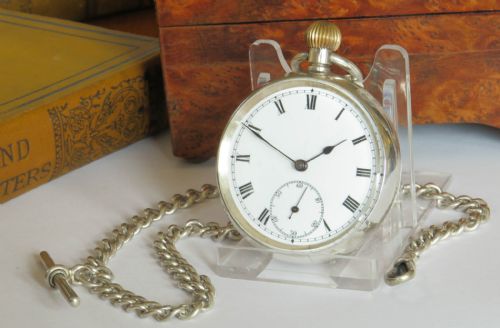
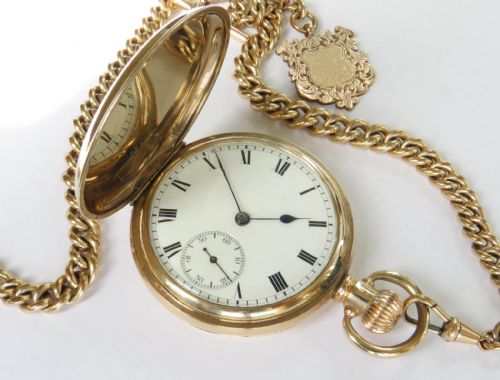
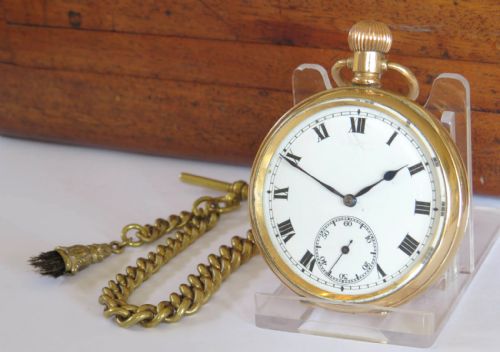
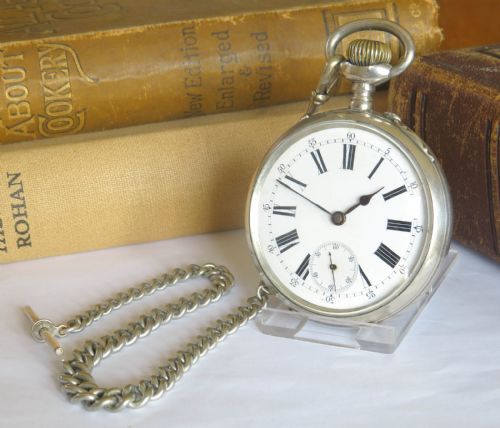
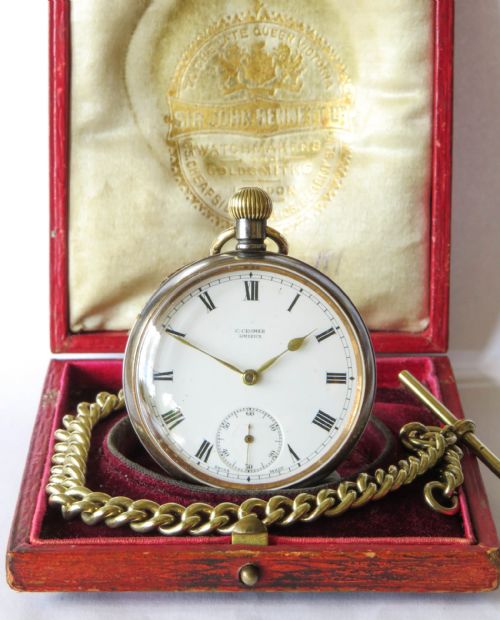
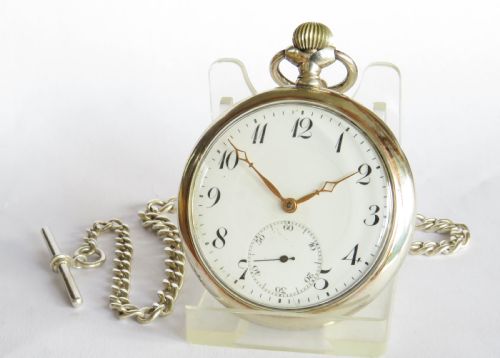
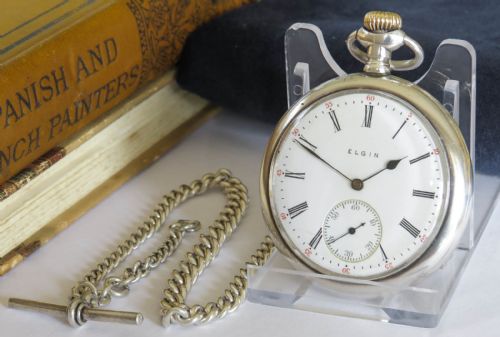
The versions you are most likely to meet on this page are silver fob watches and albert chains, alongside pocket watches paired with chains from makers like Waltham, Octava, Syren, Octo, Omega, Elgin, and Electa. You also encounter dedicated necklaces, lavaliere necklaces with brooches, and compacts on chains. These pieces reflect the varied horological and decorative accessories worn during the first two decades of the twentieth century.
How they were made
The construction of these pieces relies on metals such as silver, steel, brass, nickel, nickel silver, and gold filled wire, alongside platinum in finer examples. Enamel is fused to the metal base to create durable white surfaces on links, watch cases, and decorative drops. Artisans also incorporated glass, natural saltwater pearls, and diamonds into specific necklace and pendant designs.
Watch chains and albert chains utilise secure links designed to hold pocket watches and fob watches securely. Compacts and lavaliere necklaces integrate white metal and platinum settings to support guilloche enamel work and gemstone accents. Each material is worked by hand to achieve the finished Edwardian and Art Deco forms.
The listings span the Edwardian period, 1900, 1910, and 1920, utilising materials including enamel, steel, silver, glass, brass, nickel, gold filled, and nickel silver.
What varies in quality
The distinction between tiers rests upon the choice of base metal and the presence of precious stones like diamonds or natural saltwater pearls. Pieces utilising platinum and solid silver sit above those constructed from brass, steel, or nickel silver. The complexity of the enamel work, whether plain white enamel or patterned guilloche, also defines the grade of the piece.
Horological items vary according to the movement and maker, with established watchmakers like Waltham, Omega, and Elgin commanding attention through their signed dials and mechanical reliability. The integration between the watch and its accompanying chain influences the overall cohesion of the object. Finer chains exhibit superior link articulation and intact enamel coatings across every component.
The White Enamel Chain Glossary
- Guilloche enamel
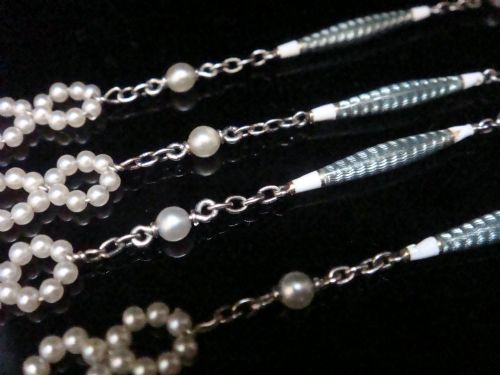
- A decorative technique where the metal surface is machined with an intricate geometric pattern before translucent or opaque enamel is applied over it. This allows the underlying pattern to show through the white or coloured coating.
- Full hunter
- A pocket watch style featuring a spring-loaded metal cover that protects the glass dial. The cover opens via a push-piece crown mechanism.
- Goliath watch
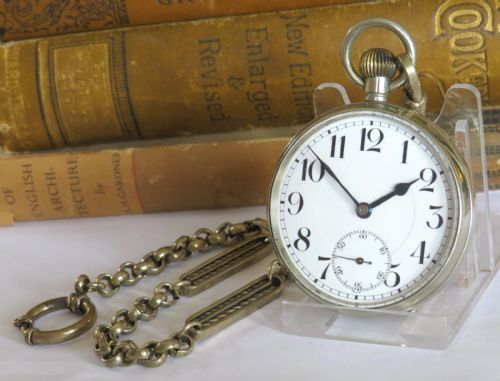
- An oversized pocket watch, significantly larger than standard timepieces, often housed on a desk stand or paired with a heavy duty chain.
- Lavaliere
- A pendant necklace featuring a central drop stone or ornament suspended from a delicate chain. Edwardian and Art Nouveau versions frequently incorporate pearls and enamel work.
White Enamel Chain: Frequently Asked Questions
What is an albert chain?
An albert chain is a traditional watch chain worn across a waistcoat or jacket, secured with a T-bar through a buttonhole. It was designed to hold pocket watches and fob watches safely during daily wear.
In this selection, albert chains frequently accompany silver pocket watches from the Edwardian period and the nineteen-tens.
How do I wear a pocket watch and chain?
Pocket watches and chains are worn by securing the T-bar of the chain through a waistcoat or jacket buttonhole, with the watch itself tucked into the pocket. The remaining length of chain drapes across the front of the garment.
Many pieces combine a functioning pocket watch with a matching white enamel or silver chain, reflecting early twentieth century haberdashery.
What is guilloche enamel?
Guilloche enamel is a decorative process where metal is mechanically engraved with a repeating pattern before an enamel coating is fired over it. The technique creates subtle texture beneath the smooth white surface.
This method appears on compacts and decorative accessories from the nineteen-twenties alongside white metal settings.
How do I identify an Edwardian chain?
Edwardian chains and jewellery are identified by their light, delicate use of platinum, silver, and pearls, often featuring Edwardian or Art Nouveau design motifs. They date from the reign of King Edward VII up to the nineteen-tens.
Pieces from this era frequently combine white enamel with natural saltwater pearls and platinum settings.
What is a goliath pocket watch?
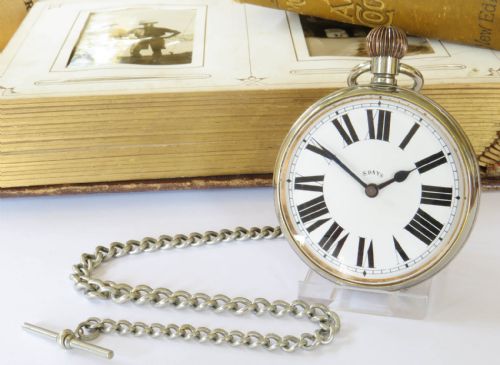
A goliath pocket watch is an exceptionally large timepiece produced in the late nineteenth and early twentieth centuries. Due to their scale, they require sturdy chains to support their weight.
Examples from nineteen hundred often feature eight-day movements and heavy metal cases paired with matching chains.