


White Earthenware Dog Figurine
A white earthenware dog figurine brings nineteenth-century domestic charm straight to the mantelpiece, offering the enduring appeal of traditional ceramic spaniels and poodles.
White Earthenware Dog Figurine
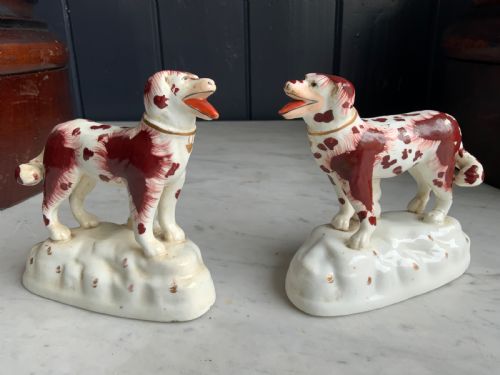
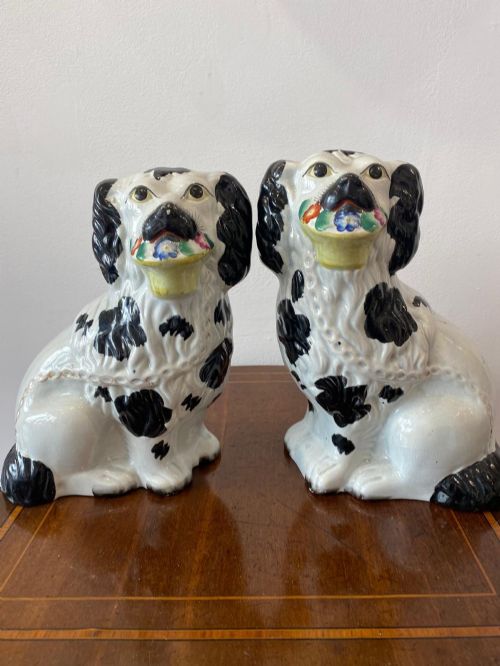
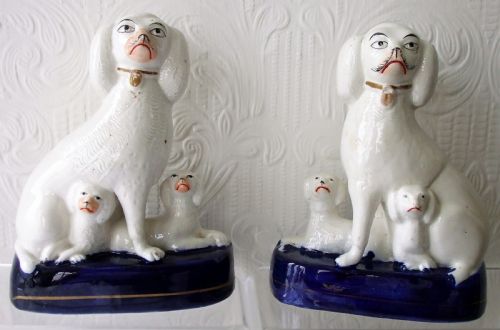
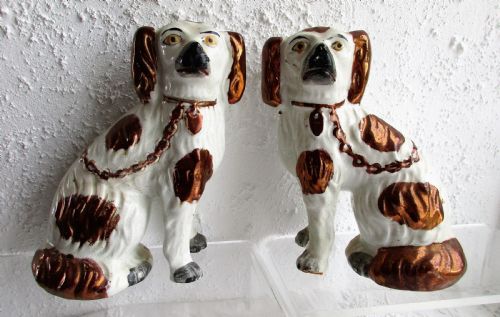
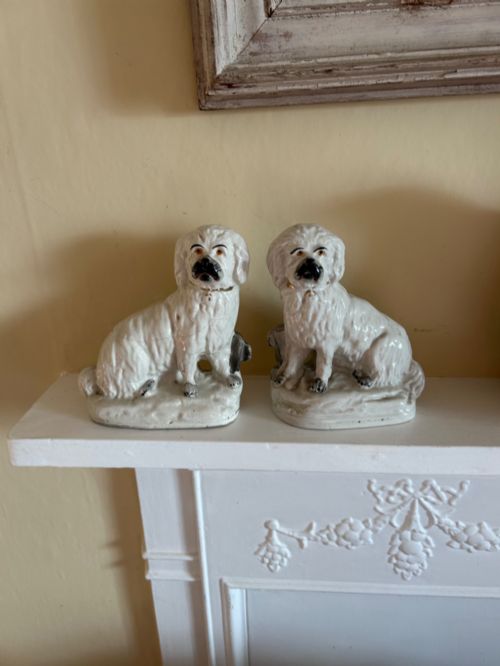
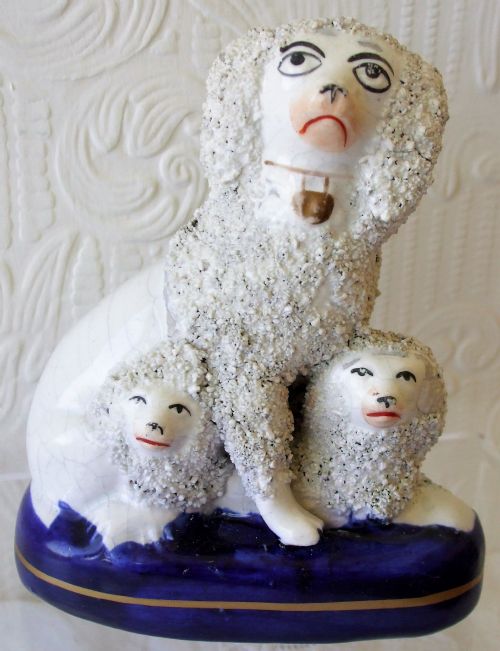
A white earthenware dog figurine represents a tradition of Staffordshire pottery spanning the nineteenth century, including the Regency and Victorian eras. These ceramic figures take the form of seated spaniels, poodles with pups, greyhounds, and dalmatians modelled as decorative ornaments.
Buyers meet pairs most frequently, often accented with gilt highlights or enamel paint. Figures range from miniature poodles to large spaniels, sometimes incorporating practical elements like quill holders or clock groups.
Materials and construction
Moulds ensured consistent shapes for popular breeds like spaniels and poodles, while hand-painting gave each piece individual character.
Some poodles wear coats rendered in tiny clay curls achieved by applying separate bits of slip before firing.
Distinctions in execution
Quality rests in the crispness of the moulding and the delicacy of the hand-painted details on the face and coat. Softer modelling and hurried brushwork separate standard production pieces from finer works.
The application of gilt and enamel preservation influences visual impact, as does the complexity of the grouping, such as figures with pups or baskets.
Thomas Parr·Enoch Wood factory
The White Earthenware Dog Figurine Glossary
- Earthenware
- Porous ceramic fired at lower temperatures than stoneware or porcelain. It requires a glaze to become impermeable to liquids.
- Lead glaze
- A glossy coating applied to pottery before a final firing to give a smooth finish. It deepens the colour of underlying enamels.
- Enamel paint
- Coloured glass powder fused to the ceramic surface during a low-temperature firing. It provides durable hues for eyes, patches, and collars.
- Gilt
- Gold leaf or gold paint applied to accents such as chains, lockets, and base lines. It catches the light on mantelpieces.
White Earthenware Dog Figurine: Frequently Asked Questions
Where were these figures placed?
Victorian households traditionally positioned pairs of spaniels on either side of the fireplace mantelpiece.
They served as decorative ornaments to watch over the hearth and parlour.
Why do they come in pairs?
Makers produced many models as symmetrical pairs to flank mantel clocks or ornaments.
Matching dogs created a balanced display across nineteenth-century furniture.
How do I date a figure?
Dating relies on stylistic clues like glazing techniques, potting weight, and specific breed popularity.
Nineteenth-century pieces often show typical crazing in the lead glaze.
What breeds appear most often?
Spaniels dominate the selection, alongside poodles, greyhounds, dalmatians, and setters.
Some examples include extra details like puppies or baskets.