



White Ceramic Tureen
A white ceramic tureen brings formal table service and classic transfer-printed scenes into the modern dining room.
White Ceramic Tureen
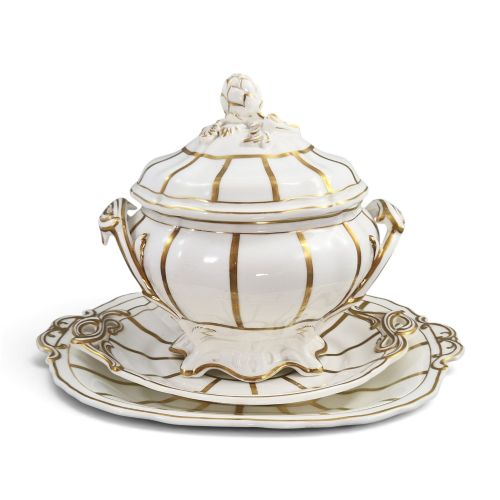
A white ceramic tureen is a covered serving vessel designed for soups, sauces, or vegetables at the dining table. When searching this phrase, buyers encounter pieces ranging from large soup tureens to smaller sauce tureens and vegetable dishes.
The selections span the eighteenth, nineteenth, and early twentieth centuries, drawing on Georgian, Regency, and Victorian periods. English earthenware and porcelain dominate, alongside Chinese Export and European continental works.
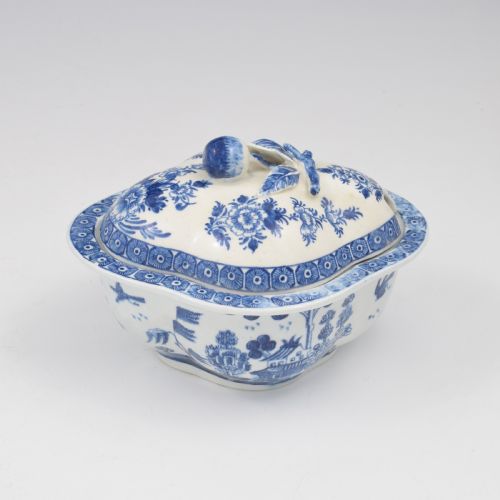
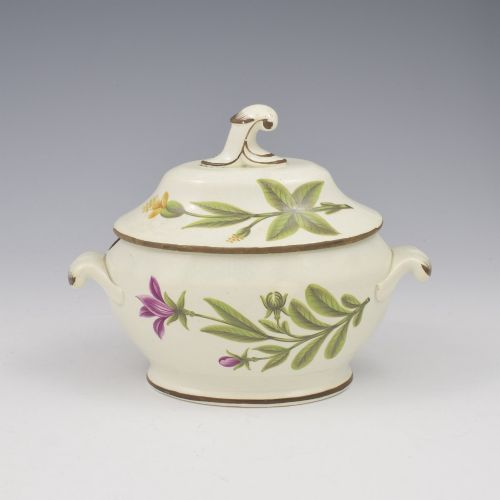
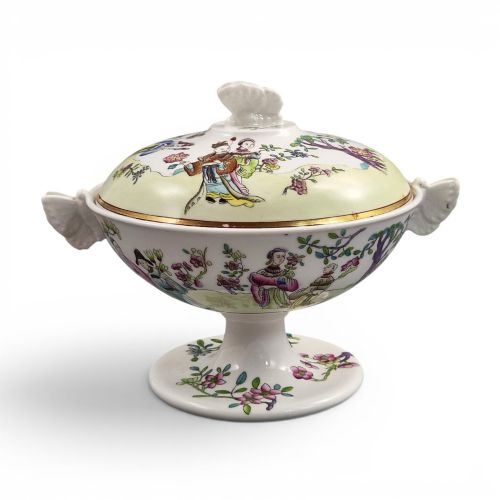
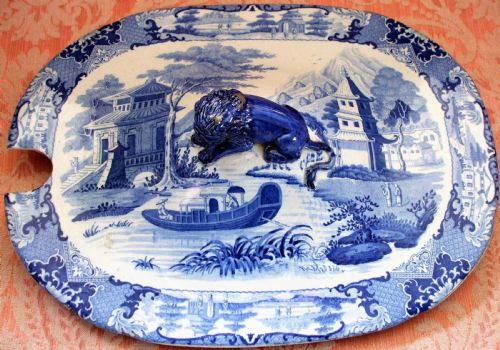
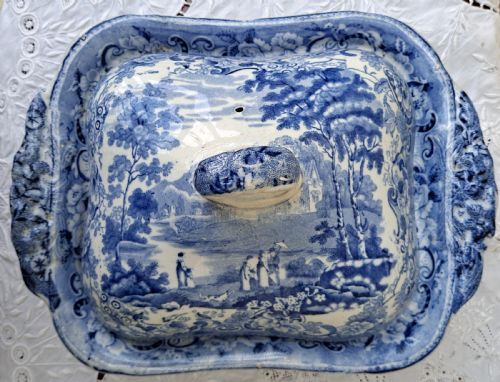
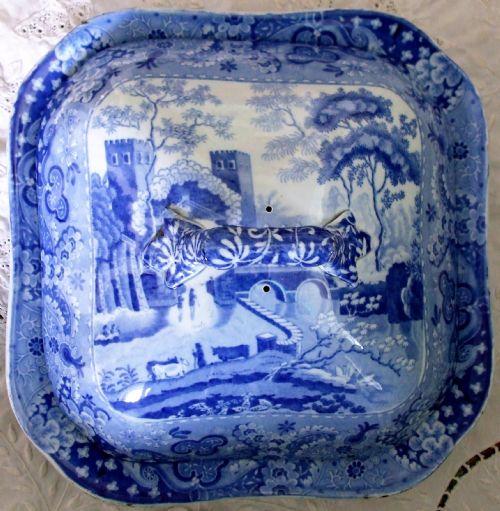
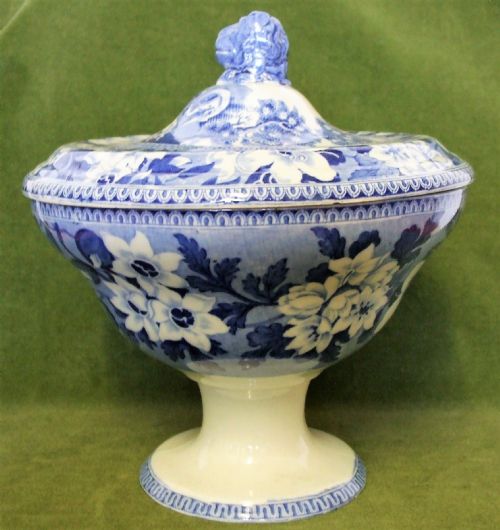
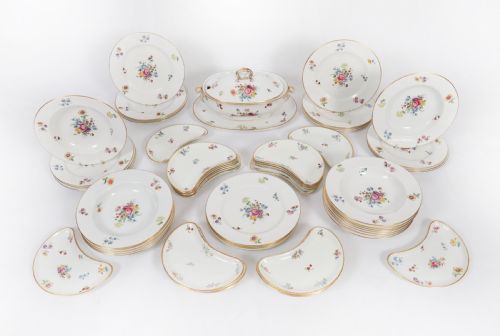
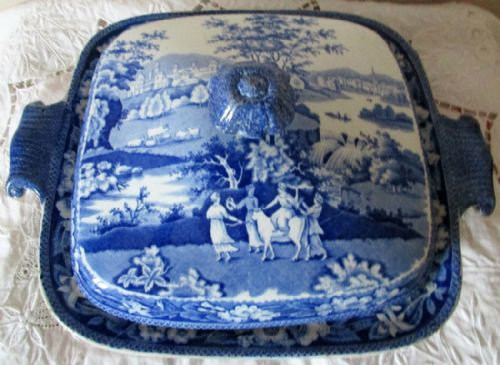
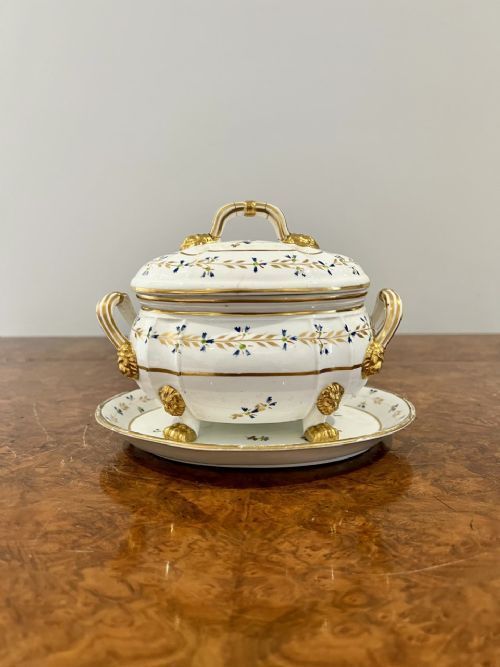
Many items display blue and white transfer printing with landscape or botanical themes, while others rely on plain white glazes shaped with intricate handles and covers.
Materials and production methods
Potters shaped these vessels from earthenware, pearlware, ironstone, and bone china, covering the bodies in clear or white glaze. Earthenware and ironstone provided sturdy foundations for daily dining, whereas bone china and porcelain offered finer walls for display pieces.
Transfer printing applied detailed designs onto the ceramic surface before glazing and firing, creating durable blue and white motifs such as the Canton River Scene or botanical studies. Artisans also applied gold leaf and gilt accents by hand to handles and rims on select porcelain works.
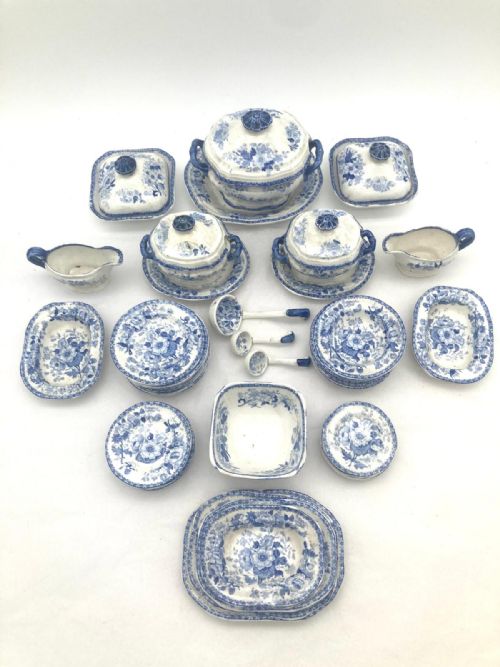
Some miniature child-sized service tureens allow tiny hands to serve imaginary feasts from two centuries ago.
Distinctions in craftsmanship
Quality rests in the crispness of the transfer print, the uniformity of the glaze, and the sculptural precision of handles and feet. Finer pieces maintain balanced proportions between the bowl, cover, and stand without warping from the kiln.
Pots produced by established factories like Spode, Derby, or Worcester often display finer detailing in moulded elements and more careful alignment of printed patterns across the lid and body seams.
Davenport Bone China·Derby Porcelain·Spode·Robert Hamilton·James Wallace and Co·J and R Clews·John Rogers and Son·John and Richard Riley·Coalport·Coalbrookdale·Booths·Ridgway·Flight Barr and Barr·Müller Volkstedt MV Co·Doulton Burslem·Wedgwood·Richard Ginori
The White Ceramic Tureen Glossary
- Pearlware
- A refined earthenware developed in the late eighteenth century featuring a thin glaze with a faint bluish tint in the crevices. This body served as an affordable canvas for blue and white transfer printing.
- Ironstone
- A heavy, durable type of ceramic patented in the nineteenth century to withstand rigorous table use. It mimics porcelain while offering greater resistance to chipping.
- Transfer printing
- A decoration technique where an engraved copper plate transfers a design onto tissue paper, which is then pressed onto the ceramic body. This method allowed intricate patterns to be reproduced consistently.
- Sauce tureen
- A miniature version of the soup tureen, typically accompanied by an attached stand and a small ladle. These vessels held gravies and sauces during multi-course meals.
- Flow blue
- A nineteenth-century ceramic decoration style where the cobalt blue pigment intentionally bled into the surrounding white glaze during firing. The resulting soft, blurred outline gives the pattern a distinctive depth.
White Ceramic Tureen: Frequently Asked Questions
What is a white ceramic tureen used for?
These vessels served soups, broths, and cooked vegetables at formal dining tables, keeping contents warm beneath fitted lids. Their matching stands caught drips and protected fine dining linens.
Today, they function primarily as decorative centerpieces or storage vessels for sideboards and side tables, bringing historic pattern work into domestic spaces.
How do I distinguish earthenware from porcelain?
Earthenware and ironstone present opaque, heavier bodies with thick walls suited to robust kitchenware. Porcelain and bone china feel lighter, often appearing translucent when held up to a strong light.
Porcelain surfaces also tend to show a brighter, glossier finish under close inspection, whereas older pearlware glazes pool with a pale blue hue in recessed areas.
Can I use an antique tureen for serving food?
Most buyers treat these historical vessels as display pieces rather than active tableware due to age and potential hairline cracks in the historic glaze. Old earthenware and ironstone can absorb moisture or oils through microscopic crazing lines over time.
Hand washing is essential for any piece retaining delicate gilt highlights or transfer prints that might degrade in modern dishwashers.
How do I date a transfer printed tureen?
Makers often stamped names, pattern titles, or registry marks directly onto the unglazed underside of the ceramic foot rim. Comparing these impressed marks and pattern names against production records helps narrow the manufacturing decade.
Style clues like the depth of the blue pigment, the weight of the ceramic body, and the shape of the handles also point toward specific periods such as the Georgian or Victorian eras.