


White Ceramic Milk Jug
A white ceramic milk jug brings the quiet utility of porcelain, earthenware, and ironstone into daily service.
White Ceramic Milk Jug
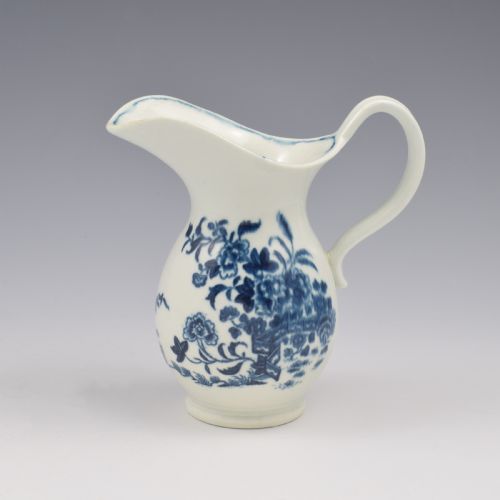
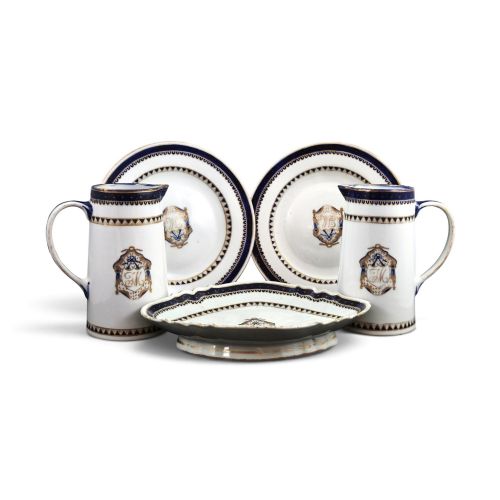
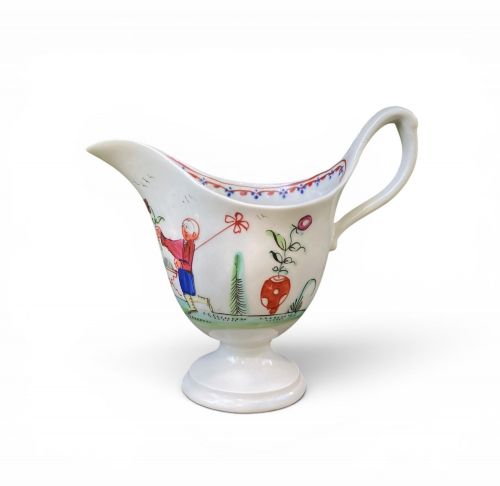
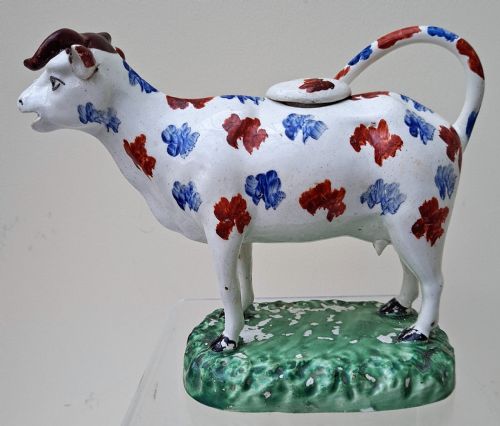
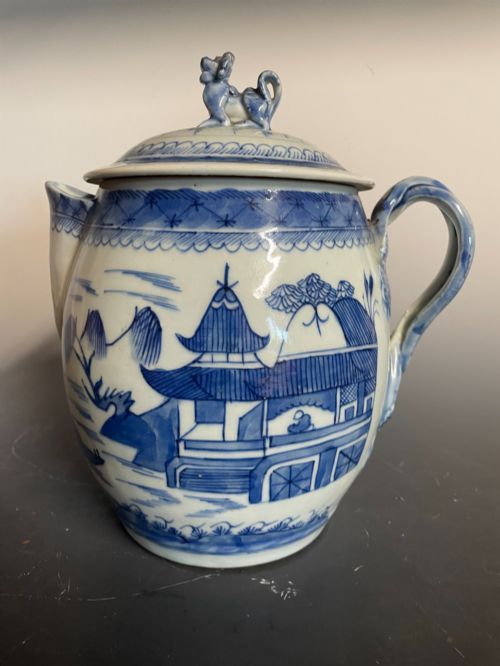
A white ceramic milk jug appears across the eighteenth and nineteenth centuries, taking forms from simple creamers and low Chelsea ewers to faceted vessels and whimsical cow creamers. These domestic pieces serve the table, uniting practical dairy storage with regional ceramic traditions ranging from Georgian Staffordshire potteries to Chinese export porcelain.
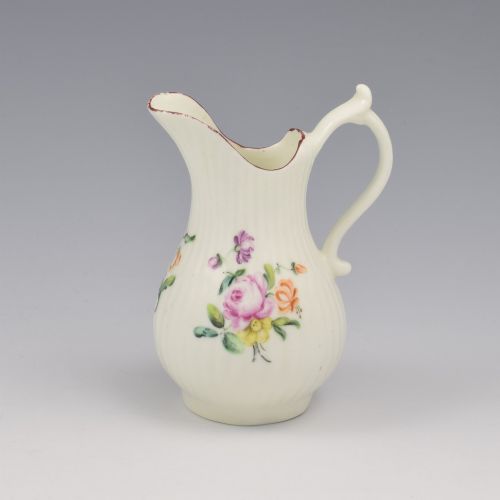
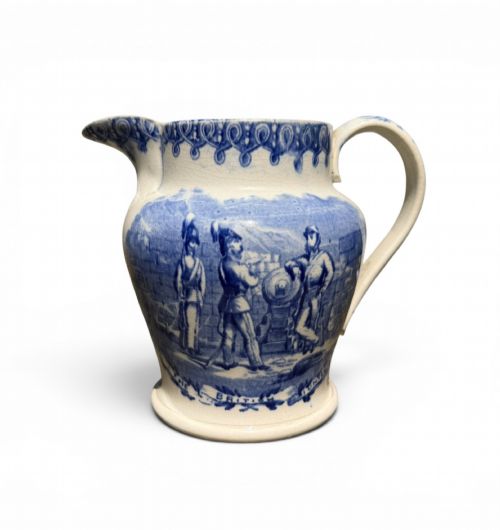
The versions met most often on this page span the Georgian and Victorian periods, encompassing pearlware, creamware, and ironstone bodies. Makers shaped these vessels for everyday pouring, decorating them with handpainted birds, floral panels, transfer printing, and occasional touches of gold leaf.
Collectors encounter everything from New Hall clip-handled jugs to Mason's ironstone hydra forms, reflecting diverse British and continental workshops. Each object records the shifting tastes of domestic dining through its specific handle placement, spout formation, and glaze depth.
Materials and technique
Potters built these vessels using porcelain, earthenware, pearlware, and ironstone, shaping the clay by hand or moulding it into fluted balusters and faceted profiles. Cobalt blue transfer decoration, purple lustre, and handpainted enamel scenes were applied directly to the body before firing.
Glazes provided a smooth, hygienic surface for dairy storage, while gilding and gold leaf added decorative contrast on fine porcelain bodies. Workshops utilised specialist kilns to vitrify the ceramic body, ensuring the jugs could withstand daily use on the tea table.
The selection includes animal-form vessels such as Staffordshire cow creamers alongside classical Georgian neoclassical shapes.
Distinctions in quality
Quality rests in the crispness of the moulding, particularly along faceted edges, handle attachments, and spout definitions where cheaper production often leaves soft or blurred lines. The precision of handpainted or transfer-printed decoration also separates standard utility wares from finer cabinet pieces.
The purity and consistency of the white ceramic body, whether translucent porcelain or refined creamware, indicate the skill of the original workshop. Superior pieces maintain balance in the hand, with cleanly struck base marks and tightly controlled glaze application free from pooling.
New Hall·Leeds Pottery·John Rose Coalport·Livesley Powell And Co·Crown Derby·Mason's
The White Ceramic Milk Jug Glossary
- Creamware
- A fine earthenware developed in the eighteenth century, noted for its warm cream-coloured glaze and refined body. Leeds Pottery famously produced substantial quantities of this material.
- Pearlware
- A refined earthenware introduced in the late eighteenth century with a slightly bluish glaze designed to mimic the appearance of true porcelain. It frequently carried transfer-printed or lustre decoration.
- Ironstone
- A heavy, durable ceramic patented in the early nineteenth century that bridges earthenware and porcelain. Workshops like Mason's used it to create robust jugs with exceptional strength.
- Transfer printing
- A decoration technique where an engraved metal plate transfers a design onto paper, which is then stamped onto the ceramic surface before glazing. This method allowed for intricate botanical and oriental scenes.
- Gilding
- The application of gold leaf or powdered gold to the surface of ceramic pieces for decorative emphasis. It appears frequently on nineteenth-century porcelain tea wares.
White Ceramic Milk Jug: Frequently Asked Questions
How do I date a jug?
Dating relies on observing material transitions, such as the shift from creamware and early pearlware to nineteenth-century ironstone and heavy Victorian earthenware. Handle styles, glaze colours, and transfer-printing patterns provide further chronological markers.
Matching specific decorators or factory marks, when present on the base, narrows the production window to a particular decade or reigning period.
Are these jugs safe for milk?
Most antique ceramic jugs remain structurally sound for holding cold liquids, though older glazes may contain historical trace elements. Many collectors prefer to display them or use them exclusively for dry presentation rather than daily service.
Gentle hand washing in lukewarm water preserves the fragile overglaze enamels and delicate gilding found on eighteenth and nineteenth-century pieces.
What is a cow creamer?
A cow creamer is a whimsical ceramic vessel modelled in the shape of a cow, designed to pour milk or cream through an opening on its back. Staffordshire and Welsh potteries produced these popular figures during the Georgian and Victorian eras.
They served as both functional tea table accessories and amusing conversation pieces for middle-class households.
How do I spot a reproduction?
Authentic period jugs show appropriate wear patterns on the unglazed base ring, known as the foot rim, along with subtle weight and potting inconsistencies. Modern reproductions often feel too uniform in their glaze thickness and body density.
Studying the chemistry of the glaze and the specific pigments used in handpainted or transfer scenes helps confirm genuine age.