



Wheat Sheaf Back Chairs
Wheat sheaf back chairs bring carved agrarian motifs to the dining table, combining classical elegance with sturdy timber framing.
Wheat Sheaf Back Chairs
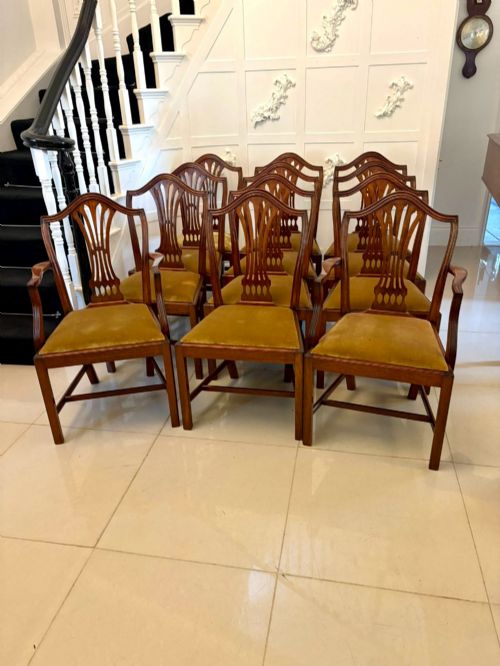
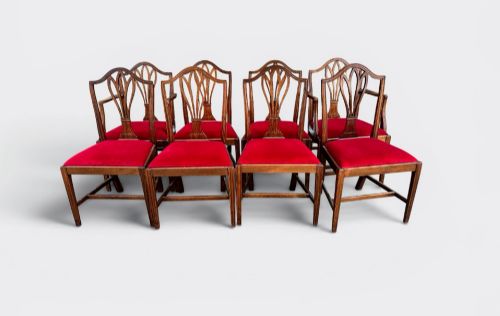
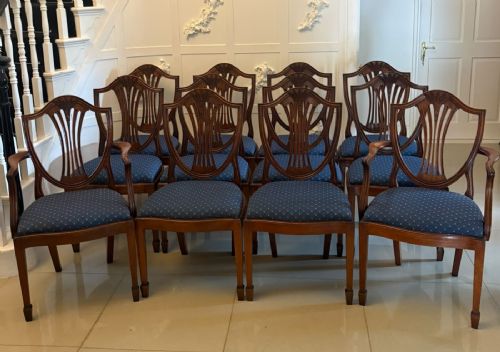
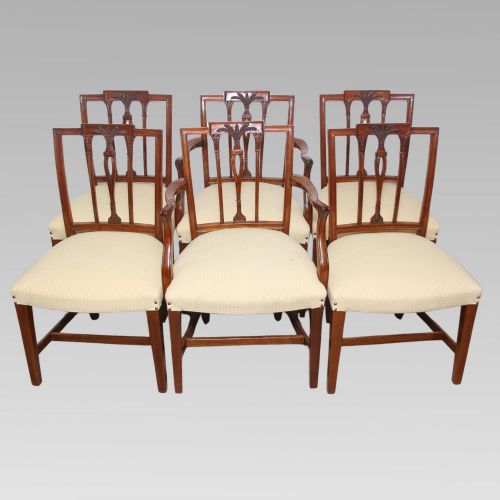
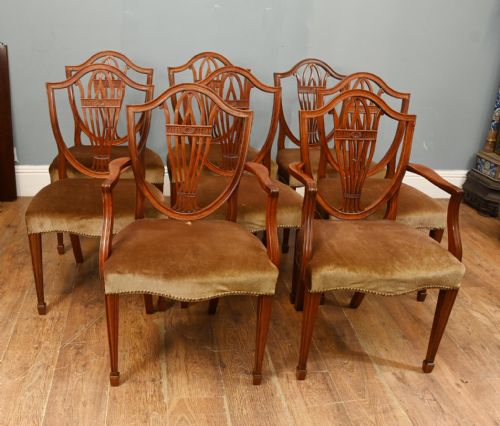
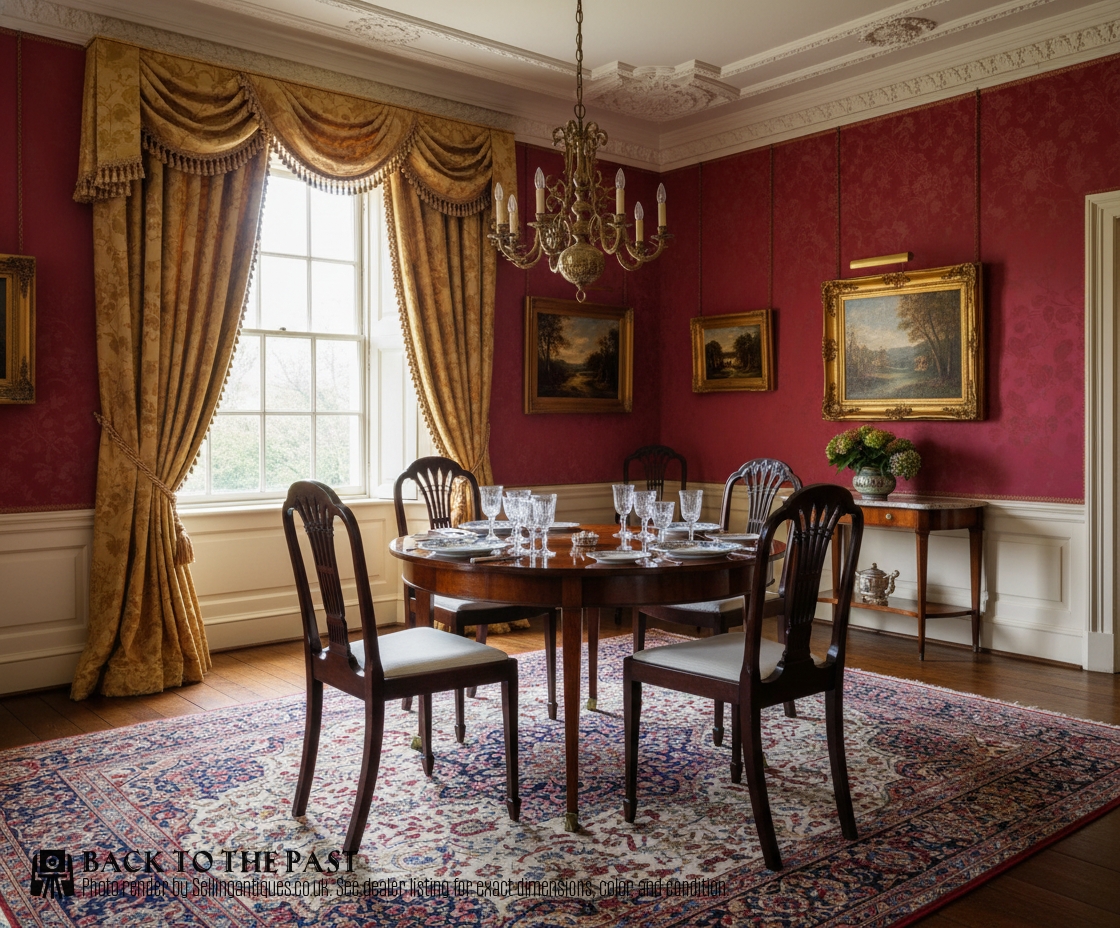
Wheat sheaf back chairs are seating furniture defined by a central splat carved to resemble bundled ears of corn or wheat. Buyers searching for wheat sheaf back chairs will find examples ranging from eighteenth-century originals to later revivals.
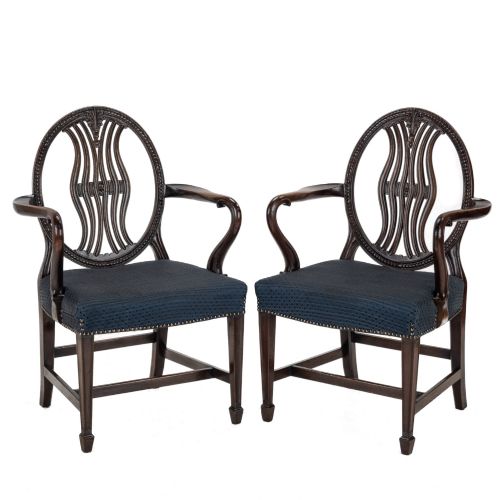
The pieces on this page primarily consist of dining chairs, side chairs, and carvers or armchairs. They appear in matching sets of various sizes as well as smaller pairs.
Originating during the Georgian period, the design reappeared across the nineteenth and early twentieth centuries through Revival interpretations. The Edwardian era and the nineteen-twenties proved particularly prolific for these stylistic revivals.
Materials and construction methods
Makers relied principally on mahogany as the primary timber, valued for its strength and suitability for intricate carving. Satinwood also appears occasionally in specific revival pieces.
The iconic back splat requires precise hand-carving to delineate the individual stalks and binding bands of the sheaf motif. Joinery follows traditional methods of mortise and tenon to ensure structural stability in daily dining use.
Seating areas are completed with drop-in pads or upholstered frames covered in fabric, velvet, or leather. Upholstery is typically secured with metal tacks along the seat rails.
Wheat Sheaf Back Chairs Retail Price Guide 2026
Typical asking prices for wheat sheaf back chairs among the pieces listed under this phrase on Sellingantiques today, from the lower quarter to the upper quarter. They describe what is for sale here now, not the wider market.
Distinctions in craftsmanship
Quality rests heavily on the depth and sharpness of the carving in the wheat sheaf splat. Superior examples display crisp detail with well-defined husks and stems, whereas lesser pieces show shallow, softened execution.
The choice and figuring of the mahogany timber dictate the visual presence of the frame. Higher-grade chairs utilise dense, richly grained wood with robust structural scantlings that resist movement over centuries of use.
Cohesion within a set separates ordinary groups from exceptional ones. Matching grain patterns, uniform colouration, and consistent proportions across both carvers and diners denote superior workshop origin.
The Wheat Sheaf Back Chairs Glossary
- Carver
- An armchair designed with elbow supports, traditionally placed at the heads of a dining table. These often accompanied sets of smaller side chairs.
- Shield back
- A chair back shaped like an inverted shield, frequently housing carved splats such as the wheat sheaf motif. This silhouette is closely associated with Hepplewhite designs.
- Splater
- The vertical wooden member positioned in the middle of a chair back, connecting the crest rail to the seat. In these pieces, the splat takes the form of bound wheat.
- Drop-in seat
- A removable wooden frame padded and upholstered separately before being dropped into a rebate in the chair seat rails. This construction allowed for easy reupholstering.
- Hepplewhite revival
- A later nineteenth or early twentieth-century interpretation of eighteenth-century designer George Hepplewhite's aesthetic. These pieces emulate earlier proportions and decorative vocabulary.
Wheat Sheaf Back Chairs: Frequently Asked Questions
How do I spot a true eighteenth-century chair?
Authentic eighteenth-century examples exhibit specific hand-cut joinery marks, patination accumulated over generations, and timber density characteristic of period harvesting. Examining the underside reveals the tool marks and construction quirks typical of early workshops.
Revival pieces from the Edwardian era or the nineteen-twenties often look remarkably crisp, but machine assistance and standardised timber preparation distinguish them from period originals.
Can I mix carvers with side chairs?
Mixing carvers and side chairs is standard practice for dining suites of this form. Historical sets frequently combined two armchairs with six or eight matching side chairs for the table ends.
When purchasing sets, check that the arm height clears your dining table apron so the carvers slide in correctly.
How should I care for mahogany frames?
Mahogany requires minimal intervention beyond dusting with a soft, dry cloth. Avoid placing timber furniture near direct heat sources or in strong sunlight to prevent the wood from drying out and splitting.
Applying a traditional beeswax polish periodically helps maintain the sheen and nourishes the grain without building up heavy chemical residues.
What defines the Hepplewhite style?
The Hepplewhite style is characterised by lighter, more graceful proportions than earlier heavy walnut or oak furniture. Shield-shaped chair backs, tapered legs, and delicate carved details define the aesthetic.
Wheat sheaf motifs fit naturally into this classical vocabulary, utilising symmetry and nature-inspired ornamentation.