




Welsh Oak Desk
A welsh oak desk brings tactile vernacular character into a room, fashioned from sturdy native timber by country cabinet-makers.
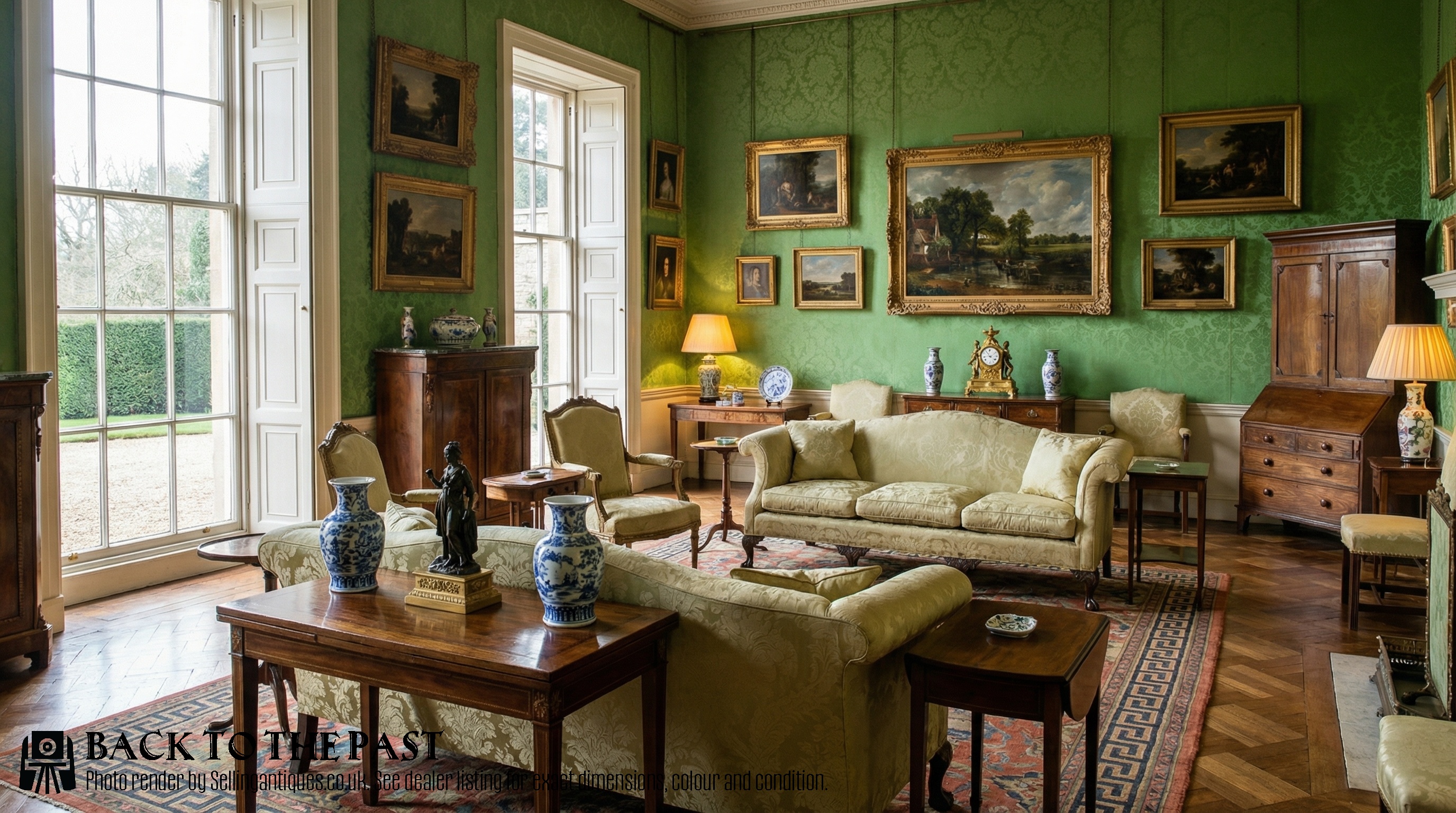
Welsh Oak Desk
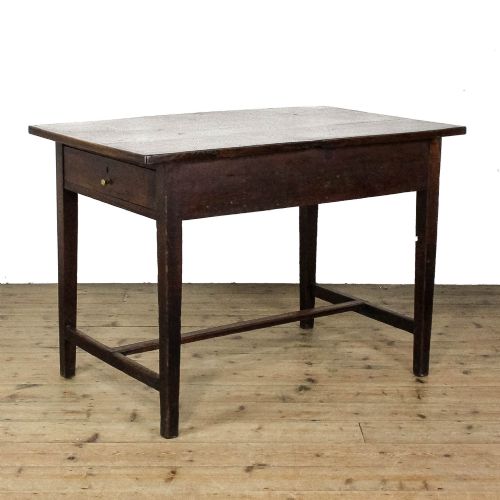
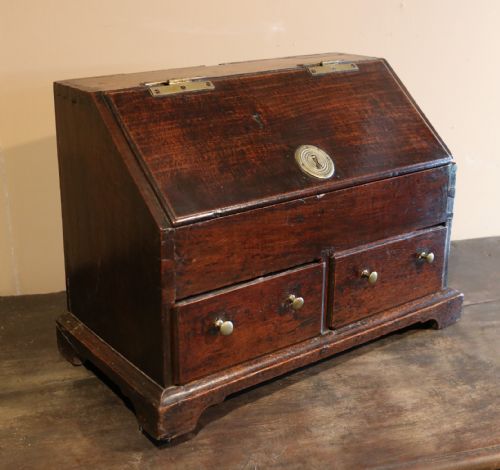
A welsh oak desk encompasses a variety of functional forms built from native hardwoods, ranging from compact writing boxes and lowboys to expansive bureau bookcases and bureau desks. The pieces listed span several centuries, including seventeenth-century table desks, eighteenth-century Georgian vernacular examples, and later twentieth-century labeled pieces.
Buyers will most frequently encounter eighteenth-century and nineteenth-century bureau desks, side tables, and fitted writing slopes originating from Welsh workshops. These forms demonstrate regional vernacular traditions that differ from urban English cabinet-making through sturdier proportions and simpler structural lines.
Assessing quality and character
Quality in these pieces rests upon the integrity of the timber, the preservation of original surfaces, and the subtlety of regional proportions. Bureau interiors fitted with burr-fronted drawers or inlaid decoration indicate a higher degree of workshop ambition.
Proportion and patination separate standard regional pieces from exceptional survivals. Untouched surfaces displaying deep wax finish and minimal timber replacement carry greater historical coherence.
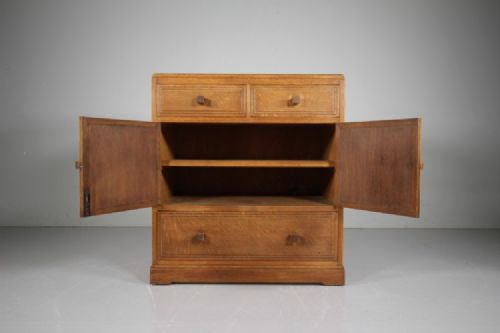
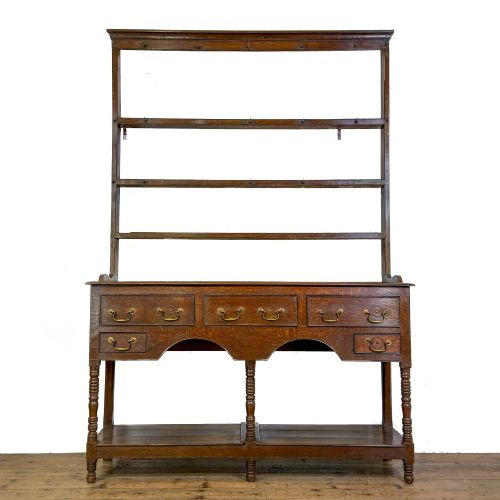
Object forms span kitchen tables, armchairs, dressers, side tables, and writing boxes alongside various bureau desks.
Bryn Mawr
The Welsh Oak Desk Glossary
- Lowboy
- A small table with drawers, commonly used as a writing or dressing table in the eighteenth century. These low tables typically feature three drawers beneath a simple top.
- Bureau
- A writing cabinet featuring a sloping fall-front that opens to reveal a fitted interior of small drawers and pigeonholes. It rests upon a chest of drawers or a stand.
- Vernacular
- Architecture or furniture built by local craftsmen using traditional regional methods and materials, without academic design influence. These objects reflect local practical needs and available resources.
- Secretaire
- A piece of furniture containing a drawer or compartment that pulls out to form a writing surface. This term often describes larger press cupboards or cabinets incorporating a writing drawer.
- Comb-back
- A Windsor chair variation where the vertical spindles of the back extend upward through a bentwood arm-rail to support a separate headrest. This regional seating form provides robust support.
Welsh Oak Desk: Frequently Asked Questions
How do I date an old desk?
Dating relies on examining construction methods, hardware, and timber patination. Seventeenth-century examples often display simpler joinery and hand-carved details, whereas eighteenth-century bureau desks introduce more complex fitted interiors and drawer configurations.
Secondary woods and structural assembly also offer clues. Nails, hinges, and drawer linings changed through the Georgian and Victorian periods, helping to narrow the decade of manufacture.
Where were these pieces built?
These pieces originate from workshops across Wales, reflecting distinct regional styles from areas such as Carmarthenshire, Glamorgan, and the Welsh Marches. Country joiners utilised locally felled timber suited to domestic and office use.
Rural makers adapted urban cabinet-making fashions to suit local preferences, resulting in sturdy forms that prioritized utility and robust construction over delicate ornament.
How do I care for solid oak?
Solid oak benefits from stable room humidity and regular application of traditional beeswax to nourish the dry timber. Avoid placing these pieces near direct heat sources or strong sunlight, which causes wood to warp and finish to fade.
Cleaning should be done with a soft, dry cloth rather than modern silicone polishes, allowing the historic patination to deepen naturally over decades of use.
What is a bureau bookcase?
A bureau bookcase combines a lower writing desk with an upper enclosed shelving section for books. The sloping desk lid folds down to create a writing surface while concealing internal compartments.
This tall form provides substantial storage for papers and volumes, making it a prominent architectural feature in a room.