
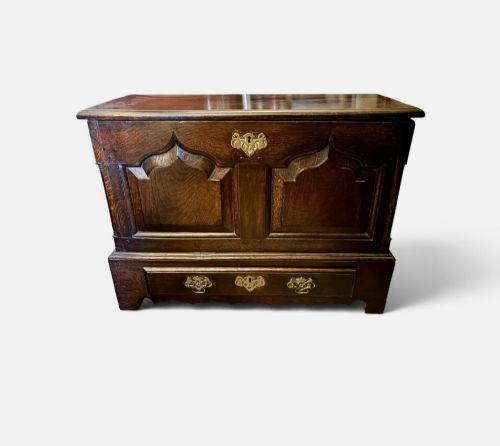
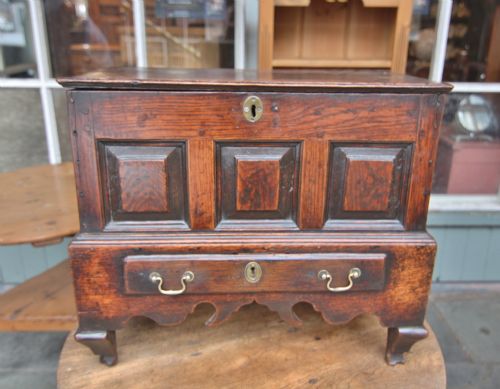
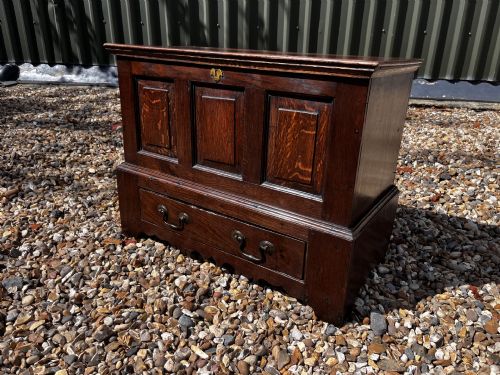
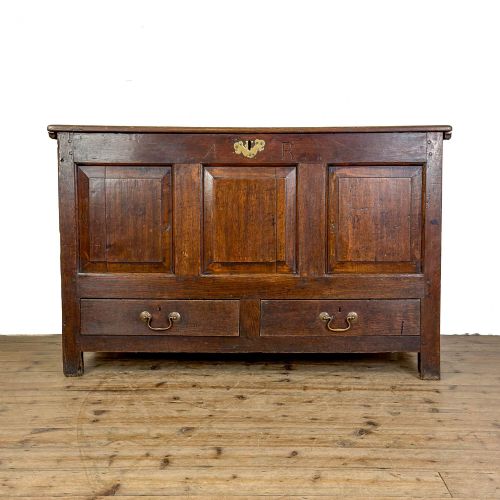
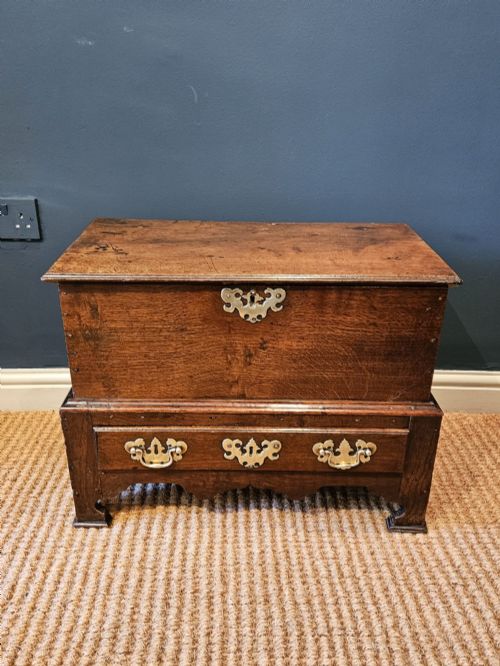


Welsh Oak Coffer Drawers
These welsh oak coffer drawers are heavy storage chests and miniature boxes built for domestic keeping, combining utility with local cabinet-making traditions.
Welsh Oak Coffer Drawers
When you search for welsh oak coffer drawers, you encounter a distinct regional form spanning full-sized mule chests and smaller table boxes known as coffers bach. These pieces typically incorporate one or more lower drawers beneath the main storage compartment.
The selections on this page bridge the seventeenth, eighteenth, and nineteenth centuries, reflecting vernacular woodworking across Welsh regions during the Georgian period and earlier eras. Full-sized coffers and miniature versions both serve traditional linen and document storage.
Materials and Construction
The primary material across these listings is solid oak, selected for durability and local availability, paired frequently with brass handles and escutcheons alongside iron hinges and fixings.
Makers utilised traditional joinery methods, incorporating panelled construction and hand-cut dovetails for the drawers, whilst surface details range from plain boards to carved enrichment.
Some miniature coffers bach are so small they sit comfortably upon a tavern table.
Assessing Quality and Proportion
Quality in these pieces depends upon the crispness of the cabinet-making and the preservation of original timber surfaces rather than applied decoration. Better examples display harmonious proportions between the upper chest body and the integrated lower drawers.
The integrity of the construction, including original feet, hinges, and drawer linings, distinguishes finer regional work from pieces that have suffered extensive later alterations or timber replacement.
The Welsh Oak Coffer Drawers Glossary
- Coffer bach
- A small Welsh miniature coffer or chest, usually featuring a single drawer beneath the main lidded compartment and designed to sit on a table. These domestic items held valuables, documents, or small linens.
- Mule chest
- A storage chest fitted with one or more drawers at the base, representing an intermediate development between the simple coffer and the chest of drawers. The design allowed access to both top-lidded space and lower drawer storage.
- Vernacular furniture
- Domestic pieces made by local regional joiners using regional materials rather than following metropolitan London fashion. These items prioritise sturdy construction and practical utility.
- Escutcheon
- A protective plate surrounding a keyhole, frequently cast in brass on these pieces to prevent the wood from splitting around the lock.
Welsh Oak Coffer Drawers: Frequently Asked Questions
How do mule chests differ from standard coffers?
Mule chests include one or more drawers built into the base beneath the main storage compartment.
This addition provided easier access to stored items without needing to lift the heavy top lid.
What wood was used for these chests?
The primary timber found in these listings is oak, supplemented by iron and brass for hardware.
Local cabinet-makers relied on native hardwood for its strength and resilience in domestic environments.
How can I date an eighteenth-century coffer?
Dating relies on construction methods, timber patination, and stylistic details like raised panels or turned feet.
Many pieces carry specific regional characteristics from the Georgian period or earlier seventeenth-century traditions.
Where were these pieces originally made?
These items originate from Welsh regional workshops and country makers working within local vernacular styles.
Their construction reflects rural cabinet-making practices distinct from urban furniture production.