



Welsh Carved Coffer
These pieces known as a welsh carved coffer are solid timber storage items built for domestic use, prized for their traditional joinery and surface detail.

Welsh Carved Coffer
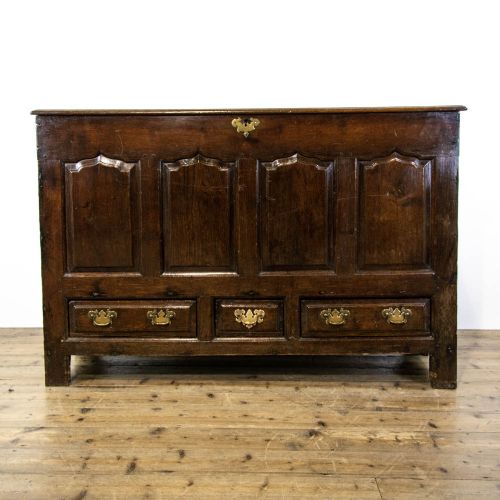
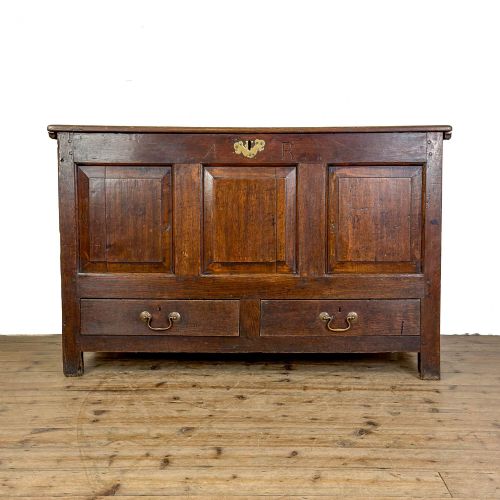
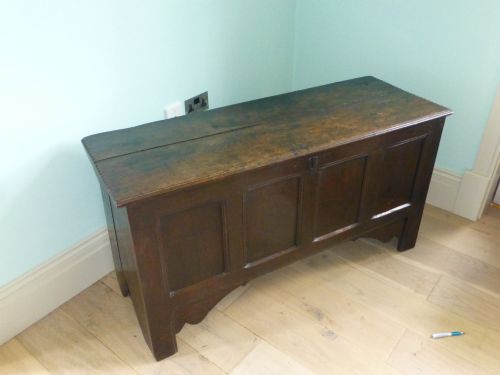
A welsh carved coffer is a substantial wooden chest designed for household storage, appearing across the sixteenth, seventeenth and eighteenth centuries in various domestic settings. These items include standard chests, mule chests fitted with lower drawers, and the smaller coffor bach format intended for precious items.
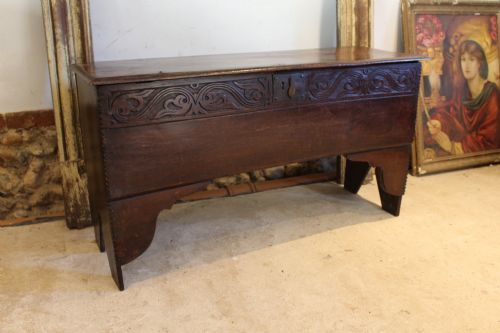
The regional character stems from workshops operating in Wales, often employing heavy timber construction with vernacular carving traditions. Pieces span from simple six plank formats to elaborate joined structures featuring chip carving and owner initials.
Alongside standard coffers, related forms like court cupboards, press cupboards and table desks share the regional oak vocabulary and architectural detailing characteristic of early Welsh cabinet making.
How they were made
Makers relied principally on native oak, complemented by occasional use of elm and fruitwood for specific panels or smaller box sections. Construction methods involved sturdy frame and panel joinery or simplistic plank assembly secured with iron nails and wooden pegs.
Surface ornament was achieved through chip carving, incised geometric patterns, and occasional mixed wood inlay to personalise panels with dates and initials. Hardware comprised hand forged wrought iron hinges and brass fittings that secured lids and internal compartments.
Listings feature oak, elm, fruitwood and mixed wood inlay across periods from the sixteenth century through the eighteenth century.
What varies in quality
Quality rests upon the crispness of the original carving and the integrity of the timber panels, where depth of relief and complexity of design distinguish regional workshops. Untouched surface patination and the survival of original integrated elements like bottom drawers or miniature proportions elevate certain examples above standard utility pieces.
Construction precision also dictates standard, separating robust joined furniture built with pegged mortise and tenon joints from simpler nailed box assemblies.
The Welsh Carved Coffer Glossary
- Coffor bach
- A small miniature chest or coffer originating in Wales, often featuring a single lower drawer and used for storing valuables or linens.
- Mule chest
- A storage chest equipped with one or more drawers at the base beneath the main compartment, bridging the form of a coffer and a chest of drawers.
- Chip carving
- A decorative technique where small chips are removed from the surface of the timber to create geometric patterns and low relief designs.
- Six plank
- A basic construction method for chests where four side walls, a base and a lid are joined directly at the edges.
- Joined cupboard
- A heavy cabinet built using pegged frame and panel construction rather than simple boarded assembly.
Welsh Carved Coffer: Frequently Asked Questions
What is a welsh carved coffer used for?
These chests served primarily for storing household textiles, blankets, clothing and personal valuables securely within domestic rooms.
Smaller variants like the coffor bach were specifically adapted for keeping precious items, documents or small garments safely enclosed.
How do I date a welsh carved coffer?
Dating relies on examining construction techniques, such as early board assembly versus later frame and panel joinery, alongside characteristic carving styles.
Inscribed dates and initials found on certain pieces provide direct chronological markers for the period of manufacture.
What wood are these coffers made from?
Oak is the predominant timber used across the majority of these Welsh storage pieces, selected for its strength and local availability.
Secondary woods such as elm, fruitwood and occasional mixed wood inlay appear in specific panels, boxes and decorative details.
What is the difference between a coffer and a mule chest?
A standard coffer consists of a simple chest with an opening lid above a single enclosed storage cavity.
A mule chest incorporates one or more drawers built into the base beneath the main lifting compartment for easier access to contents.