
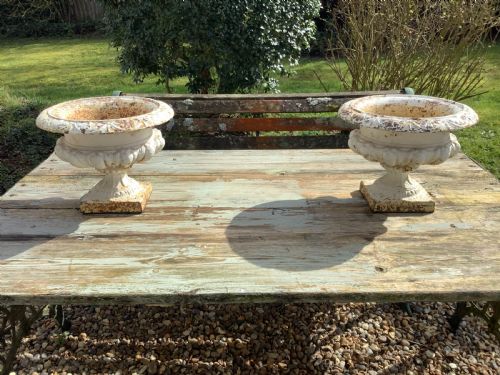


Weathered Metal Urns
Weathered metal urns bring sculptural weight to a garden, offering enduring focal points shaped by decades outdoors.
Weathered Metal Urns
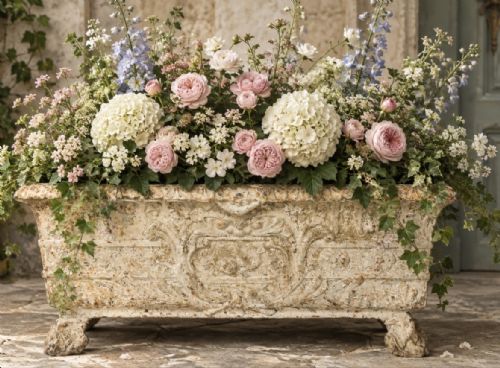
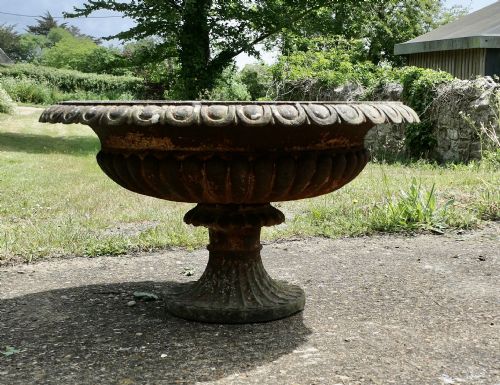
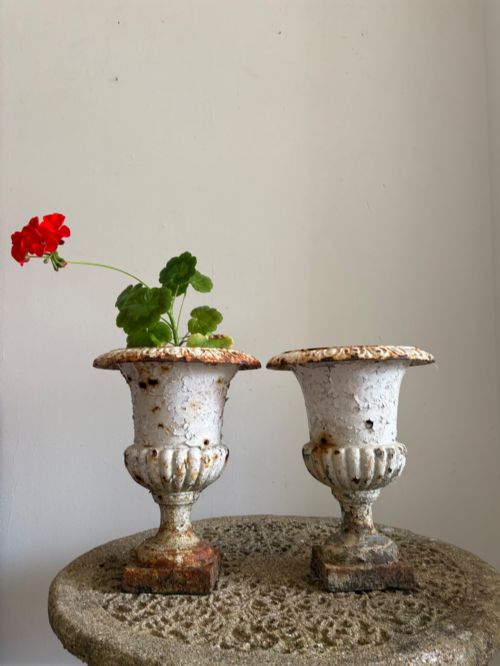
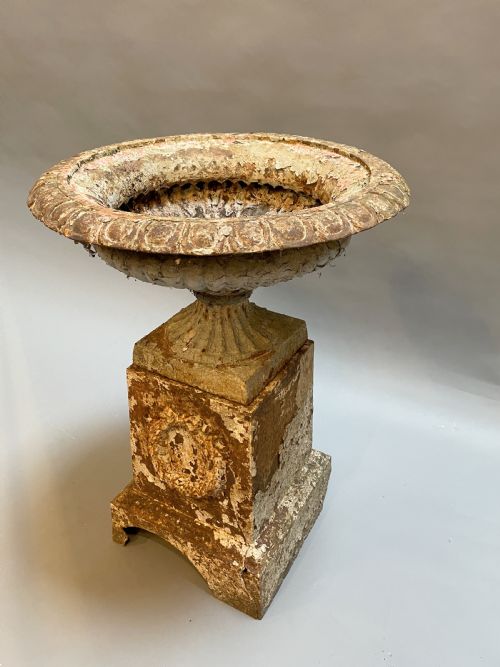
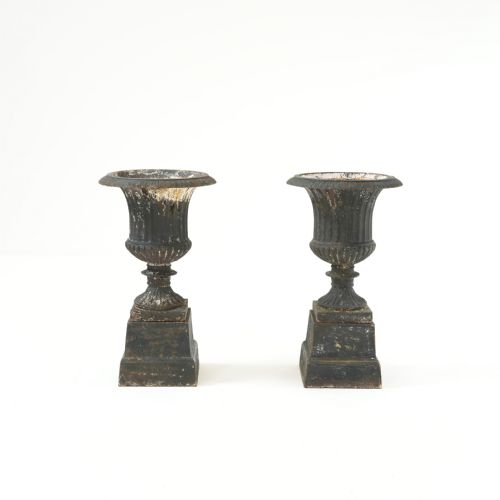
Weathered metal urns combine classical garden ornament with the deep patination of age, appearing across nineteenth-century Victorian and Regency designs. These pieces span substantial garden planters, tazza forms, and campana shapes designed to sit on stone plinths or terrace floors.
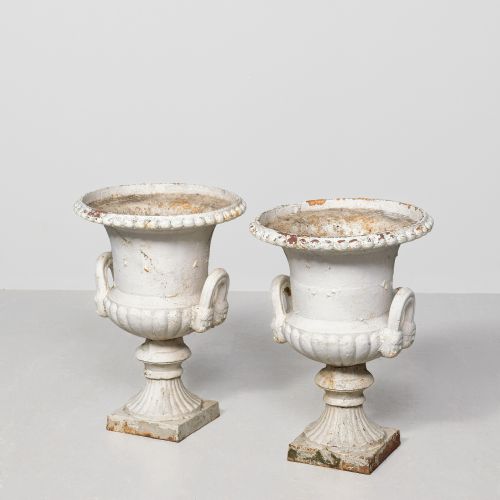
Cast iron serves as the most frequent metal found in these listings, often bearing the marks of early manufacture by makers such as Andrew Handyside. Alongside iron, examples in lead, copper, and wrought iron offer distinct silhouettes ranging from shallow bowls to tall fluted vessels.
Methods of manufacture
Cast iron and lead examples utilise traditional foundry techniques, pouring molten metal into sand moulds to create robust walls and crisp classical relief details. These heavy sections allow the vessels to withstand centuries of outdoor exposure without losing structural integrity.
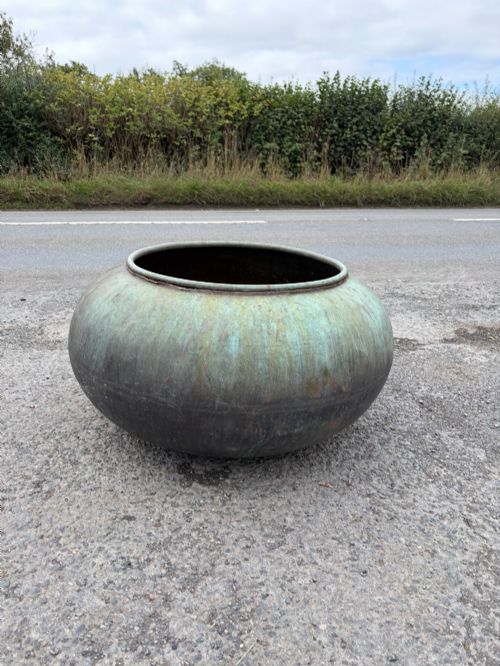
Copper and sheet iron items rely on hand-beating and seaming techniques to form hollow vessels, often finished with decorative strapwork or finials. Original painted surfaces and natural verdigris develop over decades through interaction with weather and moisture.
Several copper planters double as log bins, proving that Victorian metalwork happily swaps damp garden soil for dry hearthside kindling.
Distinctions in quality
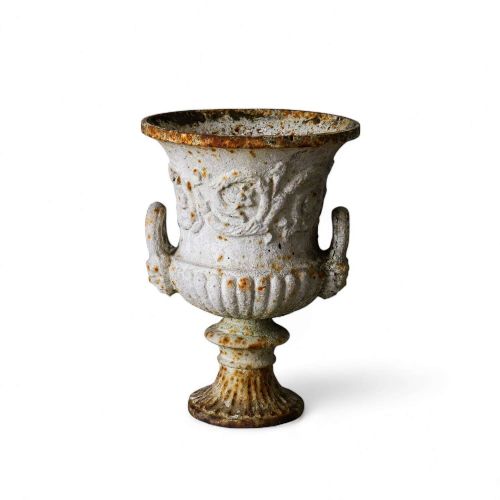
Quality rests in the crispness of the cast ornament and the proportion of the classical campana or tazza bowl to its base. Superior examples display sharp floral swags and egg-and-dart moulding that remain clear beneath layers of old paint and oxidation.
The integrity of the metal walls and the presence of matching pairs elevate certain pieces above single utilitarian planters. Heavy, thick-walled castings from established nineteenth-century foundries provide greater substance than lighter twentieth-century adaptations.
Andrew Handyside
The Weathered Metal Urns Glossary
- Campana
- A bell-shaped garden urn with an everted rim, commonly cast in iron during the nineteenth century. This classic silhouette originates from ancient Roman marble vases.
- Tazza
- A shallow cup-shaped vessel raised on a stem and foot, frequently utilised as a garden ornament in Victorian landscaping. These pieces sit lower and wider than standard campana urns.
- Verdigris
- A green patina that forms naturally on copper and brass surfaces through long-term exposure to atmospheric elements. Collectors value this stable chemical layer for its visual depth.
- Strapwork
- Ornamental metal bands applied in interlaced patterns across the surface of planters and architectural ironwork. This technique adds structural rigidity alongside decorative interest.
- Plinth
- A heavy base block that elevates garden urns above ground level, improving drainage and visual presence. Many nineteenth-century iron urns were designed specifically to partner with these supports.
Weathered Metal Urns: Frequently Asked Questions
How do I care for cast iron urns?
Cast iron garden urns require minimal maintenance beyond clearing debris and ensuring drainage holes remain open to prevent frost cracking during freezing weather.
Applying a protective coat of wax or suitable exterior paint helps preserve original surviving surfaces without obscuring the accumulated patination of age.
Are these urns heavy to move?
Nineteenth-century cast iron and lead vessels possess substantial weight due to the density of the metal and thick casting walls. Moving larger campana urns or examples paired with plinths typically requires lifting equipment or multiple pairs of hands.
Smaller table urns and sheet metal planters can be repositioned by hand around terraces and conservatories.
Can lead urns stay outside all year?
Lead naturally resists corrosion and withstands freezing temperatures, making it well-suited for permanent outdoor placement in gardens and courtyards. Over time, the metal develops a soft grey oxidation layer that protects the underlying material.
Positioning lead vessels on solid stone surfaces prevents distortion of the soft metal base.
How do I spot a genuine nineteenth-century piece?
Genuine nineteenth-century examples display deep pitting, layers of historic paint, and evidence of sand-casting techniques rather than modern fabrication marks. The weight, metal composition, and style of classical ornament align with Victorian and Regency manufacturing standards.
Comparing the casting sharpness against documented foundry work helps confirm the period.