

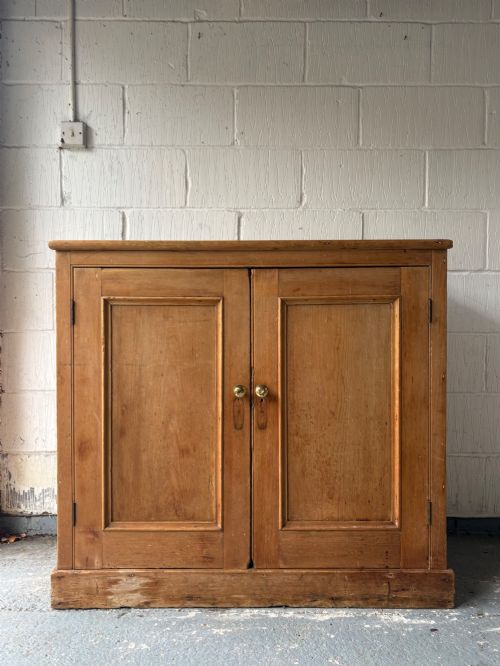
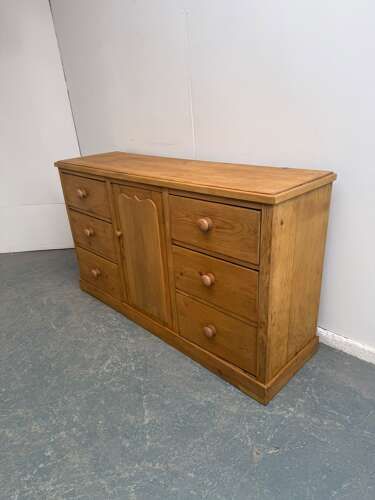
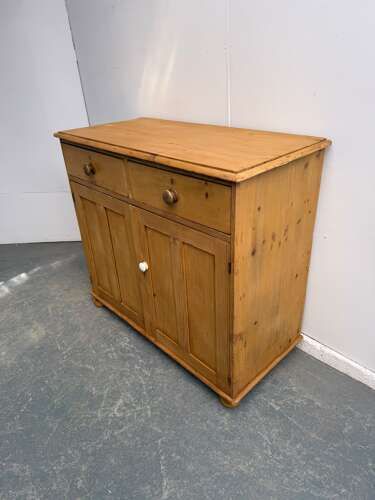
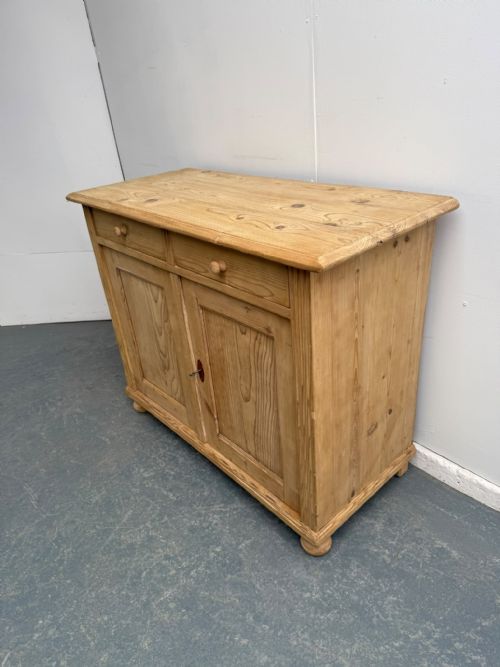
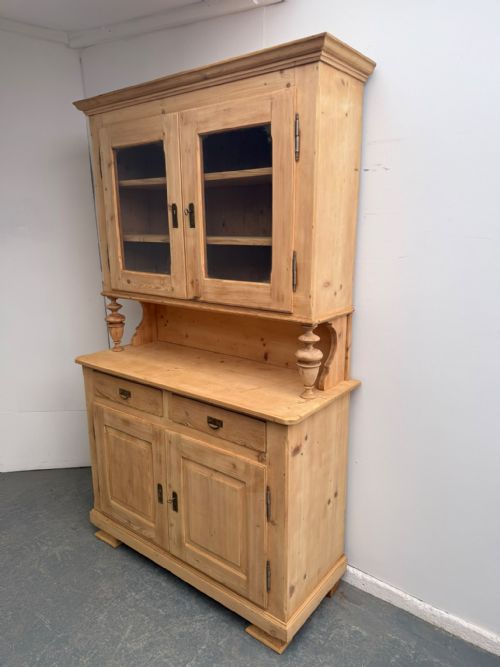
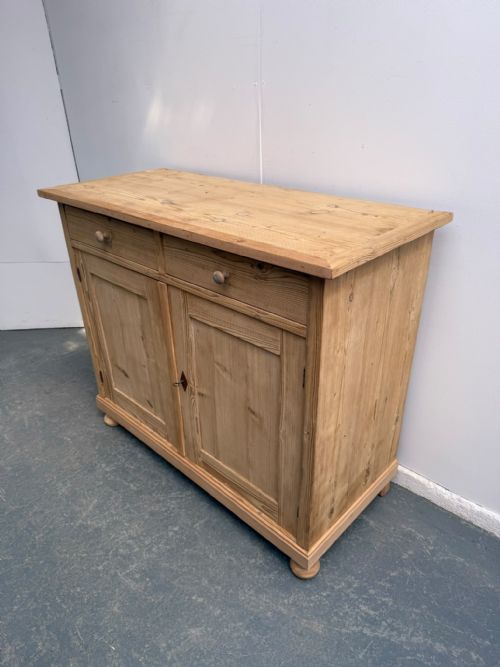
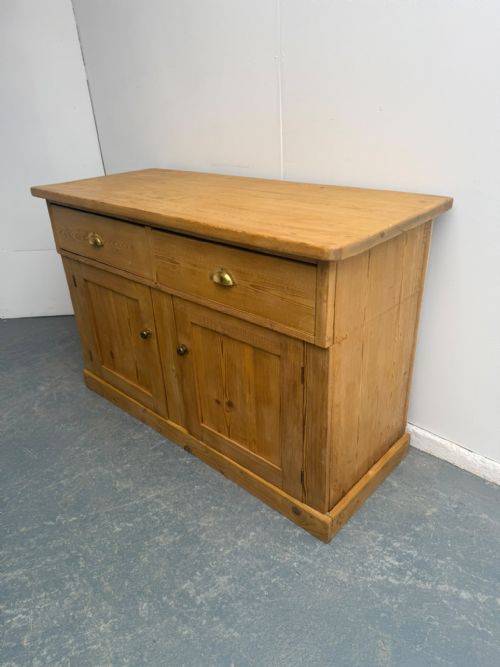
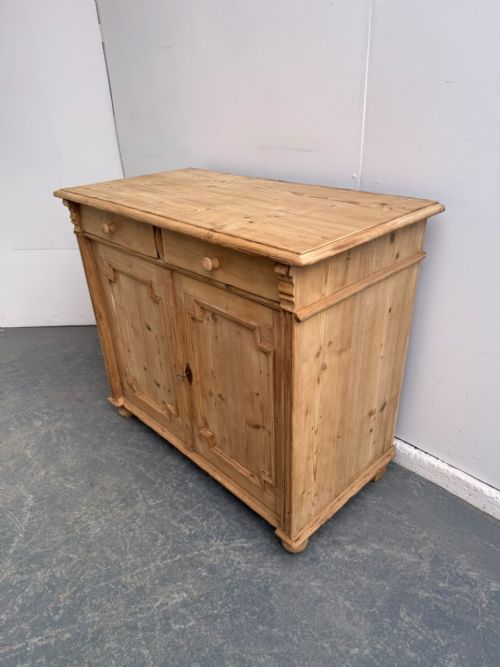
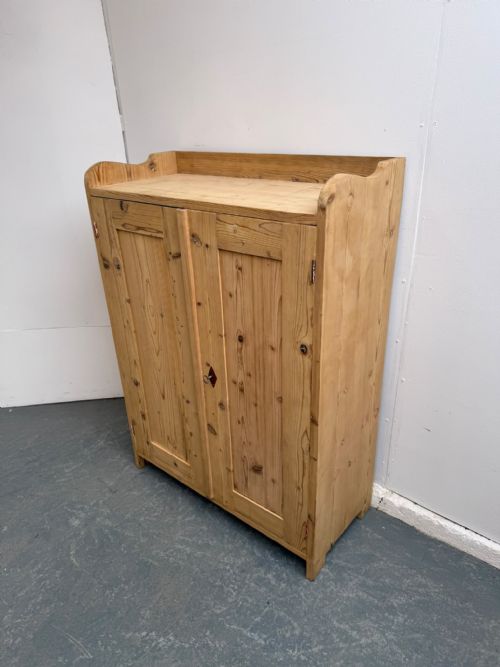
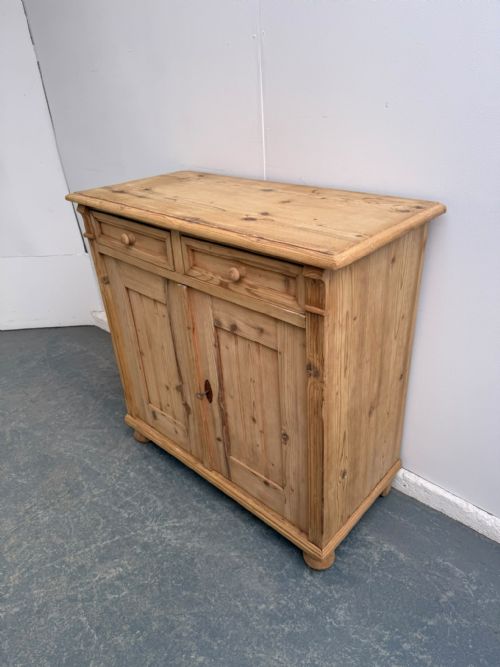


Waxed Pine Dresser Base
A waxed pine dresser base brings working kitchen utility and warmth into a modern room, offering heavy timber storage with a tactile finish.
Waxed Pine Dresser Base
A waxed pine dresser base provides substantial lower-level storage built from softwood timbers, designed originally for domestic kitchens and sculleries. These units typically combine sets of drawers with lower cupboard doors, creating a low-profile sideboard configuration.
Most examples found on this page date from the Victorian period, alongside earlier Georgian country pieces and later items from around nineteen hundred. They appear in regional variants such as English and Welsh styles, as well as French country pieces.
While primarily found as dedicated dresser bases, related forms include low wide storage cupboards, hall dresser bases, and shallow variants. These hardworking items reflect utilitarian domestic origins where durable pine surfaces took daily wear.
Materials and construction methods
These pieces are constructed predominantly from solid pine, selected for its accessibility and workability in country workshops. Iron, brass, and metal fittings provide structural reinforcement and functional hardware such as drawer pulls and hinges.
Surfaces are finished with wax rather than heavy varnish, allowing the soft grain of the pine to absorb oils and develop a tactile sheen over decades of handling. Interiors occasionally feature glass, ceramic elements, or specialist fittings like bread slides and lined compartments.
Waxed Pine Dresser Base Retail Price Guide 2026
Typical asking prices for waxed pine dresser base among the pieces listed under this phrase on Sellingantiques today, from the lower quarter to the upper quarter. They describe what is for sale here now, not the wider market.
Listings feature solid pine construction combined with iron, brass, and glass elements across Victorian and Georgian periods.
Assessing quality in pine furniture
Quality rests in the integrity of the timber selection and the retention of original structural proportions. Pieces built with thick solid pine boards and well-joined carcass construction endure better than those compromised by later alterations or heavy timber replacement.
The refinement of the joinery and the presence of original hardware, such as brass or iron pulls, distinguish better examples. Original configuration details, including bread slides or distinctive multi-drawer arrangements, elevate the character of a piece.
The Waxed Pine Dresser Base Glossary
- Dresser base
- The lower section of a traditional kitchen dresser, functioning as a standalone sideboard or cabinet with drawers and cupboards. It provides surface workspace and enclosed storage without the upper plate rack.
- Bread slide
- A pull-out wooden shelf historically used for cooling or storing baked goods before they were placed in larders. This functional feature is integrated into the cabinetry above drawers or cupboards.
- Victorian Country
- A regional domestic style spanning the nineteenth century that prioritises robust utility over refined urban ornamentation. Items in this style show honest construction methods suited to farmhouses and provincial homes.
- Georgian Country
- A style predating the nineteenth century characterised by straightforward joinery and sturdy proportions. These pieces reflect eighteenth-century rural craftsmanship before industrial standardisation.
- Wax finish
- A protective coating applied to timber to nourish the grain and produce a soft, low-lustre sheen. This traditional method requires periodic maintenance and darkens gracefully with age and handling.
Waxed Pine Dresser Base: Frequently Asked Questions
What is the difference between a dresser base and a sideboard?
A dresser base specifically derives from kitchen or scullery furniture designed for food preparation and storage, often featuring deeper proportions and utility-focused interiors like bread slides.
Sideboards generally emerged from formal dining room contexts, displaying more decorative veneers and formal styling compared to the robust utilitarian pine of a dresser base.
How do I care for a waxed pine surface?
Maintenance involves applying a suitable beeswax or furniture wax periodically to nourish the dry pine and maintain its protective barrier against moisture.
Avoid placing these pieces near direct heat sources or in damp environments, and use soft cloths for dusting rather than harsh chemical sprays.
Were these pieces originally painted?
Many Victorian and Georgian pine items were originally scrubbed bare, painted, or finished with simple layers to protect the softwood from kitchen grease.
Over time, many have been stripped and waxed to expose the natural grain, though traces of earlier paint finishes occasionally survive in mouldings and crevices.
How can I distinguish a Georgian pine base from a Victorian one?
Georgian pine pieces typically exhibit simpler, heavier structural framing with older jointing techniques and hand-wrought iron or brass fixings.
Victorian examples often display more standardised machine-sawn timber components, slightly different drawer construction, and a wider variety of specialised internal fittings.