

Washstand with Basin
These washstand with basin pieces bring practical utility and period character to a room, spanning Georgian to Edwardian eras.
Washstand with Basin
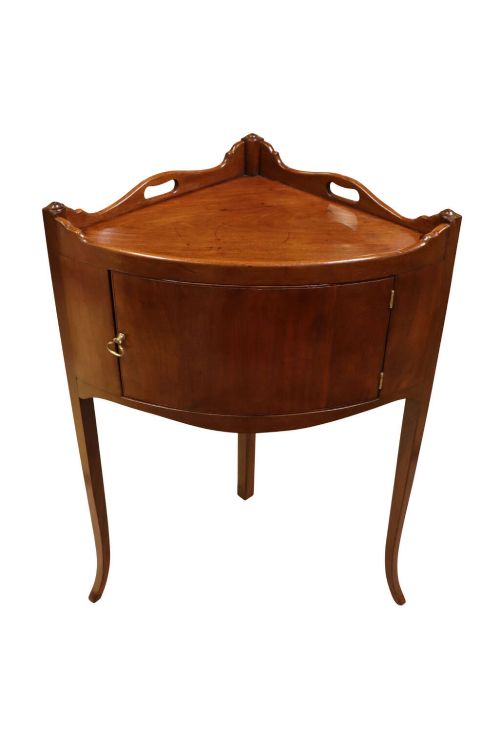
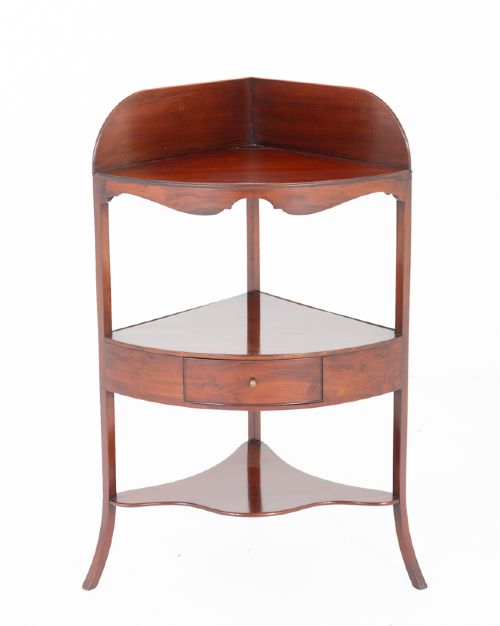
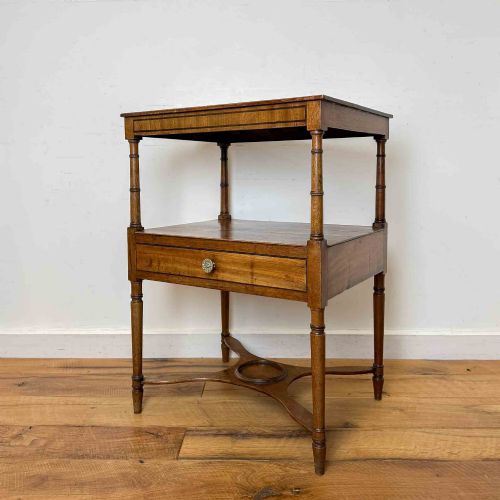
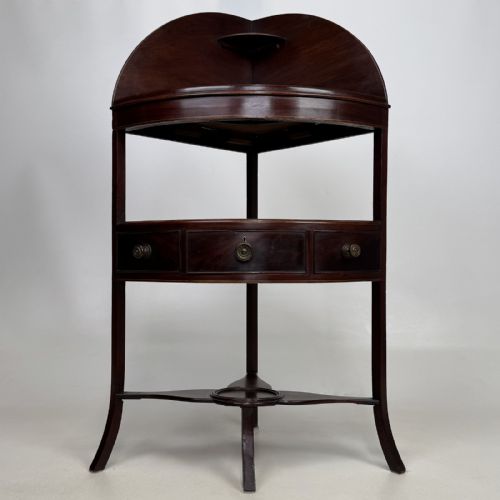
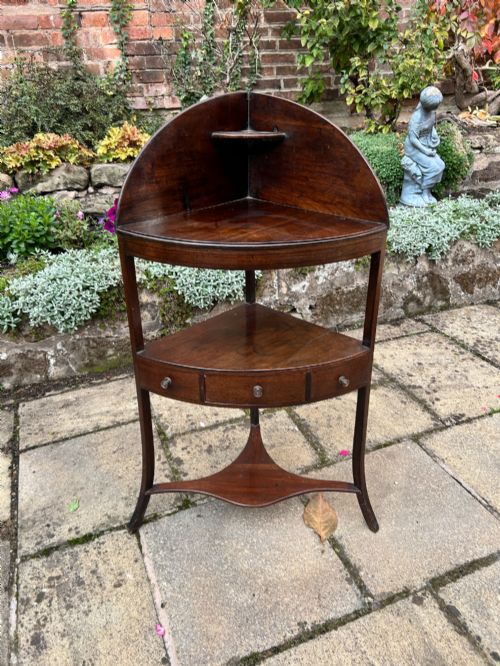
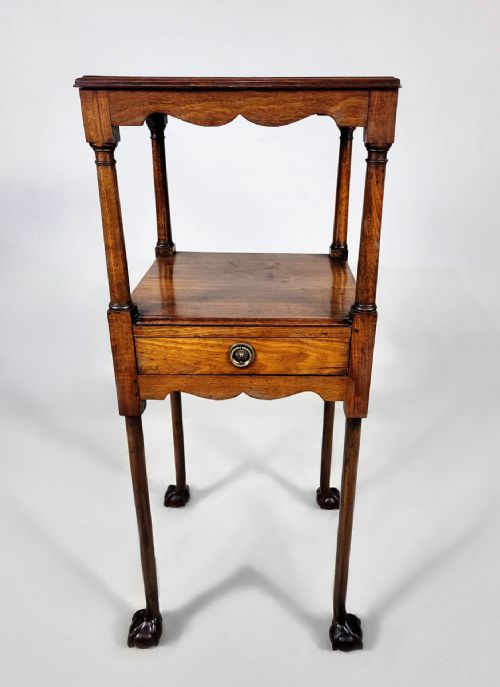
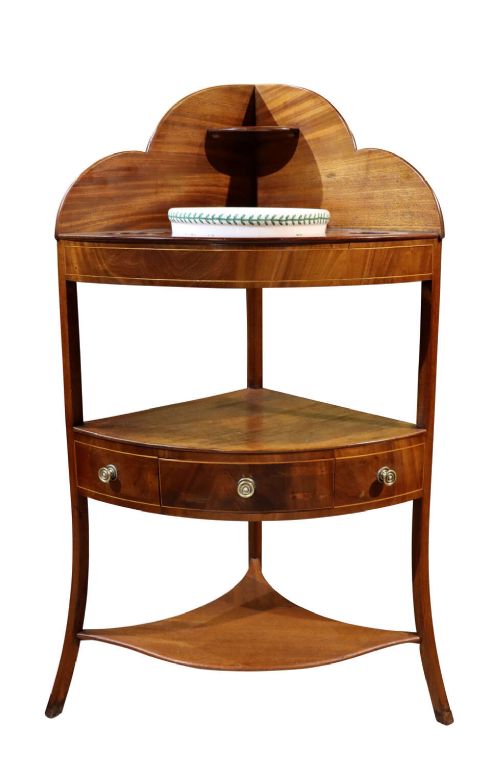
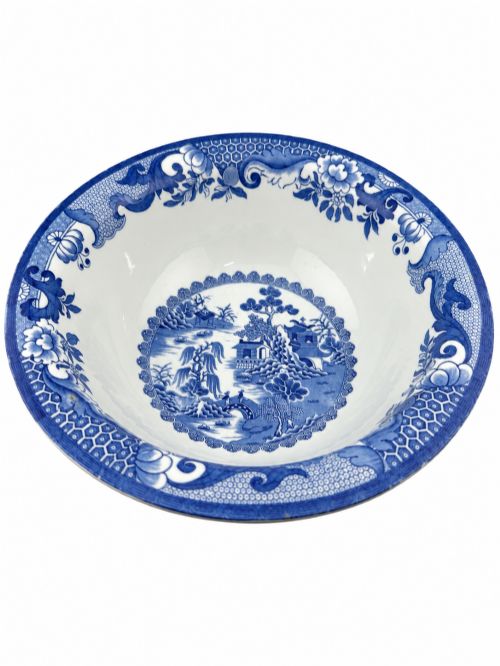
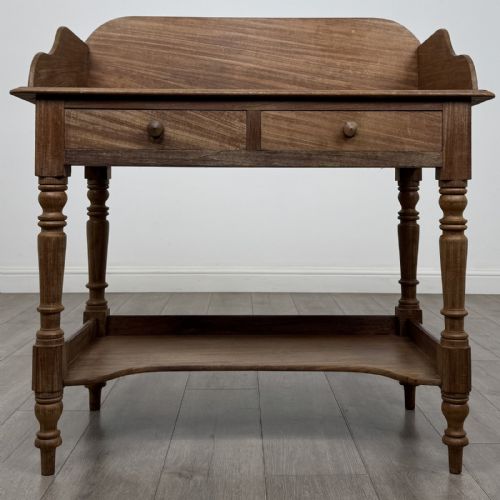
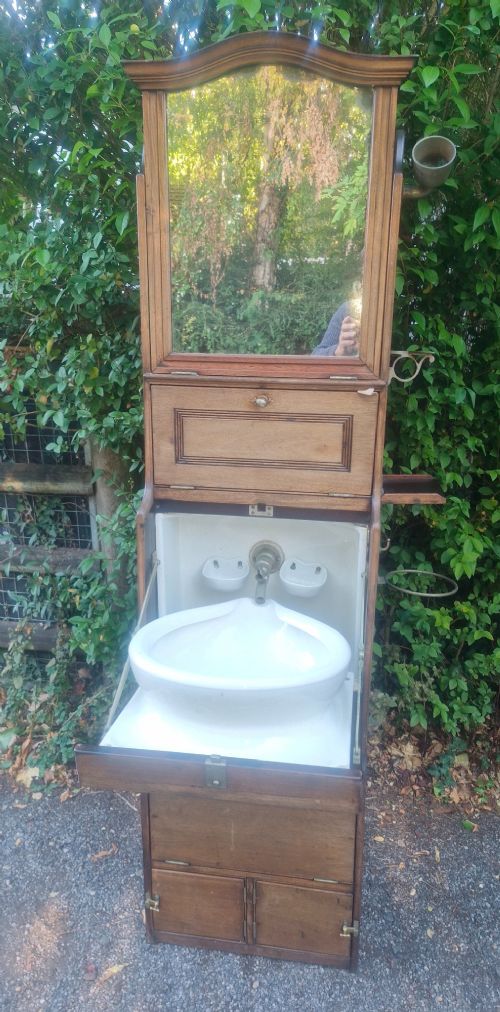
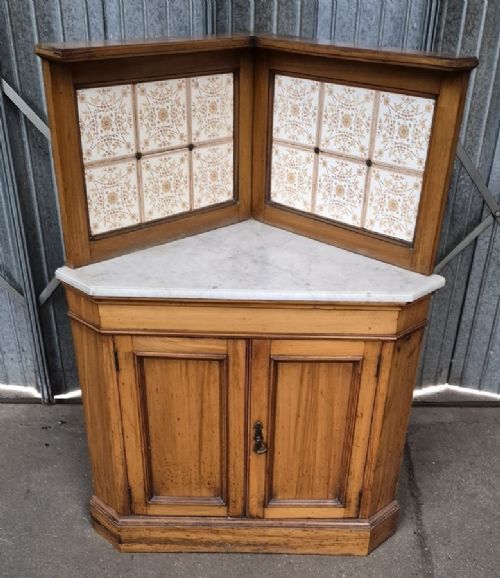
A washstand with basin comprises specialised furniture forms designed for personal ablutions before plumbed bathrooms became standard. The selection on this page includes corner stands, bow front units, bedside tables, and freestanding cabinets with basins.
Most examples date from the Georgian, Victorian, and Edwardian periods, constructed in timber such as mahogany, pine, and chestnut. Buyers encounter both utilitarian painted country pieces and refined reception room furniture with raised galleries.
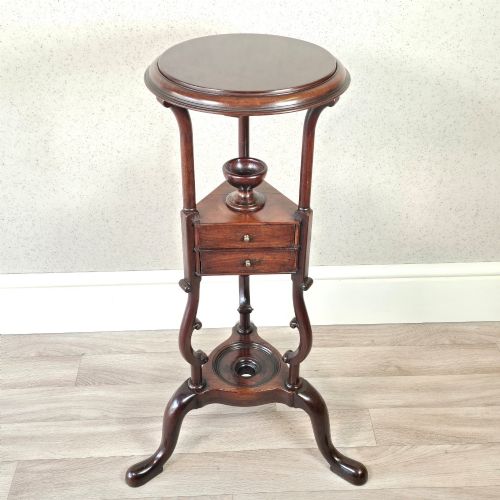
Specialised variants also appear, including campaign round basins with triform stands, wig stands, and French provincial lavabo cabinets complete with original pewter cisterns.
How they were made
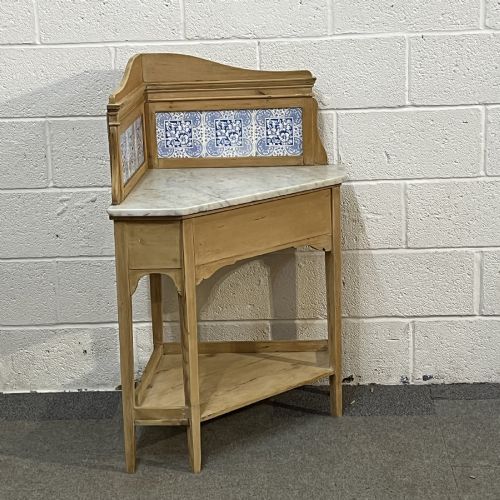
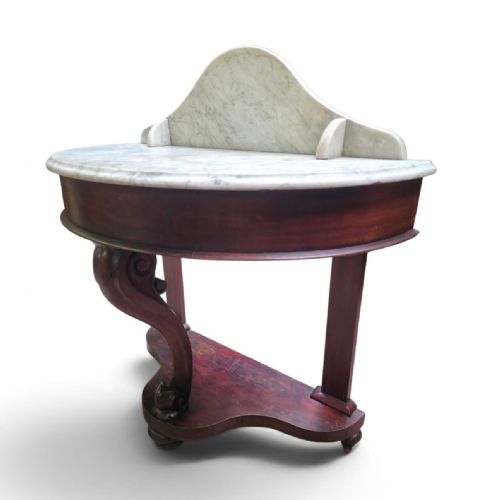
Cabinetmakers utilised timbers like mahogany for formal Georgian and Victorian pieces, while pine served for rustic country workshop items and painted finishes. Marble tops and ceramic inserts provided durable, water-resistant surfaces for daily washing.
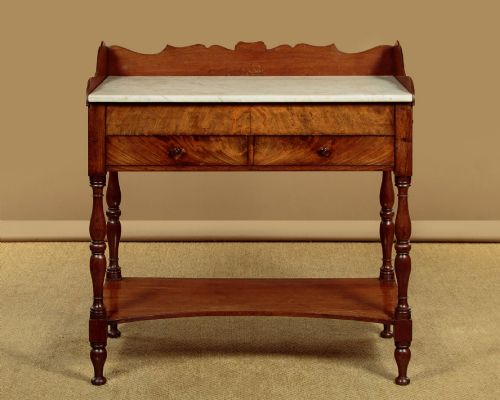
Construction techniques include raised galleries to protect walls from splashes, fold-down tops to conceal basins, and specialised metal fittings such as brass elements and original pewter cisterns. Painted pine variants often display original grain finishes and faux marble tops.
Washstand with Basin Retail Price Guide 2026
Typical asking prices for washstand with basin among the pieces listed under this phrase on Sellingantiques today, from the lower quarter to the upper quarter. They describe what is for sale here now, not the wider market.
The listings span the 18th, 19th, and 20th centuries, featuring materials from mahogany and marble to painted pine and pewter.
What varies in quality
Quality rests in the selection of timbers, the crispness of cabinetmaking joinery, and the preservation of original elements such as marble tops, tiles, jugs, and basins. Finer pieces demonstrate considered proportions and sophisticated details like bow fronts and raised galleries.
Surface treatments create another distinction, ranging from simple rustic paint applications to carefully finished grain work and polished mahogany. The survival of matching ceramic sets or original pewter cisterns elevates the integrity of an ensemble.
The Washstand with Basin Glossary
- Raised gallery
- A low wooden upstand attached to the back and sides of a washstand top to prevent water splashing against the wall. It often incorporates shaping or small ledges.
- Lavabo
- A wall-mounted or cabinet-enclosed washing apparatus featuring a cistern and basin for water storage and drainage. French provincial examples frequently pair this with pewter vessels.
- Triform stand
- A three-legged support structure commonly found on round basin campaign units. It provides stability on uneven floors during travel.
- Faux marble top
- A surface painted to imitate stone graining. Cabinetmakers used this technique on pine washstands to achieve a high-status look economically.
- Bow front
- A convex, outwardly curved front facade seen on certain Georgian corner stands. This shape softens room angles and demands advanced woodworking skill.
Washstand with Basin: Frequently Asked Questions
How do I use a washstand today?
These pieces function well as hallway furniture, bedside tables, or bathroom plant stands where their surface depth accommodates modern items.
Their historical drawers and lower tiers offer practical storage for linens or daily accessories while introducing distinct period presence.
Are the basins and jugs original?
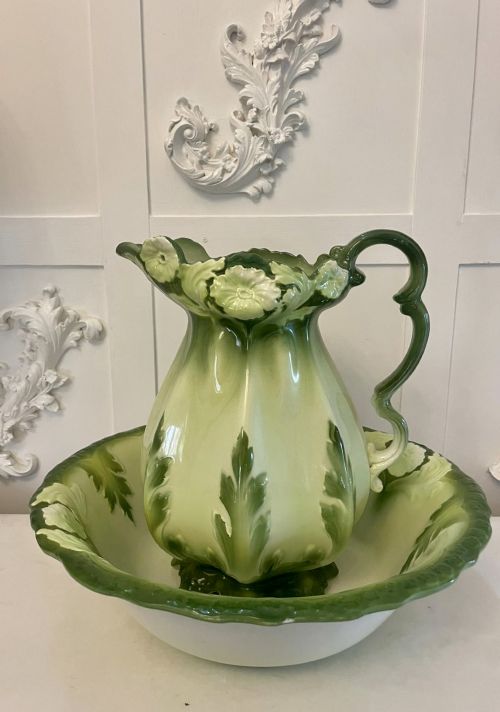
Some pieces retain their matching ceramic sets, pewter cisterns, or original tiles, while others survived as timber frames alone.
Checking listings carefully reveals whether porcelain bowl sets or marble surfaces accompany the specific stand.
How do I identify a Georgian washstand?
Georgian examples frequently employ solid mahogany and feature understated geometry, corner configurations, or wig stand formats.
They rely on clean architectural lines rather than the heavier painted pine finishes common in later Victorian country pieces.
What is a campaign washstand?
Campaign pieces were built for travel, featuring portable designs like round basins supported by folding triform stands.
Their construction prioritised compactness and sturdy disassembly without sacrificing daily utility.