



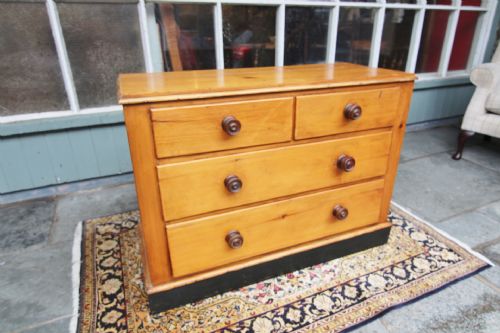


Warm Pine Drawers
Warm pine drawers bring a rich honeyed grain and practical storage to a room, ranging from compact bedside units to large Victorian chests.
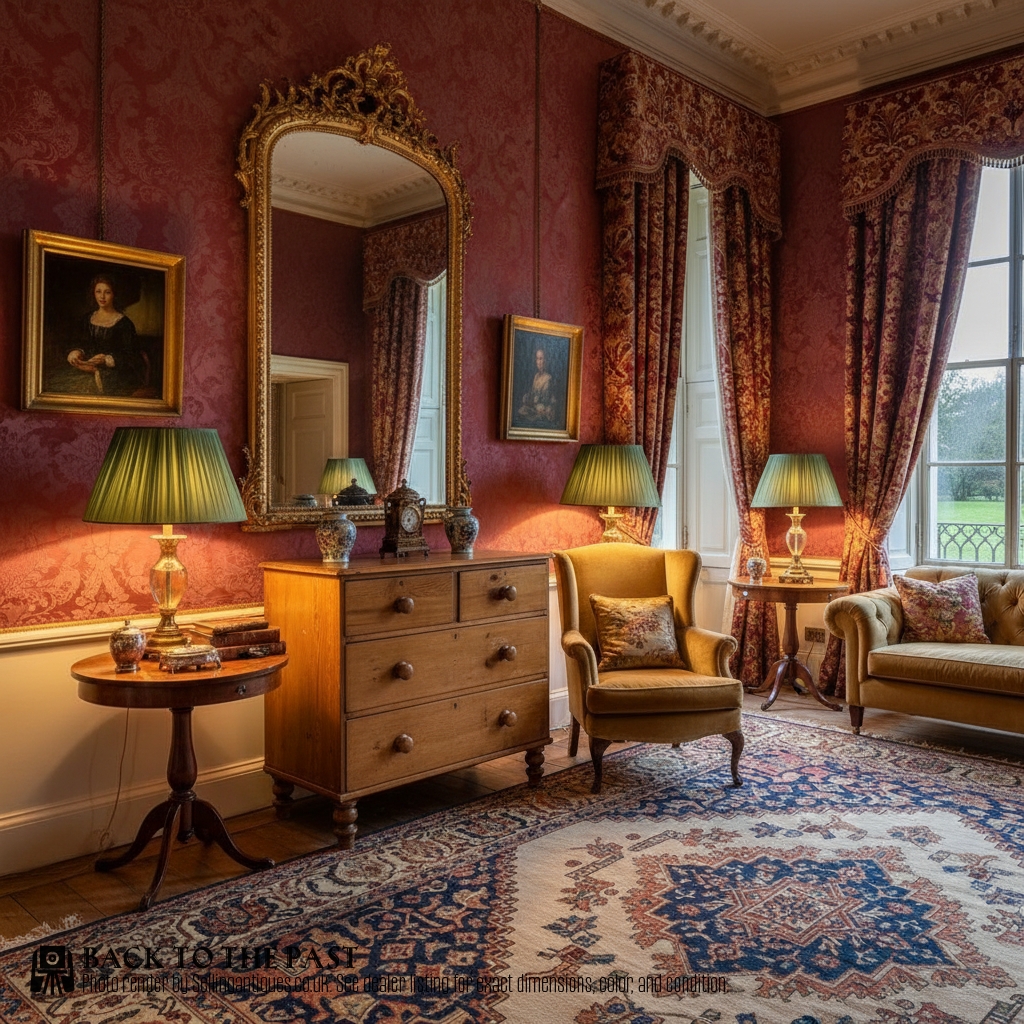
Warm Pine Drawers
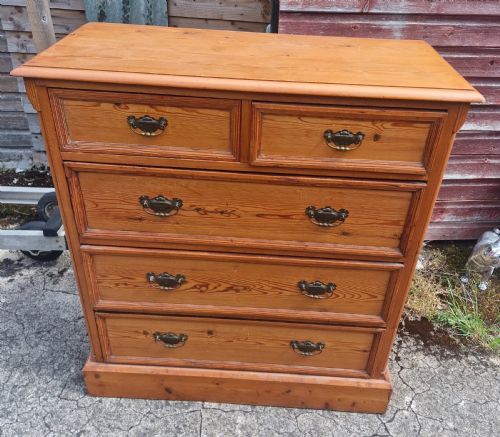
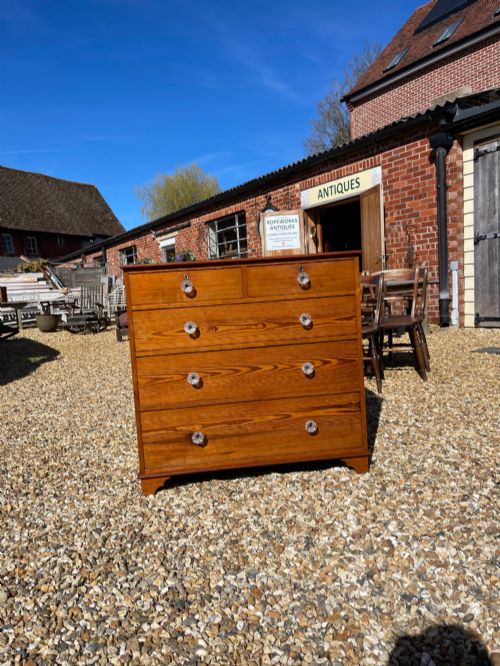
Warm pine drawers encompass a variety of utilitarian and domestic furniture pieces designed for storage, chiefly represented here by chests of drawers and bedside cabinets. These items span the nineteenth century and the Edwardian period, drawing on styles such as Victorian, rustic farmhouse, and English country.
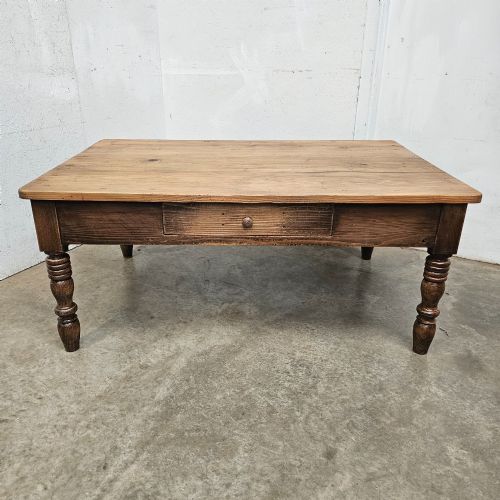
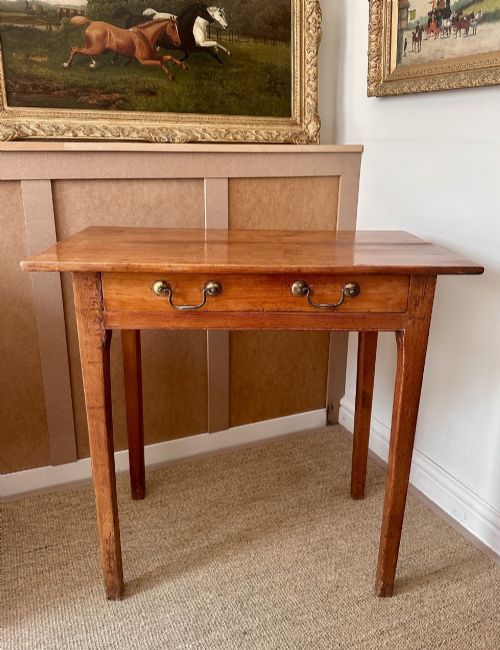
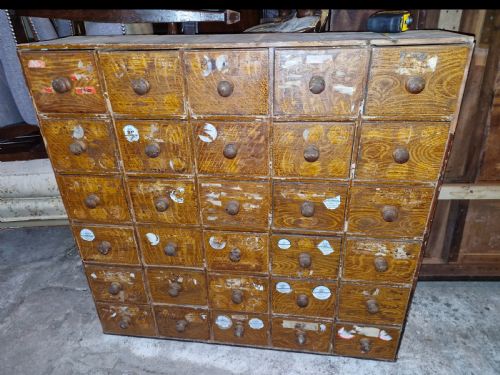
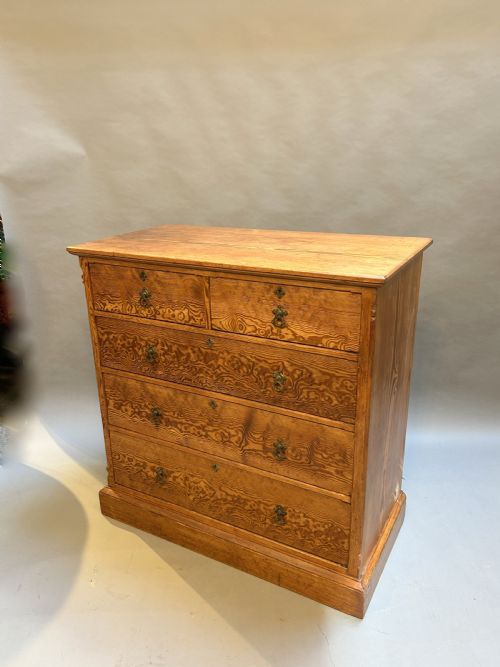
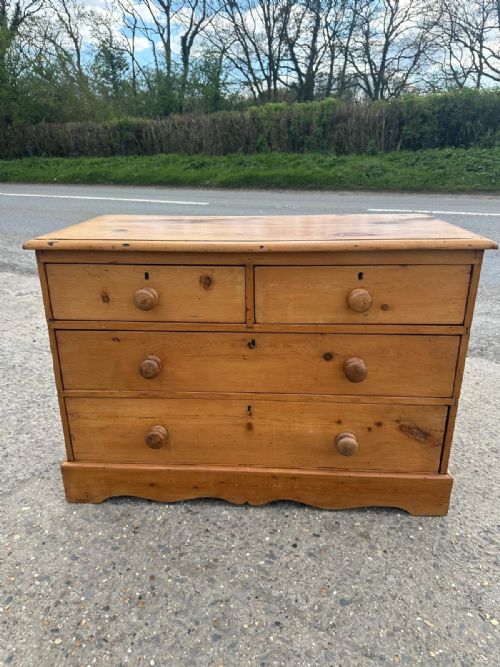
Buyers seeking warm pine drawers will most frequently encounter nineteenth-century chests featuring standard configurations like two-over-three drawer arrangements or single-drawer tables. The selection also includes banks of drawers, diminutive miniature chests, and specialised maritime or school pieces.
Origins vary from local English country workshops to specific vessels and institutional settings, demonstrating the widespread utility of pine and pitch pine in domestic and working environments. Each piece reflects the functional requirements of its era, utilising native softwood timbers to provide reliable daily storage.
Markers of quality
Quality in these pieces rests upon the integrity of the timber selection and the precision of the cabinetmaker's joinery. Dense, tightly grained pitch pine and well-figured woods indicate superior material selection compared to softer, more utilitarian deals.
The sophistication of the design details elevates certain pieces above standard utility furniture, such as shaped bases, turned legs, or carefully proportioned drawer layouts. Original hardware, intact painted or scumbled surfaces, and sound structural condition further distinguish finer examples from standard workshop output.
Listings feature 19th-century, Victorian, and Edwardian pieces, utilising materials such as pine, pitch pine, Oregon pine, fruitwood, and brass.
J.T. Crockett
The Warm Pine Drawers Glossary
- Pitch pine
- A dense, durable softwood variety known for its prominent grain and resinous content. It was frequently used in maritime contexts and robust nineteenth-century furniture.
- Scumbled
- A decorative surface technique involving the application of translucent glaze over an opaque base coat to simulate finer wood grains. This finish appears on nineteenth-century country pieces.
- Frieze
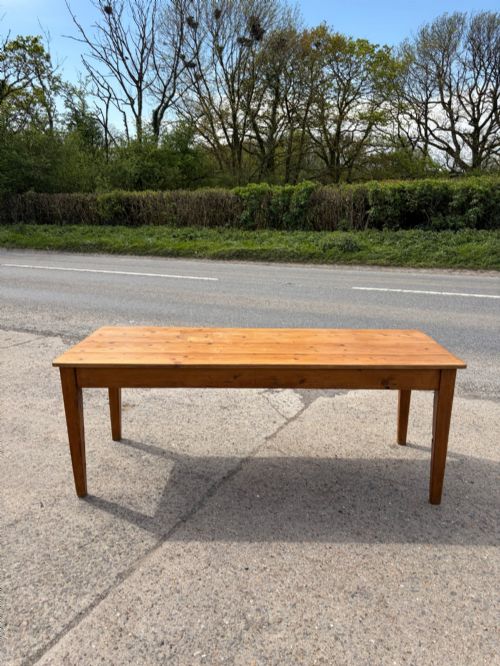
- The horizontal section of a furniture piece situated directly beneath the top surface. Tables in this selection sometimes incorporate a single drawer within this zone.
- Mule chest
- A traditional storage chest fitted with one or more drawers at the base beneath the main compartment. Victorian examples combine trunk storage with drawer utility.
Warm Pine Drawers: Frequently Asked Questions
How do I care for warm pine drawers?
Maintain the timber by applying natural beeswax periodically to nourish the grain and protect the surface from drying out. Avoid placing these pieces in direct sunlight or near heat sources to prevent the softwood from warping or splitting.
Ensure that drawers are kept clean of dust and debris on the interior runners to preserve a smooth sliding action. Gentle handling of older brass pulls and wooden knobs will prevent undue stress on the drawer faces.
Are these drawers suitable for modern bedrooms?
The versatile proportions of nineteenth-century and Edwardian pine chests allow them to integrate seamlessly into contemporary sleeping spaces. Their warm honey tones add natural texture and character to minimalist or neutral interiors.
Smaller formats, such as bedside cabinets or miniature chests, provide functional storage without overwhelming compact room layouts. Larger two-over-three configurations offer substantial capacity for clothing and daily essentials.
What is the difference between standard pine and pitch pine?
Pitch pine contains a higher resin content and exhibits a denser, heavier grain structure than standard white or yellow pine. This composition made it exceptionally resilient, leading to its adoption in maritime environments and heavy-duty furniture.
Standard pine offers a lighter weight and softer texture, which facilitated easier working properties for regional cabinetmakers. Over time, both varieties develop a rich patina through handling and exposure to light.
How can I identify a Victorian pine chest?
Victorian pine chests typically display characteristic construction traits such as hand-cut dovetails on the drawer boxes and solid timber backs. Proportions often follow standard multi-drawer arrangements, including the common two-over-three or symmetrical four-drawer formats.
Stylistic markers like turned wooden knobs, shaped bases, and applied mouldings help date pieces to the nineteenth century. The presence of Hungarian wax finishes or scumbled paint effects also points toward Victorian rural workshop practices.