



Warm Oak Longcase Clock
A warm oak longcase clock brings architectural presence and steady timekeeping into a room, combining rich timber with traditional mechanics.
Warm Oak Longcase Clock
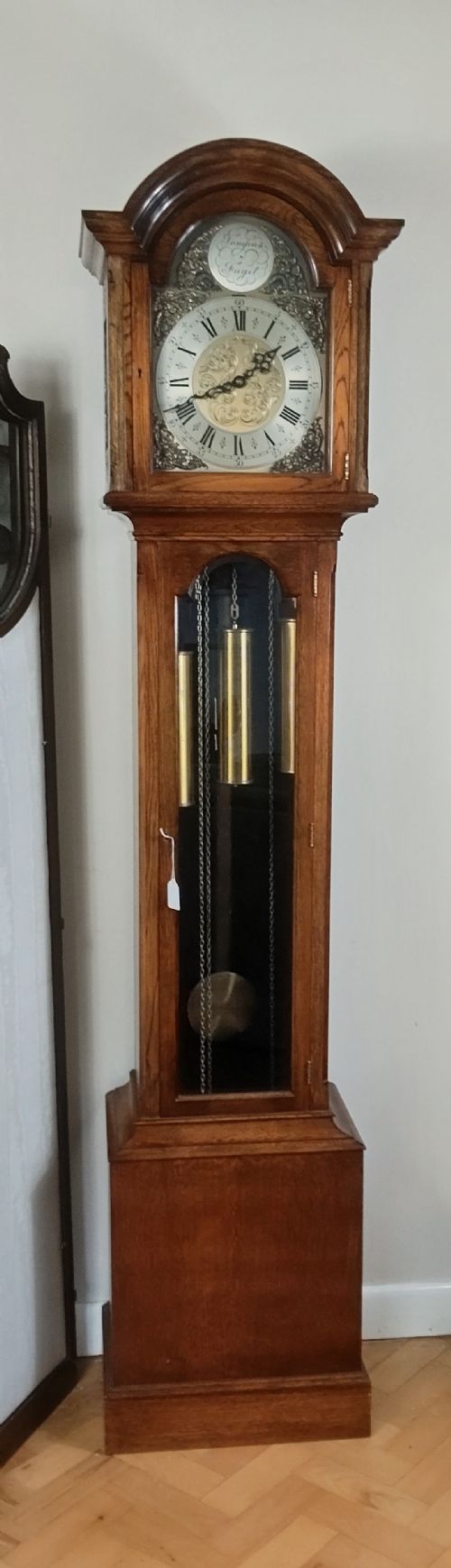
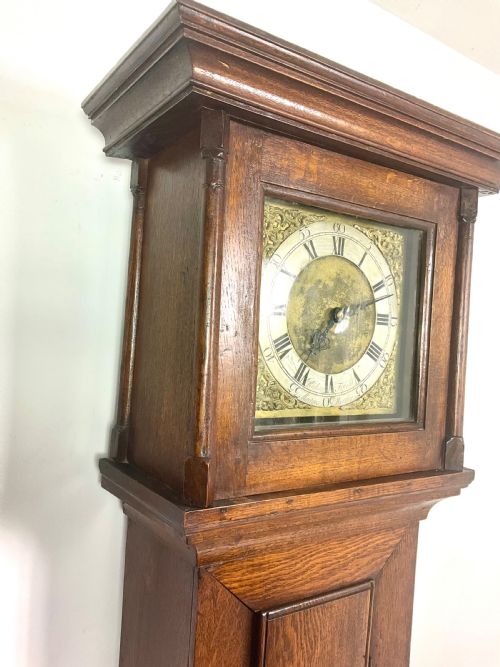
A warm oak longcase clock represents a traditional tall-case timekeeper valued for its timber and stature. When exploring a warm oak longcase clock, buyers encounter examples originating from the Georgian period through to the 1930s and 1920s.
The selection includes pieces spanning the 18th century, the Victorian era, and early Georgian styles. Many surviving examples feature oak construction, occasionally accented with mahogany details or protected by glass doors.
Regional variations appear across the selection, including Scottish Victorian pieces and town-specific makers. These clocks range from grand proportions down to smaller dwarf and grandmother formats.
Materials and Construction
Makers utilised solid oak timber for the primary case construction, often selecting boards with deep grain and warm patination. Mahogany was occasionally introduced for contrasting banding or specific structural elements.
Dials incorporated brass for chapter rings, spandrels, and movement plates, paired with iron for internal weights and mechanisms. Glass protected the dial face within the hood and occasionally glazed the trunk door to reveal the swinging pendulum.
The listings combine Georgian, Victorian, and 1930s periods, uniting oak, brass, and glass materials in traditional tall clock formats.
Factors That Separate Examples
The refinement of the case joinery and the depth of the timber's grain set better examples apart from standard production. Well-proportioned hoods, clean mouldings, and balanced dial layouts indicate careful proportioning by the original maker.
The sophistication of the internal movement influences the capability of the clock, ranging from simple single-handed 8-day mechanisms to complex quarter-chiming and musical systems utilising multiple gongs.
David Craig Ford Path head·Smith Chester·German Peerless Embee
The Warm Oak Longcase Clock Glossary
- Longcase clock
- A tall pendulum clock enclosed in a wooden case designed to stand directly on the floor. These pieces are frequently referred to as grandfather clocks.
- Grandmother clock
- A smaller, more compact version of the traditional longcase clock, typically produced during the 20th century. They offer the presence of a larger tall clock in a reduced footprint.
- Hood
- The upper section of a longcase clock that encloses the dial and movement, often featuring glazed access doors and decorative mouldings. It lifts or opens forward to allow access to the clock face.
- Trunk
- The central body of a longcase clock that houses the suspended pendulum and falling weights. This section frequently includes a hinged door to protect the interior mechanics.
Warm Oak Longcase Clock: Frequently Asked Questions
What is a warm oak longcase clock?
A warm oak longcase clock is a tall, floor-standing timekeeper built primarily from oak timber exhibiting rich patination and grain. These pieces range from early 18th-century single-handed examples to 20th-century chiming models.
The tall wooden case protects the pendulum and weights while the upper hood displays the dial and movement. They serve as both functional timepieces and architectural furniture.
How do I tell periods apart?
Distinguishing between periods involves examining the construction methods, dial design, and overall proportions of the case. Early Georgian and 18th-century pieces often display simpler, robust proportions and brass dial spandrels.
Later Victorian and 20th-century examples, including 1930s revivals, may incorporate refined woodworking techniques, glazed trunk doors, or more compact grandmother clock proportions.
Where should I place one?
These tall timepieces require a stable, level floor and a location away from direct heat sources or dampness. Hallways, living rooms, and stair landings provide suitable environments where the case can stand securely against a wall.
Adequate vertical clearance is essential, as these clocks span several feet in height. Room must also be allowed around the hood for winding the movement or adjusting the time.
How do movements vary?
Movements range from simple 8-day time-and-strike mechanisms to complex musical systems with multiple gongs. Early versions often rely on a single hand to indicate the time rather than conventional hour and minute hands.
Later 20th-century movements introduced quarter-chiming capabilities and triple-tune options. The complexity of the internal gearing determines how frequently the clock requires winding.