

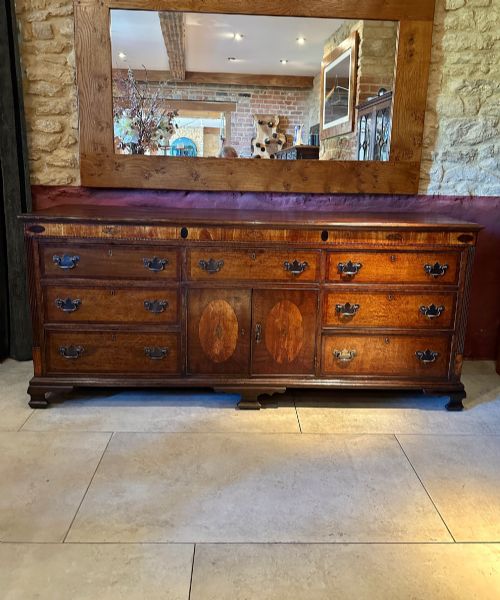


Warm Oak Dresser Base
A warm oak dresser base grounds a room with centuries of utility, offering generous surface space and deep drawers built for heavy service.
Warm Oak Dresser Base
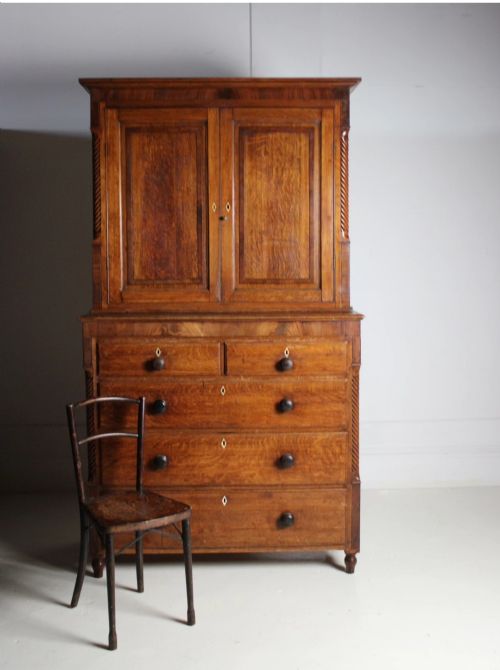
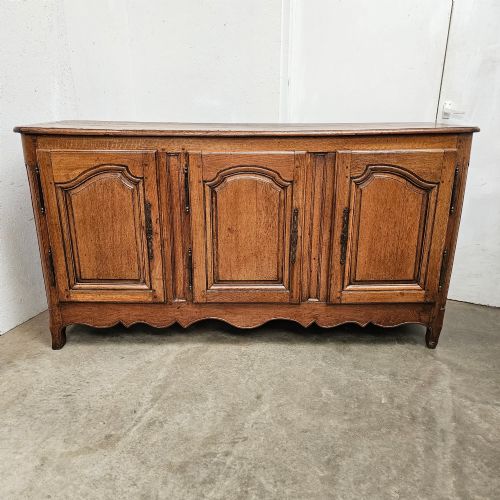
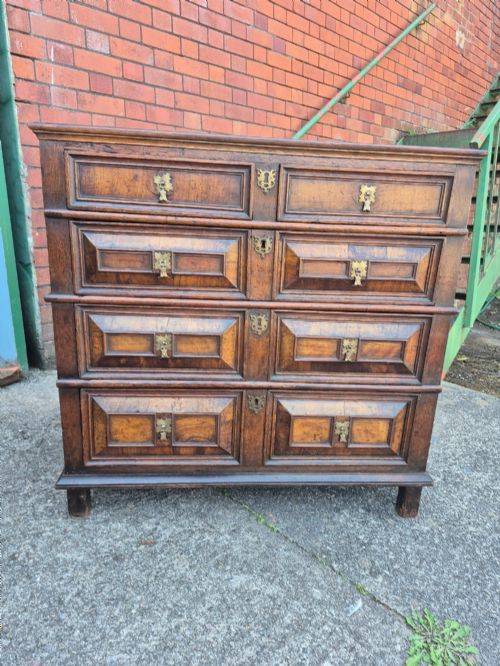
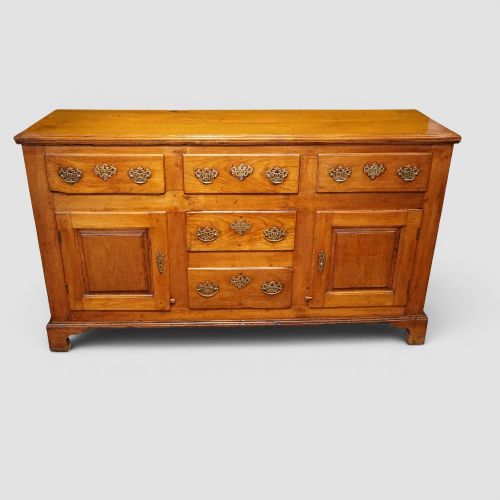
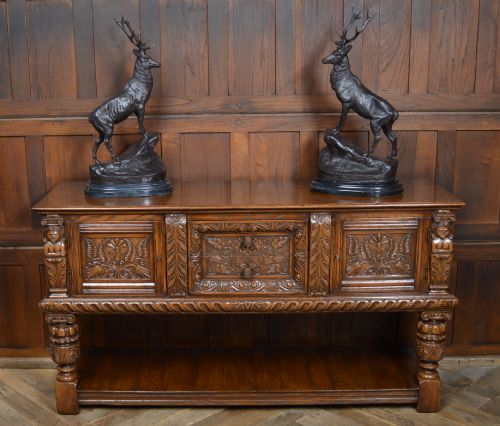
When you search for a warm oak dresser base, you look at heavy utilitarian furniture designed for domestic storage and serving. These pieces span the eighteenth century and the Georgian period alongside later Edwardian and 1920s interpretations, often emerging from country workshops and provincial contexts.
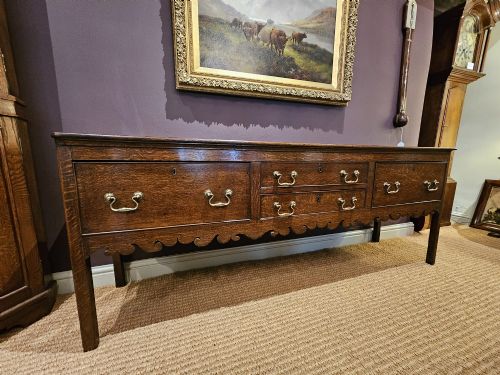
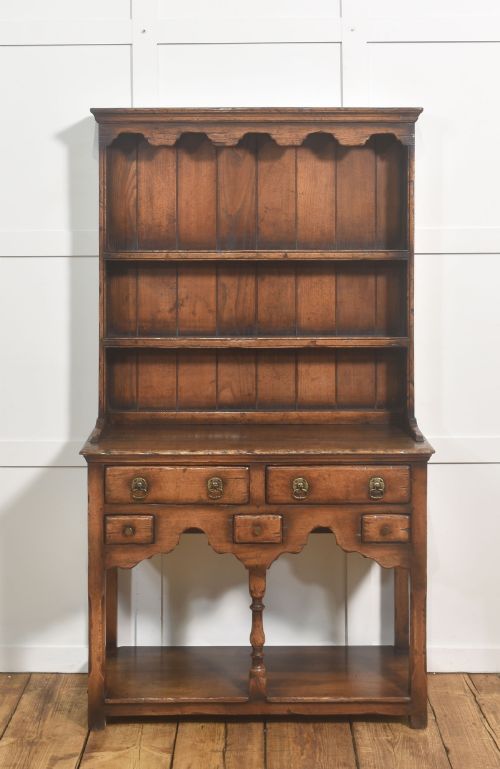
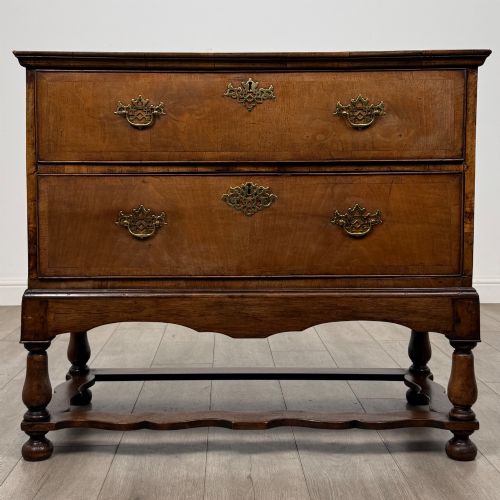
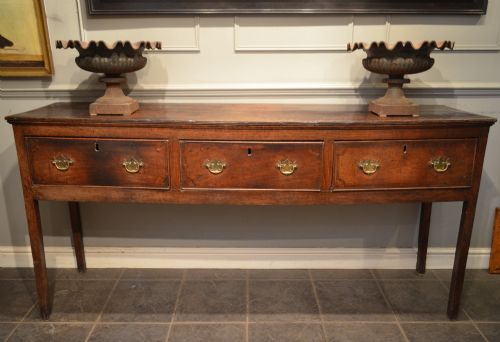
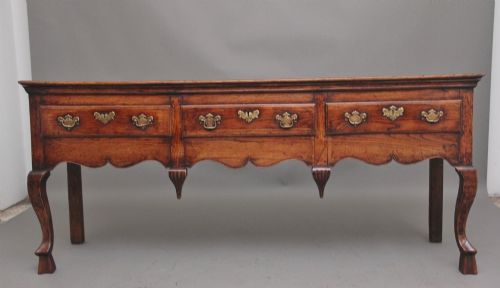
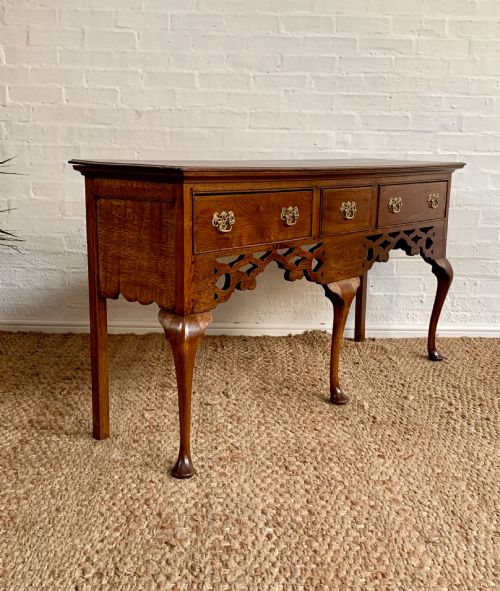
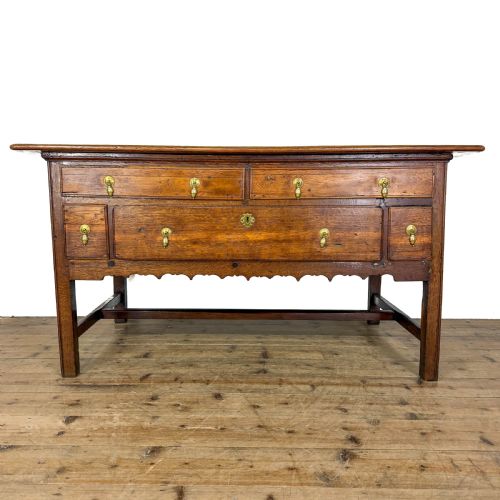
The versions you meet most frequently on this page feature a low rectangular body fitted with multiple drawers, occasionally paired with an open pot board beneath. They present solid timber construction in rich golden and brown tones developed through decades of use.
How they were made
Cabinet makers constructed these pieces primarily from solid oak, sometimes combining secondary woods like fruitwood or walnut for drawer linings and geometric mouldings. Panels were panelled into frames to allow for natural wood movement as humidity changed.
Joinery relied heavily on hand-cut dovetails for drawer construction and pegged mortise and tenon joints for the main frames. Brass drop handles and escutcheons secured the hardware, fastened with hand-beaten pins.
Listings feature oak alongside walnut, fruitwood and mahogany across periods spanning the seventeenth century to the 1920s.
What varies in quality
The distinction between standard utility pieces and superior examples lies in the depth of the timber figuring and the crispness of the hand-carved mouldings. Heavy planks selected for the top board show superior grain pattern and structural integrity.
Construction details such as solid oak drawer linings rather than deal, alongside original brass hardware, separate the finest survivals from standard workshop output.
T Simpson and Son
The Warm Oak Dresser Base Glossary
- Pot board
- An open lower shelf built near the floor for storing heavy pots and dishes. This lower tier defines many country dresser bases.
- Dresser base
- A low freestanding cabinet featuring drawers and cupboards without the upper plate rack. It served as a functional serving table in large kitchens.
- Enfilade
- A long sideboard or low cabinet featuring multiple doors in a row. French provincial examples frequently use this layout.
- Geometric moulding
- Raised ornamentation applied to drawer fronts in repeating patterns, often seen on seventeenth century and William and Mary pieces.
Warm Oak Dresser Base: Frequently Asked Questions
How do I style a dresser base in a modern room?
A warm oak dresser base anchors a modern dining room or hallway by providing strong horizontal lines and generous surface display area. Position it against a plain wall to let the timber grain and brass hardware catch the light.
Keep the top uncluttered with a few large ceramic vessels or a heavy mirror hung above. The deep drawers swallow everyday clutter while keeping living spaces calm and orderly.
What is the difference between a dresser and a sideboard?
A traditional dresser includes a lower base with drawers and often an upper plate rack for displaying ceramics. Sideboards generally lack plate racks and focus solely on the lower cabinet structure.
Many pieces listed as dresser bases function identically to sideboards in contemporary dining spaces. Both forms evolved to handle food preparation and tableware storage.
How do I care for antique oak furniture?
Protect antique oak surfaces by keeping them away from direct heat sources and sudden humidity shifts. Apply natural beeswax sparingly to maintain the polish and nourish the dry timber.
Avoid commercial silicon sprays which build up sticky residue over time. A soft dry cloth removes dust without harming the historic finish.
How can I tell an eighteenth century base from a later copy?
Examine the interior drawer construction for hand-cut dovetails and irregular timber widths. Older pieces show tool marks and natural wear patterns accumulated through generations of domestic service.
Look at the back boards and drawer bottoms for shrinkage gaps and hand-planed surfaces. Machine-sawn timber and uniform components typically point towards later Edwardian or 1920s revival work.