





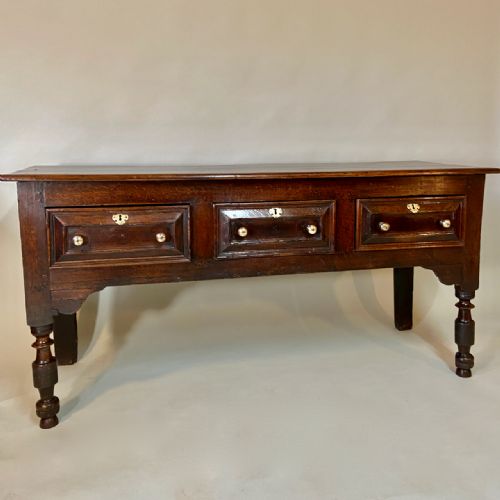

Period Oak Credenza
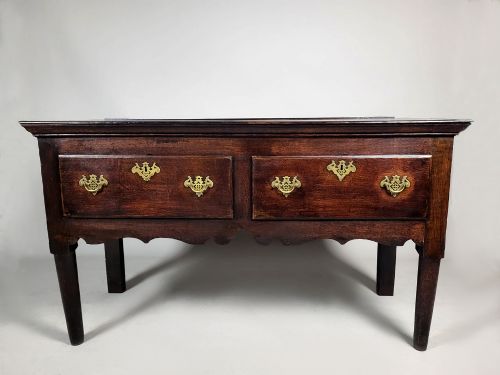
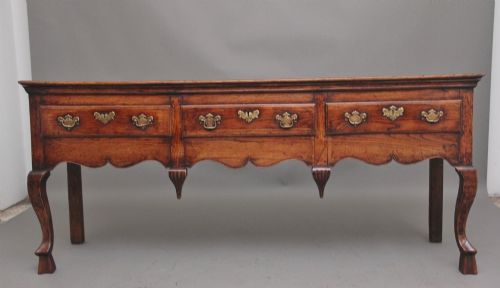
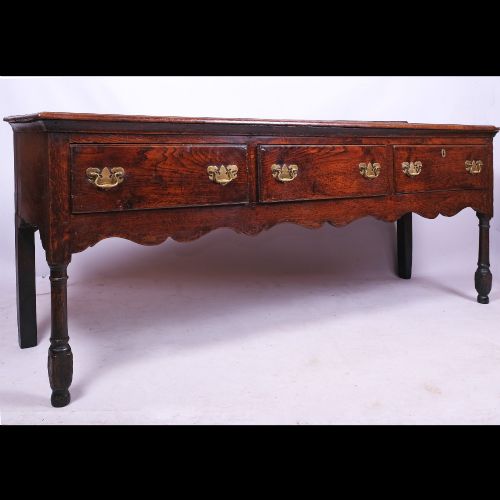
These period oak credenza pieces are robust timber storage items spanning the seventeenth to twentieth centuries, prized for their sturdy construction and historic character.
Period Oak Credenza
When buyers search for a period oak credenza, they encounter an assortment of traditional heavy timber storage furniture including dresser bases, low dressers, servers, buffets, and court cupboards. These items originate predominantly from the seventeenth and eighteenth centuries, with occasional early twentieth century interpretations reflecting earlier styles.
The pieces typically manifest in heavy timber forms such as potboard bases and serving dressers, which reflect the domestic architecture of their respective periods. Surviving examples demonstrate the functional evolution of early storage furniture from the seventeenth century onward.
Stylistic influences range widely across the listings, taking in Jacobean, Queen Anne, George III, and French Provincial designs. Buyers are most likely to meet seventeenth and eighteenth century oak dresser bases featuring traditional drawer arrangements and panelled construction.
Materials and construction
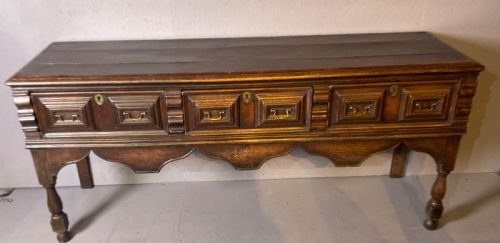
Construction relies primarily on solid oak, shaped into heavy frames, panelled doors, and geometrically moulded drawer fronts. Master craftsmen utilised traditional joinery methods to build durable storage units designed for daily domestic use.
Hardware and decorative details incorporate brass fittings, iron elements, and occasional mother-of-pearl accents. These subsidiary materials provide functional support and surface contrast against the dark tones of aged timber.
Potboards were originally built low to the floor so cooks could slide heavy iron pots underneath without straining their backs.
Assessing quality
Quality varies according to the integrity of the timber and the survival of original hardware such as brasses and handles. Pieces retaining their initial structural components command greater attention from discerning collectors.
The refinement of surface decoration, from plain boards to carved details and geometrically moulded drawer fronts, indicates the level of craftsmanship invested in the individual item. Early examples demonstrate distinct regional carving traditions and joinery nuances.
The Period Oak Credenza Glossary
- Dresser base
- A low wooden storage unit featuring drawers and often a lower shelf or potboard, designed for domestic use. These form the foundation of many traditional dining room arrangements.
- Potboard
- An open lower shelf incorporated into the base of a dresser, historically used for storing pots and heavy utensils. This structural feature is characteristic of seventeenth and eighteenth century English pieces.
- Court cupboard
- A heavy enclosed wooden storage cabinet featuring upper and lower sections, typically dating from the seventeenth century. They represent more formal domestic storage than open dressers.
- Geometrical moulding
- Raised geometric patterns applied to drawer fronts and panels, popular during the seventeenth century. This decorative technique adds depth and linear definition to flat timber surfaces.
- George III period
- The era spanning the mid to late eighteenth century, associated with refined proportions and classical stylistic influences in British furniture.
Period Oak Credenza: Frequently Asked Questions
What is a potboard dresser base?
A potboard dresser base is a traditional low storage unit featuring drawers above an open lower shelf. This design provides both enclosed and open display space.
Historically, the lower shelf served practical storage needs in large country kitchens and dining rooms. Today, these pieces function as robust sideboards in modern living spaces.
How do seventeenth century pieces differ?
Seventeenth century pieces often display heavier timber construction, visible pegged joinery, and geometrically moulded drawer fronts. They reflect an earlier, more robust aesthetic than later eighteenth century items.
Makers of this era focused on utilitarian strength and panelled decoration. These characteristics help distinguish them from later reproductions and Georgian variants.
Where should I place a low dresser?
A low dresser fits well in dining rooms, hallways, or living spaces where substantial wooden storage is required. Their long, low profile provides a stable surface for lamps and decorative objects.
Ensure the room maintains stable humidity levels to protect historic oak timber. Avoid placing heavy timber furniture directly against uninsulated exterior walls.
Are original brasses important?
Original brasses and hardware contribute significantly to the historical integrity of eighteenth century furniture. They indicate that the piece has undergone fewer alterations over time.
Replacement handles are common on antique furniture due to centuries of heavy use. Careful inspection of screw holes and indentation marks helps determine hardware authenticity.