



Early 18th Century Sideboard
An early 18th century sideboard brings robust timber and quiet presence to a room, offering practical storage grounded in centuries of domestic craft.
Early 18th Century Sideboard
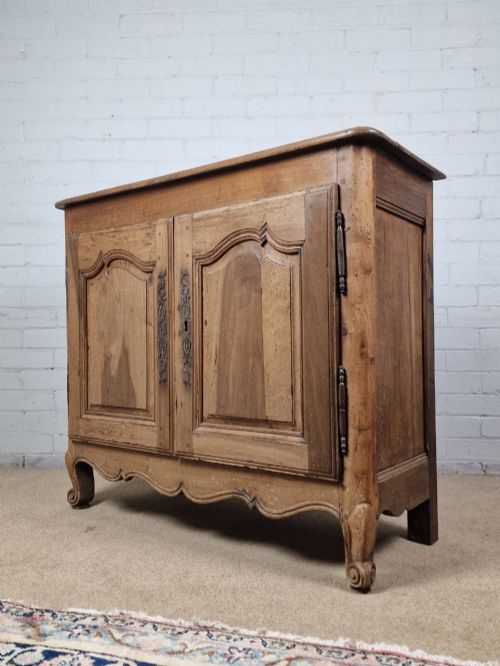
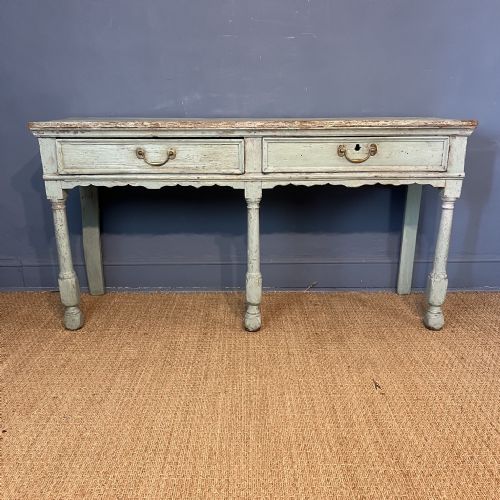
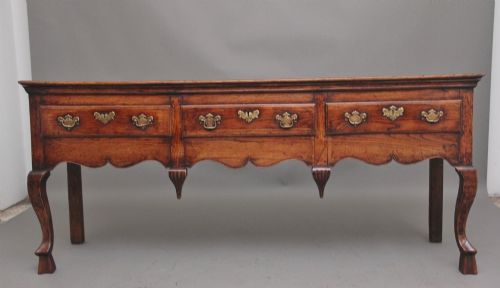
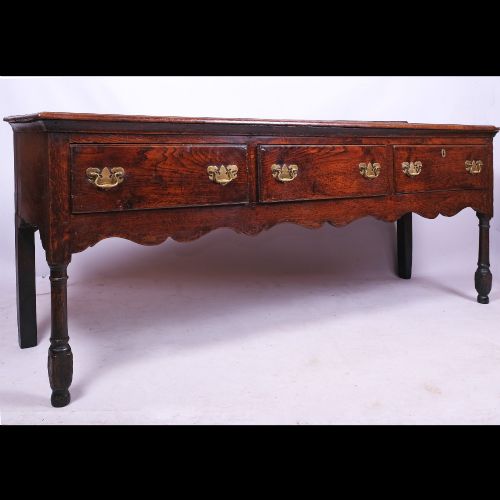
When searching for an early 18th century sideboard, buyers encounter forms described as dresser bases, side cabinets, and side tables from the 18th century and Georgian periods. These pieces serve as functional servers or storage units that bridge the gap between utilitarian kitchen furniture and formal reception room display.
The most common versions met on this page are constructed from oak or walnut, often featuring regional characteristics such as Welsh vernacular designs or Queen Anne cabriole legs. Such forms reflect the domestic habits of early Georgian households, where sturdy timbers met evolving standards of interior refinement.
Objects carrying this label span several decades around 1700 and 1750, sometimes blending styles like George I or French provincial aesthetics. This variety means buyers must look closely at the underlying carcass construction rather than relying solely on surface labels.
Materials and construction methods
Makers relied principally on solid oak and walnut, supplemented by secondary timbers such as pine for drawer linings and backboards. Timber was hand-sawn and planed, yielding boards with irregular thicknesses that reveal the marks of early pit saws and adzes.
Joinery depended on pegged mortise and tenon frames, hand-cut dovetails for drawer construction, and iron or brass hardware fastened with handmade screws and nails. Surfaces were frequently finished with natural wax or oil, though historic painted finishes occasionally survive on pine and softwoods.
Listings span oak, walnut, pine, and mahogany, with Welsh vernacular and Queen Anne styles appearing alongside George I and George III periods.
Evaluating quality and proportion
The distinction between ordinary and superior pieces rests on timber selection, particularly the figure of walnut veneers or the tight grain of quarter-sawn oak. Better examples preserve their original proportions and unaltered hardware, while lesser pieces may show extensive timber replacement or unsympathetic height alterations.
Carved details and moulding profiles also divide the range, separating provincial work executed with simple gouges from sophisticated urban pieces displaying refined walnut crossbanding and meticulous stringing. The integrity of the internal carcass and drawer runners determines how well a piece survives daily use.
The Early 18th Century Sideboard Glossary
- Dresser base
- A low utilitarian table fitted with drawers and occasionally a potboard shelf beneath, used for food preparation and storage in early kitchens. It forms the direct ancestor of the modern sideboard.
- Potboard
- An open slatted lower shelf built between the legs of a Welsh dresser or base to hold heavy pots and pewter. It provides structural rigidity to the base frame.
- Cabriole leg
- A furniture leg featuring a double curve, swelling outward at the knee and tapering inward to a foot. This design gained prominence during the Queen Anne and George I periods.
- Kneehole desk
- A compact writing table featuring a central recessed space for the legs flanked by banks of small drawers. Walnut examples often include concealed compartments behind the main facade.
- Quarter-sawn
- A method of cutting logs radially toward the centre to produce boards with enhanced stability and decorative medullary ray patterns. This cut minimises timber movement in heavy oak furniture.
Early 18th Century Sideboard: Frequently Asked Questions
What is an early 18th century sideboard?
These pieces are primarily sturdy oak or walnut dresser bases, side tables, and cabinets designed for storage and serving before dedicated sideboards became common later in the Georgian period.
Buyers select them to anchor dining rooms or hallways with authentic period timber and understated domestic history.
How were these sideboards used originally?
Households utilised these surfaces in kitchens and dining parlours for food preparation, serving dishes, and storing household linens or pewter.
The lower drawers and shelves kept everyday utensils secure while providing a solid platform for heavy serving vessels.
How do I live with an antique sideboard?
Living with these pieces involves placing them away from direct heat sources and radiators to prevent timber shrinkage and splitting.
Routine maintenance requires only occasional application of natural beeswax to nourish the dry wood surfaces.
How can I tell Queen Anne from Georgian pieces?
Queen Anne furniture typically displays curved cabriole legs, pad feet, and rich walnut veneers dating from around the turn of the 18th century.
Later Georgian examples often incorporate stricter classical proportions, mahogany timbers, and straight bracket or Marlborough legs.