




Warm Oak Armchair
A warm oak armchair brings tactile honesty and practical comfort to any room, offering the sturdy charm of traditional vernacular seating.

Warm Oak Armchair
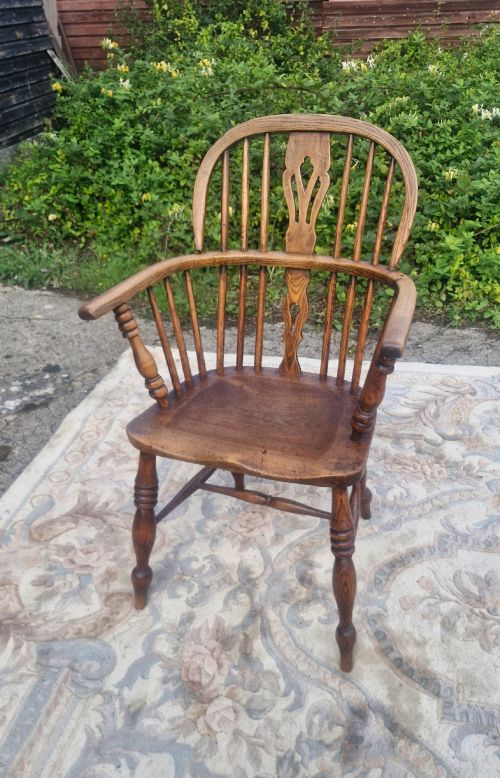
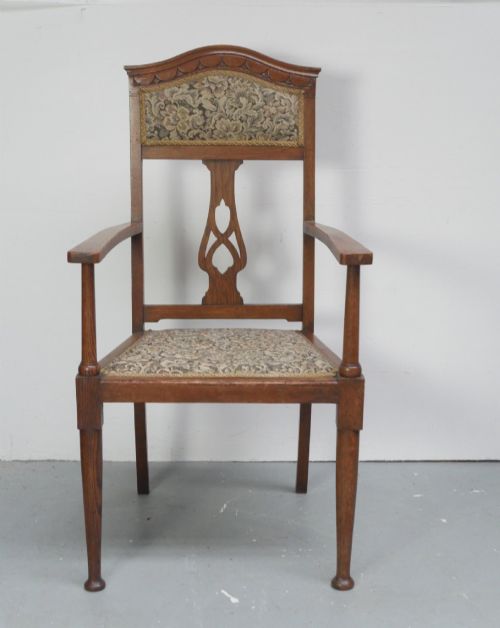
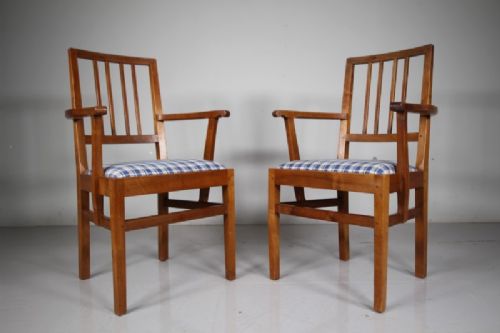
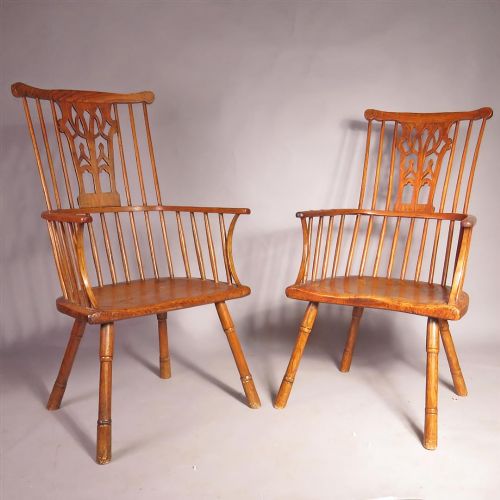
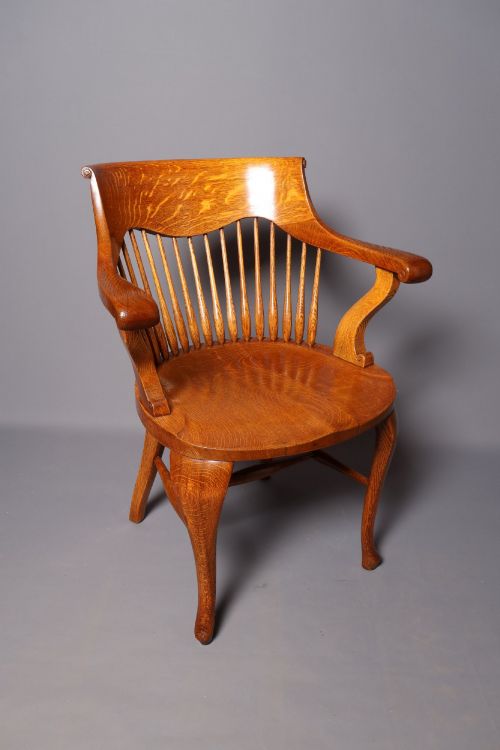
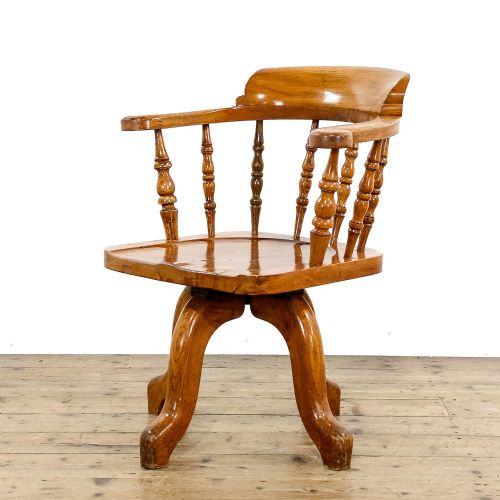
A warm oak armchair spans sturdy domestic seating created across several centuries, ranging from eighteenth-century George III country house pieces to late Victorian farmhouse Windsors. Buyers encounter various utilitarian forms designed for everyday sitting, including captain's chairs, smokers' bows, desk chairs, and low-back Windsor designs.
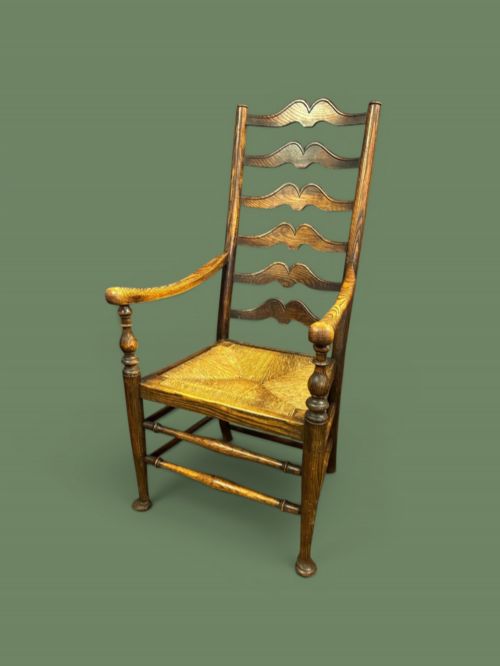
The material palette of a warm oak armchair extends beyond oak to include elm, beech, ash, and yew, frequently paired with rush seating or fabric upholstery. These chairs reflect regional vernacular traditions, emerging from domestic kitchens, offices, and rural homesteads where robust construction mattered most.
How they were made
Makers of a warm oak armchair utilised solid timbers, turning spindles and legs on lathes while shaping seats from thick planks of elm or oak. Steam-bending techniques allowed woodworkers to form curved comb backs, lathe backs, and continuous arm rails without weakening the grain.
Joinery relied on traditional methods such as mortise and tenon joints and wedged spindles to ensure stability under heavy daily use. Rush seating was hand-woven directly onto wooden frames, providing a resilient and flexible base for sitting.
Listings feature solid oak, elm, and rush across Victorian, Georgian, and Arts and Crafts periods.
What varies in quality
The distinction in a warm oak armchair lies in the depth of timber figure, the harmony of the timber's grain, and the integrity of the original construction. Superior examples retain their original surface patination, untouched timber colour, and balanced proportions shaped by skilled regional makers.
Workmanship shows in the subtlety of the spindle turnings, the comfort of the saddle-shaped wooden seat, and the tightness of the historical joints. Lesser quality often appears in heavy-handed modern repairs or replaced components that disrupt the unified appearance of the piece.
Edward Barnsley
The Warm Oak Armchair Glossary
- Windsor chair
- A wooden chair constructed with a thick wooden seat into which the legs and back spindles are separately bored and wedged.
- Captain's chair
- A low-backed wooden armchair designed for compact spaces, featuring a curved rail supported by numerous small spindles.
- Rush seat
- A seating surface woven from dried marsh rushes, creating a durable and textured platform across the chair frame.
- Comb back
- A Windsor chair design where the top rail resembles the teeth of a comb, extending above the main spindle back.
- Lathe back
- A chair back featuring shaped vertical wooden slats or splats arranged between the seat and the top rail.
Warm Oak Armchair: Frequently Asked Questions
How do I use a warm oak armchair?
These armchairs function naturally as desk chairs, fireside seating, or reading chairs in living spaces and studies.
Their sturdy build handles daily sitting while adding historical character and textural warmth to a room's interior scheme.
How do I care for a warm oak armchair?
Protect the timber by keeping the chair away from direct heat sources and sudden humidity changes that cause wood to dry or split.
Apply a light application of beeswax occasionally to maintain the natural lustre and feed the historical surface.
How do I tell periods apart?
Dating relies on observing construction methods, timber species, and stylistic details such as comb backs or lathe turnings.
Eighteenth-century examples often display simpler, heavier country proportions, whereas Victorian pieces show more varied commercial workshop designs.