
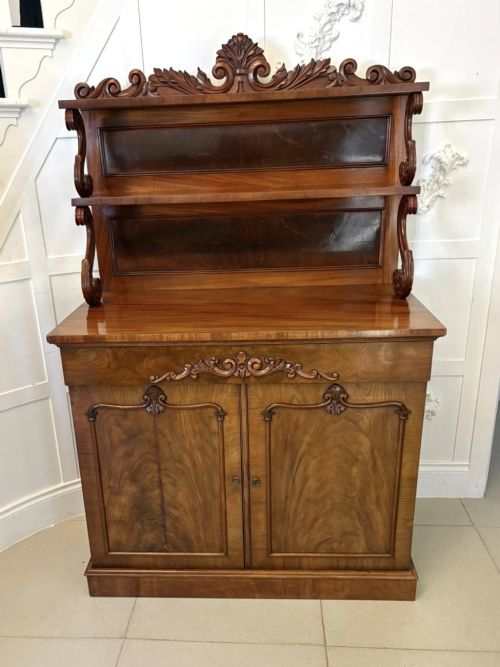
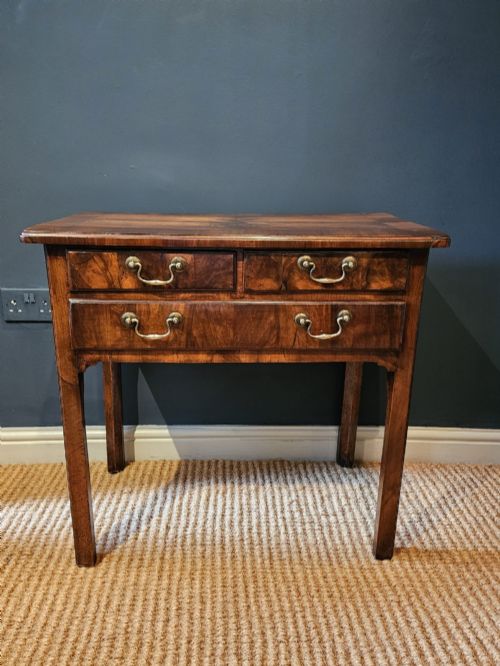
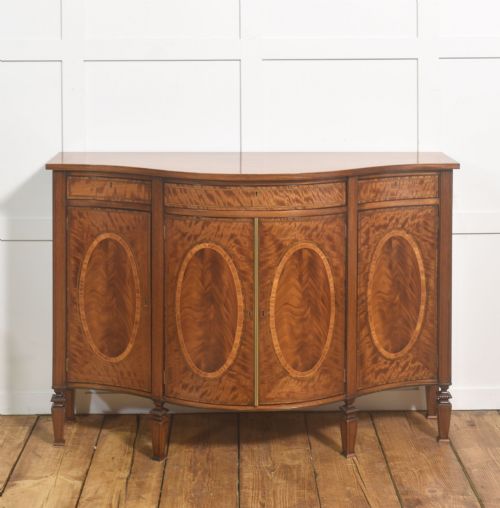
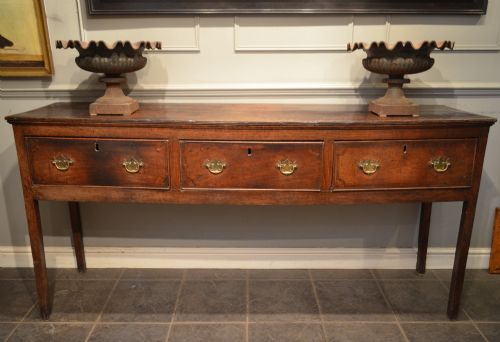
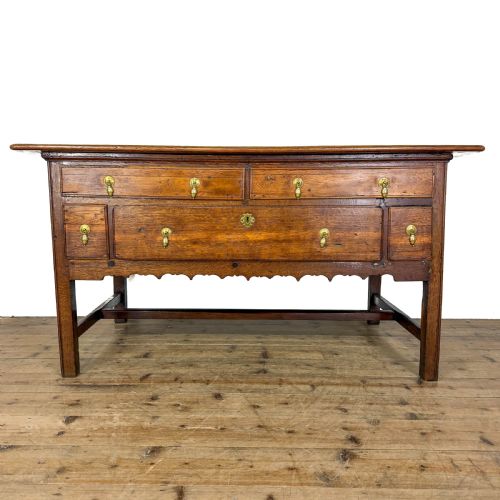
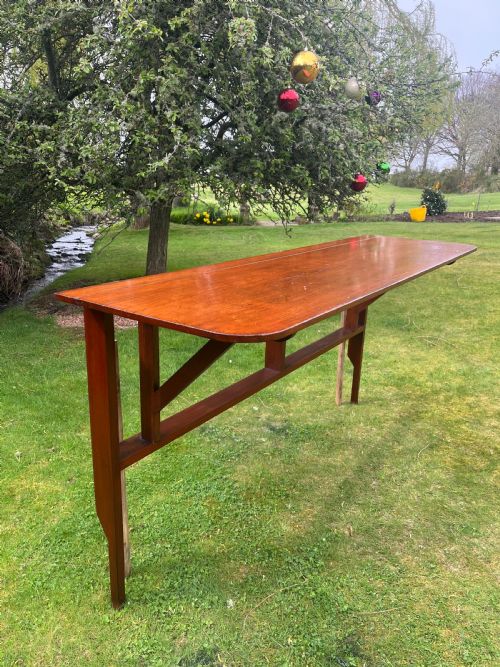


Warm Brown Wooden Server
A warm brown wooden server is a practical surface for dining rooms and kitchens, combining rich timber tones with useful storage and serving space.
Warm Brown Wooden Server
A warm brown wooden server encompasses a range of traditional serving tables, dresser bases, sideboards, and console tables designed for domestic utility and display. When searching for a warm brown wooden server, buyers encounter forms spanning the eighteenth, nineteenth, and early twentieth centuries, constructed in Britain and continental Europe.
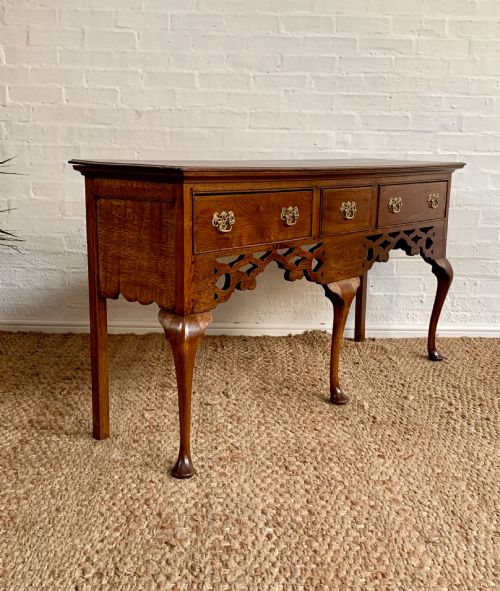
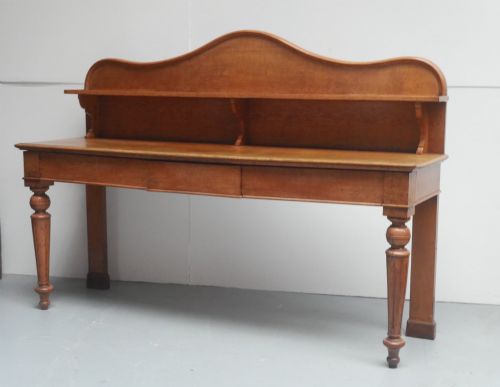
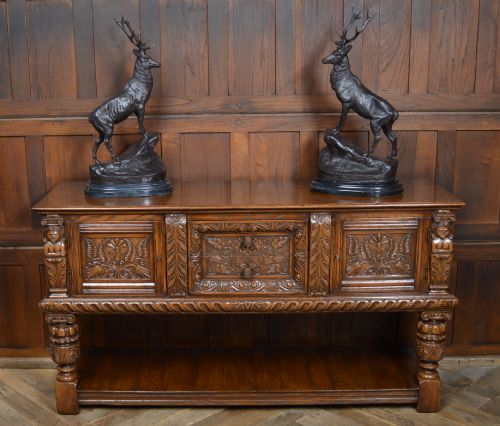
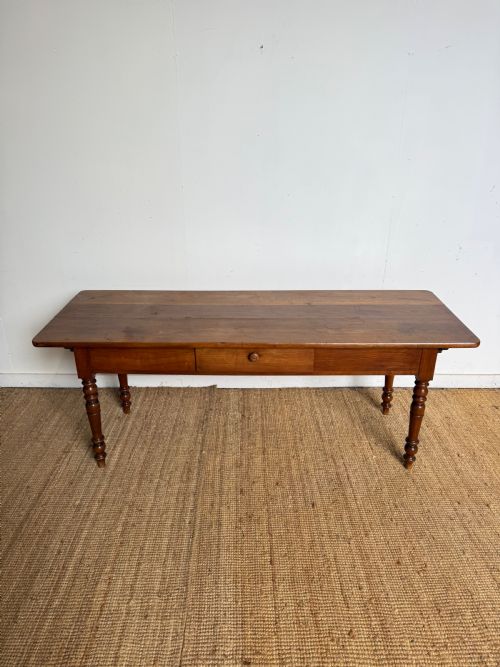
The pieces on this page lean heavily toward nineteenth-century French fruitwood and cherrywood tables alongside British oak dresser bases and mahogany sideboards. These items served dining rooms and large kitchens as practical furniture for food preparation, storage, and serving.
Common variations include simple two-drawer farmhouse consoles, substantial oak dresser bases with pot boards, and refined mahogany or satinwood pieces with inlaid decoration. The selection bridges formal dining furniture and rustic country house preparation tables.
How they were made
Cabinetmakers utilised solid timbers including oak, mahogany, walnut, cherrywood, and fruitwood, often selecting boards with pronounced grain patterns or figured mahogany surfaces. Construction methods relied on traditional joinery, dovetail drawers, and hand-planed panels suited to daily domestic use.
Decorative elements involve contrasting stringing, boxwood inlay, and carved details such as cabriole legs or Art Nouveau motifs. Metal hardware typically consists of brass handles, knobs, and occasional galleries that complement the warm tones of the wood.
The listings feature pieces spanning the 18th century, 19th century, Georgian, Victorian, and Edwardian periods in oak, mahogany, fruitwood, and cherrywood.
What varies in quality
Quality rests on the selection of timber, the crispness of the joinery, and the integrity of the secondary woods used for drawer linings and backboards. Superior examples demonstrate thoughtful grain matching, well-proportioned framing, and cabinetry that retains its original structural rigidity.
The refinement of surface finish and the retention of period hardware distinguish finer formal sideboards from utilitarian country pieces. Finer items feature subtle decorative inlays and carefully carved mouldings rather than purely functional execution.
Maple and Co
The Warm Brown Wooden Server Glossary
- Dresser base
- A low wooden unit featuring drawers and sometimes open pot boards beneath, originally used in kitchens and dining rooms for food preparation and storage.
- Chiffonier
- A compact sideboard cabinet popular in the nineteenth century, often fitted with enclosed lower cupboards and a raised tier or shelf above.
- Lowboy
- A small seventeenth or eighteenth-century side table with one or more rows of drawers supported on four legs.
- Pot board
- An open lower shelf built into a dresser base or sideboard, traditionally used for storing pots and heavy kitchen utensils.
- Stringing
- A narrow inlay of contrasting wood used to create delicate linear borders on cabinet doors and tabletops.
Warm Brown Wooden Server: Frequently Asked Questions
What is a warm brown wooden server used for?
These pieces function as surface areas for serving food, displaying ceramics, or storing dining linens and tableware.
They sit easily in dining rooms, large kitchens, or hallways as both decorative and practical furniture.
How do I date a wooden server?
Dating relies on observing construction techniques, timber choices, and stylistic markers such as hardware and leg shapes.
Eighteenth-century pieces often display heavy oak framing and hand-cut dovetails, while nineteenth-century items show wider use of mahogany and fruitwoods with distinct regional styles.
Are these servers made of solid wood?
Most pieces combine solid structural timbers with selected veneers on larger flat surfaces like drawer fronts and tabletops.
Timbers such as oak, mahogany, cherrywood, and fruitwood form the primary structure across the listed periods.
How should I care for a wood surface?
Maintain the timber by keeping it away from direct heat sources and sudden humidity changes that cause wood to shift.
Apply natural beeswax periodically to nourish the grain and preserve the warm patina of the finish.